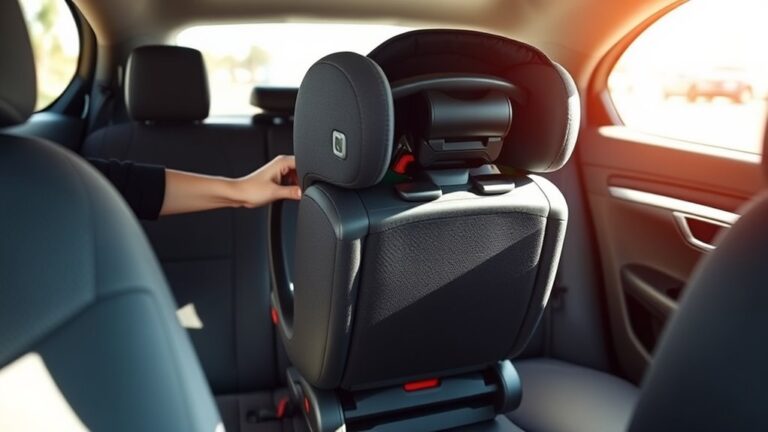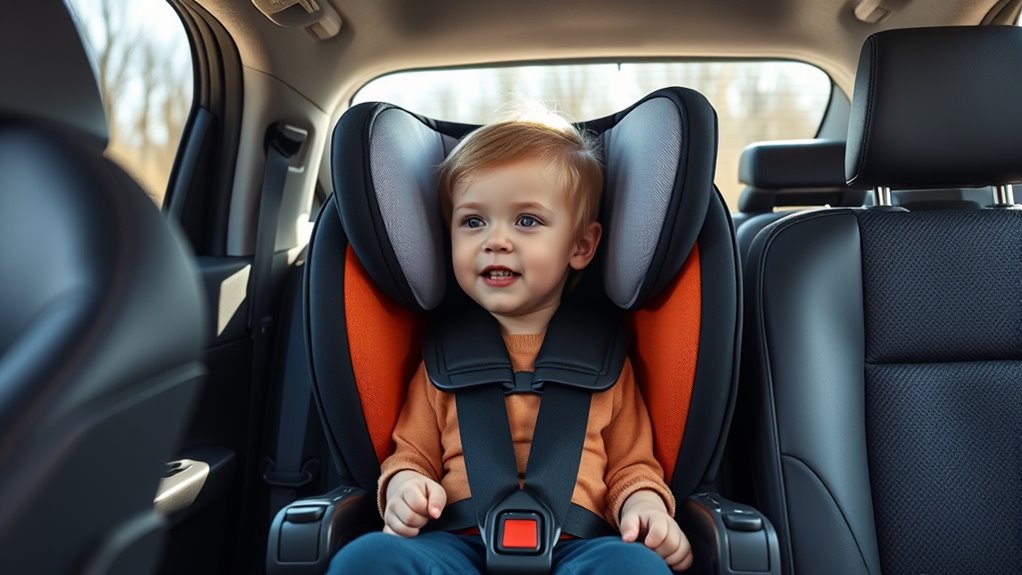
When Forward Facing Car Seat: Safety Tips & Age Guidelines
Many parents find it tricky to know exactly when to switch their child to a forward-facing car seat. It’s a common concern—you’re not alone—and making the right choice is so important for your child’s safety and comfort.
You should switch your child to a forward-facing car seat once they reach about age 2, weigh between 20-40 pounds, and are under 40 inches tall.
But developmental readiness matters too. Look for signs like steady head control and comfort in the seat.
Proper installation, a snug harness fit, and safety features like impact absorption are essential.
If you want to make certain you’re following all safety tips and guidelines, keep exploring for more detailed advice.
Key Takeaways
- Children are usually ready to forward face around age 2 when they weigh at least 20-40 lbs and are under 40 inches tall.
- Before transitioning, make sure the child’s harness is snug, the straps are flat, and the chest clip is at armpit level.
- Proper installation is key. Use LATCH or seat belt systems correctly, and ensure the seat is reclined at the right angle for safety.
- Regularly check that the seat’s integrity is intact, the attachments are secure, and adjust the harness as your child grows.
- Remember, the right time to switch isn’t just based on age but on your child’s development, size, and safety guidelines.
How Do I Know When It’s Time to Switch to a Forward-Facing Seat?
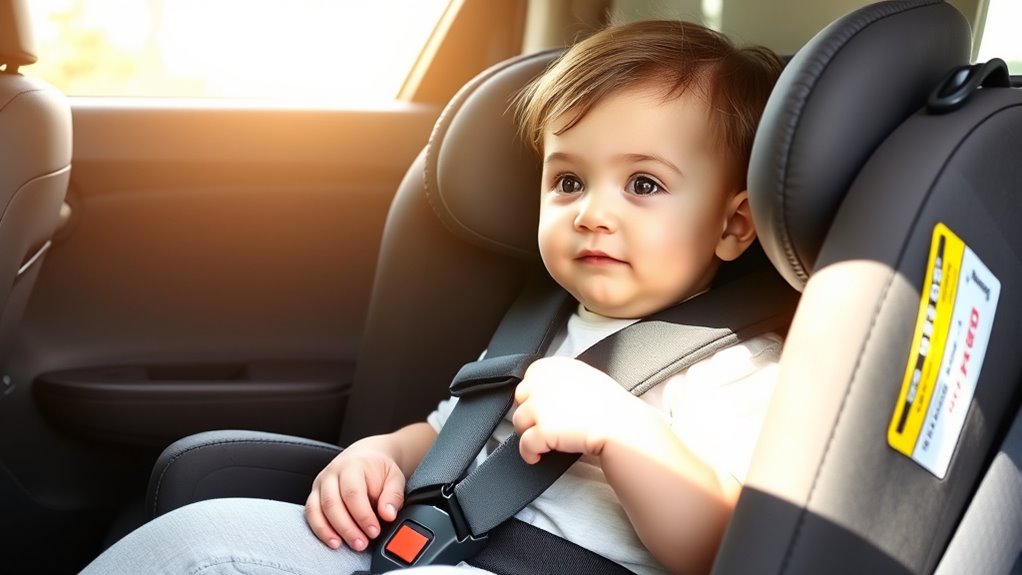
Deciding when to switch your child to a forward-facing car seat mostly depends on their age, size, and developmental readiness.
Switch to a forward-facing seat based on your child’s age, size, and development for safety and comfort.
Make sure your child’s head, neck, and back are strong enough to sit supported, which usually happens around age 2 or when they reach the height and weight limits of their rear-facing seat.
Comfort also matters. If your child’s posture feels cramped or uncomfortable, it might be time for a switch.
Car seat materials are important too because newer models often have padded, breathable fabrics to keep your child comfortable on long rides.
Look for seats with adjustable straps and good padding to prevent pressure points.
Always follow the manufacturer’s guidelines for weight and height, but trust your judgment about your child’s physical and emotional readiness.
A comfortable, well-fitting seat ensures safer, happier journeys while you wait for the right age and size milestones.
What Are the Age and Size Guidelines for Forward-Facing Car Seats?
Children should be in a forward-facing car seat once they meet specific age, weight, and height requirements, making sure they’re physically ready for the switch.
Most kids reach these milestones around age 2, often weighing between 20 to 40 pounds, and are under 40 inches tall. Convertible seats are designed to grow with your child, letting you switch from rear-facing to forward-facing as they grow.
Be sure to check your seat’s specific weight and height limits because these can vary between models. When your child outgrows their convertible seat’s forward-facing limits, you can move them to a booster seat, which helps position the seat belt properly.
This transition depends more on your child’s size and maturity than just age. Always confirm that the forward-facing seat has a harness system that fits snugly and supports your child’s current weight and height before making the switch.
Proper sizing ensures maximum safety and comfort for your child.
How to Properly Install a Forward-Facing Car Seat for Safety
Properly installing a forward-facing car seat is essential to guarantee your child’s safety during every trip. Correct installation ensures the seat fits well and keeps your child comfortable, which can reduce fussiness and improve safety.
To get it right, follow these key steps:
- Securely attach the seat using the vehicle’s LATCH system or seat belt. Make sure all anchors click into place properly.
- Adjust the harness to fit snugly around your child’s shoulders with minimal slack. Ensure the chest clip is at armpit level.
- Recline the seat appropriately for your child’s age and size, balancing comfort with safety.
- Double-check that the base is firmly installed and doesn’t move more than an inch side to side or front to back.
What Safety Features Should I Look for in a Forward-Facing Car Seat?
When choosing a forward-facing car seat, it’s essential to look for specific safety features that offer better protection during travel. Focus first on the car seat material, making sure it’s durable, impact-absorbing, and flame-retardant. Good-quality materials help withstand crashes and keep your child comfortable.
Next, check the adjustment mechanisms. They should be smooth, secure, and easy to operate. Look for multiple harness height adjusters and recline options to make sure the seat fits your growing child snugly. An adjustable harness system that distributes tension evenly can help prevent injuries in a crash.
Also, see if the car seat has a sturdy, anti-rebound bar or reinforced side wings. These features help minimize injuries during side-impact collisions. Always verify that the safety features meet current safety standards and certifications.
Combining durable materials with user-friendly adjustments enhances your child’s comfort and protection. This gives you peace of mind knowing you’re doing everything you can to keep your child safe during every trip.
Signs Your Child Is Ready to Face Forward
As your child grows and develops better motor skills, it becomes important to recognize when they’re ready to face forward in their car seat. Here are signs they might be ready:
- Steady Head Control: If your child can hold their head up unassisted for a while, it suggests they’re ready to face forward.
- Child Sleep Habits: When your kid comfortably falls asleep with minimal fuss, it may be time to switch to forward-facing, especially if they enjoy looking around.
- Age and Weight: Typically, when they outgrow height and weight limits for the rear-facing seat, it’s a good indicator.
- Car Seat Accessories: Some seats have adjustable harnesses and reclining features, making it easier for your child to sit comfortably facing forward.
Watch for these cues—your child’s safety and comfort depend on it.
Tips for Securing Your Child Correctly in a Forward-Facing Seat
Making certain your child is securely strapped into a forward-facing car seat is crucial for their safety on every trip. Start by adjusting the harness system so that the straps lay flat against their body without twists.
The harness should be snug, allowing you to fit no more than one finger between the straps and your child’s chest. Be sure the harness clip is positioned at armpit level for maximum protection.
Check that the seat padding is properly positioned; it should provide cushioning without interfering with the harness fit or causing slack. If the padding shifts or compresses, remove or reposition it to maintain a secure fit.
Always confirm the seat is tightly installed, with minimal movement when you push on it. Regularly recheck the harness tension and seat position to ensure continued safety as your child grows.
Proper child harnessing and seat padding adjustment are key to keeping your child safe and comfortable.
Common Mistakes to Avoid With Forward-Facing Car Seats
Many parents make the mistake of installing the car seat incorrectly or failing to secure the harness properly, which can compromise your child’s safety. To avoid common errors, keep these points in mind:
- Ignoring seatbelt etiquette: Make sure the seatbelt is snug and properly threaded through the car seat’s designated path. This prevents slack that can reduce protection.
- Incorrect harness position: Ensure the harness is at or just above your child’s shoulders, not too loose or too tight. This is key for maximum safety.
- Poor car seat maintenance: Regularly check for frayed straps, cracks, or damaged parts. Replace the seat if needed to keep it safe and effective.
- Forgetting to check installation: Always test the seat’s stability after installing. It shouldn’t move more than an inch to be securely attached.
Avoid these mistakes to maximize your child’s safety and get the most out of your car seat.
How Long Should My Child Stay in a Forward-Facing Seat?
Children should stay in a forward-facing car seat until they outgrow the height or weight limits set by the manufacturer. Most convertible seats are designed for longer use, so you can keep your child in the forward-facing position as long as they meet the seat’s guidelines.
Children should remain in a forward-facing seat until they reach the manufacturer’s height or weight limit.
It’s important to follow car seat regulations, which usually specify maximum height and weight limits for forward-facing seats. Keep an eye on your child’s growth and check the labels on the seat regularly to make sure they stay within these limits.
When your child exceeds the seat’s height or weight restrictions, it’s time to switch to a booster or another type of safety seat. Sticking to these guidelines helps ensure they’re as safe as possible on every trip.
Don’t rush the transition. Waiting until they outgrow their convertible seat is really important for their safety.
Official Safety Recommendations for Forward-Facing Car Seats
When it comes to your child’s safety in a forward-facing car seat, it’s really important to stick to the age and weight limits. These guidelines are there to make sure your little one is protected as they grow.
Also, proper installation is a must. Take the time to make sure the seat is fitted securely and correctly — it really makes a big difference in keeping your child safe. And don’t forget to always check the manufacturer’s instructions to be sure you’re meeting all the official safety standards.
Age and Weight Limits
Wondering if your child is ready to move to a forward-facing car seat? It’s important to follow official safety recommendations on age and weight limits, but also consider your child’s emotional readiness and overall development.
Most children should stay rear-facing until at least age 2 or until they reach the maximum weight or height for their seat. Check your car seat’s specified weight limit—many now accommodate children up to 65 pounds.
Use parenting strategies to help your child feel comfortable and confident before making the switch. Remember, emotional readiness matters too; some kids may be physically ready but need reassurance or more time to adapt.
Knowing these limits keeps your child safe and helps them feel secure and confident on the road.
Proper Installation Techniques
To guarantee your child’s safety when using a forward-facing car seat, proper installation according to official safety recommendations is essential.
First, always check the child car seat labels for specific installation instructions, ensuring the seat is secured tightly with the vehicle’s seat belt or LATCH system.
Make sure the seat is at the correct recline angle for your child’s age and size. Regularly inspect your install to confirm it’s secure and free from movement.
Keep the seat clean by following manufacturer guidelines on car seat cleaning to prevent dirt and debris that could affect safety. Proper installation not only keeps your child safe but also helps the seat perform effectively during a crash.
Take your time to double-check every connection and adjustment for maximum security.
What If My Child Isn’t Ready to Face Forward Yet?
If your child shows signs of discomfort or doesn’t seem ready to face forward, it’s important to focus on their safety and comfort. Many parents think early switching is best, but myths about age or size often lead to unsafe choices.
Here are four things to keep in mind:
- Follow the safety guidelines for your convertible car seat and consider your child’s developmental readiness, not just their age.
- Remember that some children benefit from staying in rear-facing seats longer, which can be safer.
- Discomfort doesn’t mean your child is unsafe; it’s a sign to wait.
- Always check the height and weight limits from the manufacturer, not just the age.
Frequently Asked Questions
Can My Child’s Weight Affect When They Should Switch to a Forward-Facing Seat?
Your child’s weight does matter for the seat switch point. You should switch to a forward-facing seat once they reach the maximum weight limit specified by the car seat manufacturer, regardless of age.
Keep an eye on your child’s weight and height, as these are important indicators of readiness. Always follow the seat’s guidelines to ensure your child’s safety.
Never move them prematurely based solely on age. It’s best to wait until they meet both weight and height requirements before switching to a forward-facing seat.
Are There Any Specific Brands Known for the Safest Forward-Facing Car Seats?
Some brands stand out for their safety features and high safety ratings. Look for car seats from top brands like Britax, Chicco, Maxi-Cosi, Nuna, and Evenflo, which are known for rigorous testing and innovative safety features.
These brands often include side-impact protection, steel-reinforced frames, and easy installation systems. Picking a seat from a reputable brand helps ensure your child’s safety and gives you peace of mind.
It’s a smart investment in their protection, giving you confidence that you’re choosing a safe and reliable option.
How Often Should I Check the Harness Tightness in a Forward-Facing Seat?
You should check the harness adjustment each time you place your child in the forward-facing seat to make sure it’s snug enough that you can’t pinch excess strap at the shoulder.
Also, regularly inspect the seat padding because it shouldn’t interfere with the proper harness fit.
Proper harness tightness keeps your child secure during travel, and adjusting it frequently ensures safety as your child grows.
Always follow your specific car seat’s instructions for the best fit.
Is It Safe for My Child to Sleep in a Forward-Facing Car Seat?
It’s generally safe for your child to sleep in a forward-facing car seat, but making sure they’re comfortable is important. Use a well-padded, supportive seat to encourage proper sleep positions and reduce restlessness.
Keep an eye on their head and neck position to avoid awkward angles. Regularly check that they’re securely strapped in because sleep can sometimes cause them to shift or slouch.
This helps ensure both safety and comfort during travel.
What Are the Legal Requirements for Forward-Facing Car Seats in My State?
You need to follow your state’s specific laws about car seat installation, which usually include minimum age, weight, and height requirements for forward-facing seats.
Most states require children to stay in a car seat with a harness until they reach the rear-facing safety limits. This highlights the importance of keeping kids rear-facing until a certain age or size.
Always check your local regulations to stay compliant. And make sure your car seat is installed correctly for the best safety.
Conclusion
Remember, your child’s safety always comes first, and knowing when to switch to a forward-facing seat is essential.
Trust the guidelines, watch for signs of readiness, and install the seat properly. Don’t rush the process—you’re laying a foundation for their safety that will last years.
As the saying goes, “Better safe than sorry.” Stay informed, vigilant, and committed to keeping your little one secure every mile of the way with the right forward-facing car seat.