Troubleshooting Wet Spark Plugs for No Start Issues: Tips for Effective Diagnosis and Solutions
Many drivers have experienced the frustration of a car that won’t start, especially when they notice wet spark plugs. You’re not alone—this common issue can leave you feeling stuck and unsure of the next step. Troubleshooting wet spark plugs for no start issues is essential to getting back on the road smoothly.
If your engine won’t start and your spark plugs are wet, first carefully remove them to inspect for oil, fuel, or coolant contamination. Drying or cleaning the plugs might help, but if they’re heavily fouled or damaged, replacing them is best.
Check for proper gap and spark, and make sure no debris is trapping moisture. Maintaining your ignition system and regular inspections can prevent future issues—keep exploring to learn more effective troubleshooting tips.
Key Takeaways
- Check your spark plugs for any signs of oil, fuel, or coolant contamination, as well as wear and tear. This helps you figure out why they might be wet.
- Dry or clean the plugs thoroughly, then do a spark test to see if they’re igniting properly. This can point to electrical problems that need fixing.
- If the plugs are badly fouled or damaged, replace them. Also, double-check your engine timing to prevent the problem from happening again.
- Make sure to address any root causes like fuel leaks, oil dripping, or issues with the ignition system. Fixing these can stop the wetness from recurring.
- If the wet plugs still don’t dry out or if the engine misfires and runs poorly, it’s a good idea to call in a professional for help.
What Causes Wet Spark Plugs and How Do You Recognize Them?
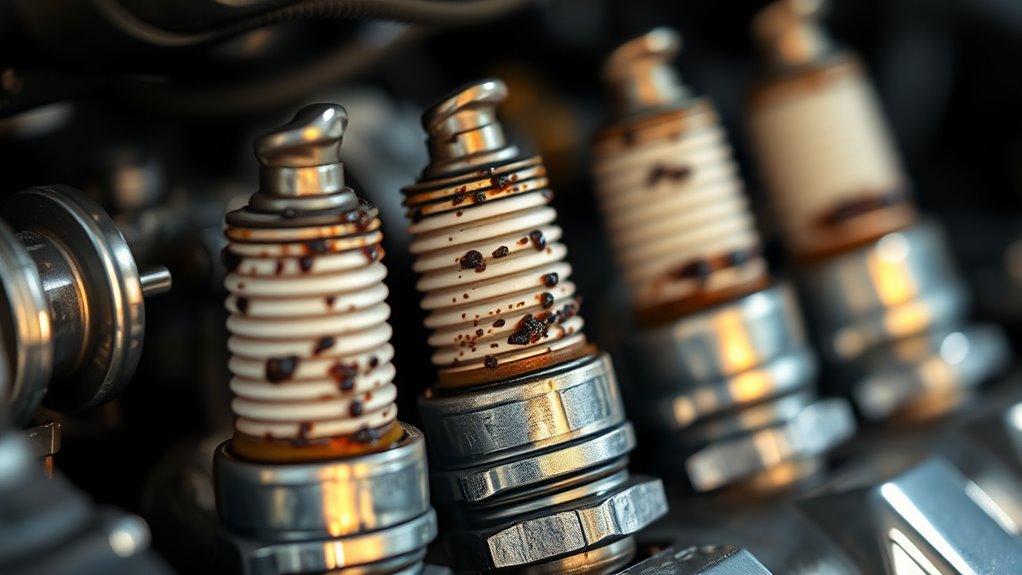
Wet spark plugs happen when extra fuel or oil contaminate the electrode area, making it hard for the spark to ignite properly. This can happen if spark plug materials wear out or are incompatible, trapping debris or oil around the electrodes.
Wet spark plugs indicate fuel or oil contamination, hindering proper ignition and causing engine trouble.
If the spark plugs aren’t made from durable materials, they’re more likely to gather fuel or oil, leading to wetness. Ignition timing also matters; if it’s off, the spark might fire at the wrong moment, causing unburned fuel to pool around the electrodes.
You can spot wet spark plugs if they look shiny, are coated with fuel or oil, and often smell like gasoline. Signs include difficulty starting the engine or rough running. If you pull out a spark plug and see it’s wet, that’s a clear sign of contamination.
Using proper spark plugs with the right materials and keeping the ignition timing correct helps prevent this. It ensures a clean, ignitable spark, reducing the chances of wetness and related issues.
How Wet Spark Plugs Lead to Engine No-Start Problems
When spark plugs get contaminated with excess fuel or oil, they become wet. This wetness can stop the ignition system from producing a strong enough spark.
A weak spark makes it harder for your engine to fire correctly. Wet plugs can also create compression problems because the extra fuel forms a barrier that blocks proper combustion.
If the spark isn’t strong enough because of the wetness, the engine might not reach the right compression levels to start. Plus, the fuel and oil films on the plugs can disperse ignition energy, which slows down or stops combustion.
As a result, your engine might not start at all or run very roughly once it does. Wet spark plugs mess with the timing and compression needed for smooth engine operation.
To fix this, you’ll need to clean or replace the plugs and check for underlying issues like faulty ignition timing or internal leaks causing the wetness.
How to Visually Inspect Your Spark Plugs for Wetness and Fouling
To see if your spark plugs are wet or fouled, carefully remove one from the engine when it’s cool. Look at the insulator and electrode for any signs of moisture, oil, or carbon deposits.
Wetness usually looks like a shiny film on the plug, while fouling appears as black, oily, or soot-covered buildup. Pay attention to the coatings—they can tell you a lot about your engine’s health.
Fouling can mess with ignition timing and spark efficiency, which may cause misfires or even prevent the engine from starting.
Here’s a quick visualization:
| Wetness | Fouling Symptoms | Causes |
|---|---|---|
| Shiny, damp | Black, oily deposits | Rich fuel mixture, oil leak |
| Sticky residue | Carbon build-up | Poor fuel quality |
| Moisture on electrode | Worn or damaged coatings | Ignition timing issues |
How to Tell If Your Spark Plugs Are Flooded or Fouled
If your engine is having trouble starting or runs rough, your spark plugs might be flooded or fouled. To check, start by inspecting the spark plug’s tip—if it’s covered in a thick, oily, or black soot-like substance, it’s probably fouled.
Fouling often happens due to oil leaks, too-rich fuel mixtures, or carbon buildup. Spark plug materials like platinum, iridium, or copper react differently to these deposits, so keep that in mind. Flooded plugs occur when excess fuel fills the combustion chamber and prevents proper spark ignition.
You might notice a wet, shiny look on the spark plug tip, or the plug might be soaked in fuel or oil. Removing and closely inspecting the plug will show if it’s covered in debris or moisture. Just remember, fouling and flooding both make it hard for your engine to start or run smoothly because they disrupt the spark’s ability to ignite the fuel-air mixture.
How to Test Spark Plugs to Confirm Wet or Fouled Conditions
Sure! Here’s the revised version with a more conversational tone:
—
If you’re trying to figure out whether your spark plugs are wet or fouled, the first step is to give them a good visual look. Check for any signs of oil or carbon buildup—that can tell you a lot about what’s going on.
Next, you can do a spark test. Just see if the plug kicks out a strong, steady spark. If it’s weak or inconsistent, that might be part of the problem. Also, look for any fuel residue on the plug—if you see that, your engine might be flooding or having incomplete combustion issues.
These simple checks can really help you identify the issue quickly, so you know exactly what needs fixing.
Visual Inspection Techniques
A thorough visual inspection is the first step in diagnosing wet or fouled spark plugs. Carefully remove the spark plugs and check their condition.
Look for signs of wetness, like oil, fuel, or coolant on the plug tip or insulator. Fouled plugs often have carbon buildup or a black, oily coating.
Check the electrode for erosion or damage. If you’re thinking about cleaning the spark plugs, do so gently with a wire brush or appropriate cleaner. Replace them if they’re heavily fouled.
Also, verify the spark plug’s gap because improper ignition timing can cause abnormal combustion and fouling.
A quick visual check helps you spot issues fast and decide if cleaning, replacing, or further testing is needed to fix the no-start problem.
Performing Spark Tests
Wondering if your spark plugs are truly firing? Doing a spark test can help you see if they’re wet, fouled, or igniting properly.
To do this, remove a spark plug and reconnect it to the ignition wire. Hold the metal shell close to a grounded metal surface, then crank the engine.
You should see a strong, consistent spark. If the spark is weak or absent, that’s a sign something’s wrong.
If the spark isn’t up to par, consider cleaning your spark plugs or checking your ignition timing. Proper timing makes sure plugs fire at the right moment and helps prevent fouling.
Regular spark tests can help you catch issues early, saving you time and effort. Use this method to check your spark plugs before diving into other troubleshooting steps.
Analyzing Fuel Residue
When you take out a spark plug and look at its tip closely, you can learn a lot from the residue. If it’s wet and shiny, that usually means unburned fuel is present. This might signal engine flooding or incorrect ignition timing.
Fouled plugs with thick, dry black carbon buildup suggest incomplete combustion or oil getting into the mix. To be sure, smell the residue—if it smells like gasoline, that confirms unburned fuel.
Adjusting the ignition timing might help improve how the engine burns fuel, reducing residue build-up. Proper diagnosis involves checking for fuel leaks into the cylinders or timing issues, as both can cause wet, fouled plugs.
Getting this right is key to figuring out why the engine won’t start and fixing the problem efficiently.
Quick Fixes for Wet or Flooded Spark Plugs: What You Can Do Now
If your spark plugs are wet or flooded, acting quickly can often save the day. First, remove the affected spark plugs and take a look at them. If they’re soaked, carefully dry them with a clean cloth.
To prevent more flooding, consider turning off the ignition coil or disconnecting it temporarily. Doing a compression test can help you see if any internal engine damage caused the flooding.
You can also try cranking the engine without pressing the accelerator to vaporize any excess fuel. For more serious issues, replacing the spark plugs and making sure the ignition coil is working properly can boost your chances of starting.
Here’s a quick guide:
| Step | What to Do | Important Tip |
|---|---|---|
| Inspect spark plugs | Remove and check if they’re wet or fouled | Dry or replace as needed |
| Disable ignition coil | Disconnect to avoid sparking during drying | Prevent electrical problems |
| Crank engine briefly | Turn it over to burn off excess fuel | Don’t crank for too long |
| Check compression | Run a test to see how healthy the engine is | Watch for signs of low compression |
| Reinstall spark plugs | Once they’re dry, put them back in and try starting | Make sure they’re torqued properly |
This quick approach can often clear up minor flooding problems easily.
Step-by-Step Guide to Clearing Wet Spark Plugs and Restarting Your Engine
First things first, you want to figure out which spark plugs are wet. Once you’ve got that sorted, gently dry them off and take a good look to make sure they’re not damaged. After they’ve been cleaned and dried, you can go ahead and restart your engine. Just make sure you keep an eye on how it’s running afterward—pay attention to any unusual sounds or performance issues. Watching closely will help you figure out if everything’s back to normal or if you need to do more repairs.
Identify Wet Spark Plugs
Wet spark plugs are a clear sign that your engine is having trouble starting, often due to fuel or oil fouling. To spot them, take out the spark plugs and check their coatings.
Wetness usually means there’s excess fuel or oil on the electrode, which can mess up the sparking process. Look for fouling signs like black, oily deposits, or a shiny, wet surface.
Properly identifying wet plugs also means making sure your ignition timing is correct. Mistiming can cause incomplete combustion and lead to wet spark plugs.
When you examine them, pay attention to the color and condition of the plugs. Don’t put faulty plugs back in, as they could cause further issues.
Accurate identification is key for deciding whether cleaning or replacing them is necessary. Doing so will bring you closer to fixing the starting problem.
Dry and Inspect Correctly
After identifying that your spark plugs are wet, the next step is to properly dry and inspect them to see if they’re good for reuse or need replacing. Carefully remove the plugs and clean them if they look dirty or oily, as this can mess with proper combustion.
Use a wire brush or a spark plug cleaning tool to clear off debris. Once they’re dry, inspect the electrodes and insulator for any damage or signs of wear. Conduct a combustion analysis to look for fouling or carbon buildup, which might point to underlying engine problems.
If the spark plug shows excessive wear, cracks, or persistent fouling even after cleaning, it’s best to replace it. Proper drying and thorough inspection help you accurately determine whether the plugs are still effective or need new ones.
Restart and Monitor Engine
Once you’ve dried and inspected your spark plugs, it’s time to restart your engine carefully. Turn the key or press the start button, and listen for a steady engine idle.
Monitor for signs of engine overheating, like unusual heat or smells. These can indicate improper combustion after wet plugs. Keep an eye on oil consumption too.
Excessive oil use might signal internal issues caused by wet spark plugs. Carefully observe your engine’s behavior to confirm everything’s back to normal.
| Action | Observation |
|---|---|
| Restart engine | Engine starts smoothly without misfiring |
| Monitor engine temperature | Watch for overheating and abnormal heat signs |
| Listen for irregular sounds | Possible sign of incomplete combustion or misfiring |
| Check oil levels | Ensure oil consumption stays within normal limits |
Being attentive helps confirm the fix and prevents any further damage.
When to Replace Spark Plugs for Reliable Starts
Knowing when to replace your spark plugs is key to making sure your vehicle starts reliably every time. If they’re worn or fouled, they won’t ignite the fuel-air mixture efficiently, which can cause starting problems.
Replacing worn spark plugs ensures reliable starts and smooth engine performance.
You should think about replacing them if you notice trouble starting, rough idling, or poor acceleration. The material of your spark plugs, like platinum, iridium, or copper, affects how long they last.
Platinum and iridium plugs tend to last longer—around 60,000 to 100,000 miles—while copper ones might need replacing closer to 20,000 miles. Ignition timing also impacts wear; incorrect timing can cause premature damage.
If your plugs have exceeded their recommended miles or show signs of damage or fouling, replacing them is essential for reliable starts. Regular inspections and timely replacements help keep your engine running smoothly and avoid issues from worn or wet spark plugs.
Preventative Tips to Avoid Wet Spark Plug Problems in the Future
To avoid wet spark plug issues down the road, it’s a good idea to keep up with regular engine maintenance and make sure all parts are in good shape. This way, everything’s running smoothly and you’re less likely to run into problems.
Keeping an eye on your fuel intake is also important. Too much fuel can flood the plugs and cause problems, so try to avoid overfilling or misfiring that leads to excess fuel.
And of course, don’t forget about your spark plugs themselves—making sure they’re in good condition helps your engine run better and prevents them from getting wet or fouled.
Just sticking to these simple tips can really help cut down on wet plug problems in the future.
Regular Engine Maintenance
It’s also important to regularly check and replace a dirty or clogged air filter. A clean air filter ensures proper airflow, helping keep the right fuel-air mixture and preventing excess fuel from wetting the plugs.
Additionally, keeping your engine components well-maintained reduces the chance of unburned fuel reaching the spark plugs. Routine inspections and timely repairs help your engine run smoothly, lowering the risk of wet spark plugs and hard starting.
Regular maintenance not only helps prevent problems but also extends your engine’s lifespan and boosts overall reliability.
Proper Fuel Management
Ever wonder how proper fuel management can prevent wet spark plugs? Keeping good fuel efficiency helps your engine run smoothly and makes sure you use fuel wisely.
When you avoid using too much fuel, you lower the chances of excess fuel reaching the spark plug, which can make it wet. Managing your fuel mixture properly promotes better combustion, meaning your engine burns fuel more completely.
This helps prevent unburned fuel from pooling on the spark plug, reducing the risk of wetness. Regularly fueling with quality gasoline and avoiding sudden acceleration also support ideal combustion.
Consistent tune-ups and paying attention to your fuel system health prevent your engine from running too rich or too lean. This ultimately keeps your spark plugs dry, ensuring reliable starts and smooth engine performance.
Maintain Spark Plug Integrity
Maintaining your spark plugs is key to preventing them from getting wet and causing misfires. Proper care helps keep their coatings intact and reduces electrode corrosion.
Here are some tips to keep your spark plugs in good shape:
- Regularly check the coatings for signs of wear or damage. Good coatings shield against moisture and rust.
- When installing, apply anti-seize compound to prevent electrode corrosion and make future removal easier.
- Follow the manufacturer’s recommended intervals for replacement to avoid buildup, corrosion, or damaged coatings that can cause wet plugs.
When to Seek Professional Help for Spark Plug Troubleshooting
While many spark plug issues can be diagnosed and fixed at home, sometimes you need professional help. If you notice persistent problems like misfires, rough idling, or plugs that stay wet, a pro can properly identify the underlying cause. This is especially true if there are issues with coatings or the ignition system.
Consider seeking help if you see any of these symptoms:
| Symptom | Cause | Action Needed |
|---|---|---|
| Persistent wet plugs | Fuel leaks or ignition problems | Get a professional diagnosis |
| Engine misfires | Ignition system trouble | Have an expert inspect it |
| Excessive spark plug wear | Coatings breaking down | Needs a detailed check |
| No improvement after cleaning | Electrical issues underneath | Get professional troubleshooting |
| Sudden performance loss | Serious ignition or spark plug damage | Consult an expert |
Knowing when to call in a pro helps keep your engine running safely and reliably.
Frequently Asked Questions
Can a Wet Spark Plug Cause Engine Misfires?
Yes, a wet spark plug can cause engine misfires. When your spark plug is wet, it struggles to produce a strong spark because of excess fuel or oil, which disrupts the ignition system.
This makes it harder for the engine to ignite the fuel properly, leading to misfires. Checking the fuel delivery system and looking for leaks of fuel or oil can help diagnose the problem.
Making sure your spark plug fires correctly will help keep your engine running smoothly.
How Long Should I Dry or Clean Wet Spark Plugs?
You should dry or clean wet spark plugs immediately to ensure proper ignition.
Gently remove the plug and wipe it with a clean cloth or use compressed air to blow away moisture.
For thorough drying, let the plug sit in a warm, dry spot or use a hairdryer on low heat.
Making sure the spark plug is dry before reinstalling helps prevent misfires and keeps your engine starting reliably.
Are Certain Engine Types More Prone to Wet Spark Plug Issues?
Yes, some engine types are more prone to wet spark plug issues, especially those with complex designs or specific fuel systems.
Carbureted engines, for example, tend to have more wet plugs because they can flood easily if the fuel system malfunctions.
Direct injection engines also face unique challenges, as their design can cause fuel to pool on the spark plugs.
Regular maintenance helps prevent these problems by making sure the fuel system works properly.
Will Using Starting Fluid Help With Wet Spark Plugs?
Think of starting fluid as a spark igniting life into a dormant engine. It can temporarily help a wet spark plug, but it doesn’t fix the root cause.
If your fuel system is delivering too much fuel or your ignition timing is off, starting fluid might help create a spark where there was none before.
But relying on it isn’t a real fix. You need to properly diagnose fuel delivery issues and make timing adjustments for a long-term solution.
How Does Oil Contamination Affect Wet or Fouled Spark Plugs?
Oil contamination happens when oil leaks into the combustion chamber and fouls your spark plugs badly.
This oil makes the plugs wet or greasy, which prevents them from sparking properly.
The oil acts like a barrier and blocks ignition, making it harder for the engine to start.
To fix this, you need to find and stop the oil leak, then clean or replace the affected spark plugs for smooth engine performance.
Conclusion
Remember, a stitch in time saves nine—address wet spark plug issues promptly to keep your engine running smoothly. Regular inspections and maintenance can prevent no-start headaches down the road.
If you’re unsure or the problem persists, don’t hesitate to seek professional help. Taking care of your spark plugs now guarantees trouble-free starts later because a well-maintained engine is the key to reliable performance.
Stay proactive, and your vehicle will thank you!