
5W40 vs 10W40: Number Definition, Differences, Similarities & Better Choice
Many drivers find choosing the right engine oil confusing, especially when there are options like 5W40 and 10W40 out there. You’re not alone—designing the best choice for your car can feel overwhelming. Understanding these oils better can help you make smarter decisions for your engine’s health and performance.
The numbers in 5W40 and 10W40 oils show their viscosity, affecting cold-start and high-temperature performance. 5W40 flows better in cold weather, making it ideal for colder climates, while 10W40 suits moderate to hot environments with thicker protection at high temperatures.
Choosing the right oil depends on your climate and vehicle needs. But understanding these differences guarantees better engine protection and efficiency.
Keep exploring to find out which option fits best for your driving conditions.
Key Takeaways
- 5W40 has a lower cold-start viscosity, so it flows better in winter compared to 10W40. This means easier starts and less engine wear when it’s cold.
- Both oils have the same high-temperature viscosity rating of 40, so they offer similar protection when the engine is warm.
- 5W40 is better suited for colder climates, helping your engine start quickly and reducing wear during winter months.
- On the other hand, 10W40 is usually more affordable and works well in moderate to hot climates for everyday driving.
- Which one to choose depends on your climate, your vehicle’s needs, and driving conditions. Always check your manufacturer’s recommendations.
What Do the Numbers in Motor Oil Mean?
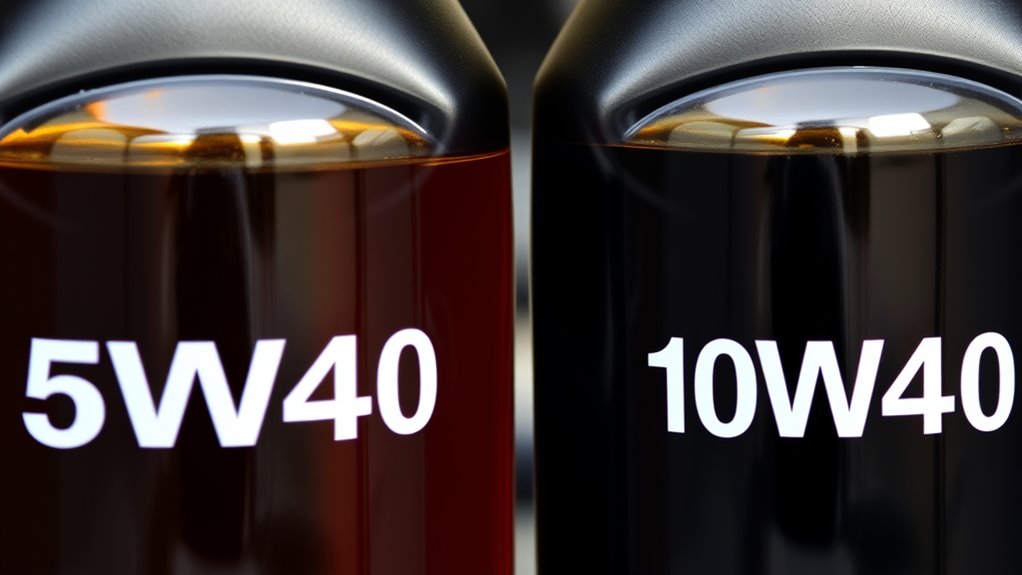
The numbers on motor oil labels, like 5W40 or 10W40, tell you about the oil’s viscosity rating. This indicates how the oil performs at different temperatures. The first number, followed by a W (winter), shows how well the oil flows in cold conditions, affecting cold-start performance.
The lower the number before the W, the better the oil flows when it’s cold. The second number reveals how the oil behaves at engine operating temperatures and influences how durable the oil is. Oils with higher viscosity can provide a stronger film to protect engine parts under stress.
Viscosity modifiers are key players in keeping the oil’s thickness stable across temperature changes. They help the oil stay consistent, so your engine stays protected and runs smoothly. Understanding these numbers helps you pick the best oil for your engine in any driving situation.
Viscosity and Cold-Start Performance of 5W40 vs 10W40
You’ll notice that 5W40 oil flows more easily when you start your engine in cold weather compared to 10W40. That’s because of its lower winter rating, which helps your engine warm up faster and get the lubrication it needs right from the start. Once the engine warms up and temperatures go up, both oils perform similarly. But if you’re driving in colder conditions, 5W40 definitely has the edge.
Cold-Start Viscosity Differences
During cold starts, the viscosity difference between 5W40 and 10W40 oils really impacts engine performance. At low temperatures, 5W40, often made from synthetic blends with advanced additives, flows more easily. This means quicker lubrication and less engine wear.
In comparison, 10W40 is thicker, which can cause more resistance during startup. Imagine these scenarios:
- Quick start — 5W40’s lower viscosity helps your engine turn over smoothly.
- Reduced strain — synthetic blends with special additives protect engine parts during cold starts.
- Faster circulation — the thinner oil reaches critical components sooner, offering better early protection.
These viscosity differences can really influence how your engine responds in colder weather, making 5W40 a better choice where cold starts happen often and quick lubrication is key.
Engine Warm-Up Efficiency
Although both 5W40 and 10W40 oils are designed to protect your engine across different temperatures, their effectiveness during warm-up phases varies quite a bit.
5W40 oil flows faster at cold start, reducing stress on engine parts and ensuring quicker lubrication. This better cold-start performance helps improve engine durability over time by minimizing wear caused by metal-to-metal contact during those critical warm-up moments.
In contrast, 10W40 takes longer to circulate fully, which can put extra strain on engine components during initial ignition. Over time, the quicker flow of 5W40 helps extend the oil’s lifespan and keeps engine performance at a higher level.
If engine durability with efficient warm-up is your priority, 5W40 offers a clear advantage. It provides excellent flow during those essential startup periods, helping your engine run smoothly from the get-go.
Temperature-Related Flow Performance
When it comes to flow performance at different temperatures, viscosity is key in how fast the oil reaches engine parts.
5W40 and 10W40 oils differ a lot, especially in cold weather. In winter, 5W40’s lower cold-start viscosity helps it flow quicker, which means less engine wear during startup.
Picture this:
- Oil quickly coating pistons like a smooth, thin layer.
- Engine parts sliding smoothly into place with less delay.
- Cold starts feeling faster and more even.
This better cold flow supports the oil’s lifespan, reducing stress on engine parts through seasonal changes.
Which Climate Is Better Suited for 5W40 or 10W40?
Your car’s ideal oil choice really depends on the kind of temperatures it’s going to be facing. If you live somewhere with colder weather, like chilly winters, 5W40 is usually the way to go because it handles low temperatures better. It flows more easily when it’s cold, helping your engine start up smoothly.
On the other hand, if your climate tends to be milder or warmer, then 10W40 might be a better fit. It’s designed for higher temperatures and provides good protection in those conditions. Knowing what kind of climate you’re in is super helpful for choosing the right oil to keep your engine running smoothly all year round.
Optimal Temperature Range
Have you ever wondered which oil viscosity works best across different temperatures? 5W40 and 10W40 are designed for specific climates, so choosing the right one depends on where you live.
5W40 is better suited for cold weather because its low winter rating helps it flow easily at low temperatures, ensuring your engine gets proper lubrication during cold starts.
Think about these factors:
- In freezing weather, 5W40 keeps its viscosity, helping prevent engine wear.
- In moderate climates, both oils are stable, but 10W40 might offer slightly better temperature stability.
- Hotter environments need high-temperature viscosity, so 10W40 can provide good protection with its thicker consistency in high heat.
Climate Adaptability
Choosing the right oil viscosity depends heavily on your local climate, as it influences how well the oil performs under varying temperature conditions. 5W40 is designed to do well in colder climates, where its ability to flow easily at low temperatures keeps your engine lubricated during cold starts. It also helps reduce engine emissions by ensuring efficient combustion from the start.
Conversely, 10W40 is better suited for warmer climates, where the oil’s thicker consistency at operating temperature offers better protection. In colder areas, using 10W40 may lead to more oil aging and thicker cold start oil, which can impair flow and increase engine wear.
Selecting the right viscosity improves overall engine health, minimizes oil aging, and ensures peak performance regardless of the climate.
How Do These Oils Protect Your Engine and Extend Its Life?
Since these oils flow quickly at start-up and keep a proper film on engine parts, they effectively reduce friction and wear. This helps protect your engine and extend its lifespan. They also create a barrier that prevents metal-to-metal contact, lowering the risk of damage over time. Using quality oils can also reduce emissions, which is better for the environment.
High-quality engine oils reduce friction, protect parts, and lower emissions for a longer-lasting, eco-friendly engine.
To get the most benefits, consider these points:
- Consistent Lubrication: It keeps engine parts moving smoothly, preventing overheating and corrosion.
- Protection During Cold Starts: The right viscosity makes starting easier and reduces stress on engine parts.
- Storage Considerations: Store oils properly so they stay effective longer. This reduces environmental impact from degraded oils and makes disposal safer.
Fuel Efficiency: Comparing 5W40 and 10W40
If you’re looking to improve your fuel economy, understanding how 5W40 and 10W40 oils affect efficiency is key. Both oils can impact fuel savings and engine wear, especially in different temperatures.
Generally, 5W40 performs better during cold starts. It gets to circulate faster, reducing engine strain and boosting fuel efficiency early on.
On the other hand, 10W40 might save slightly less fuel but still provides reliable lubrication when the engine is warm.
Here’s a quick comparison:
| Feature | 5W40 | 10W40 |
|---|---|---|
| Cold-start flow | Quicker, helps save fuel at start | Slower, may use a bit more fuel |
| Engine wear | Less during cold starts | Slightly more at cold starts |
| Operating temperature | Suitable for many climates | Better for warmer climates |
| Overall efficiency | Slightly better in cold weather | Good for moderate temps |
Choosing 5W40 could help you get the most out of your fuel and protect your engine during cold starts.
Which Vehicles Benefit Most From 5W40 or 10W40?
If you’re driving a high-performance vehicle or often find yourself in really extreme weather—like super hot summers or icy winters—then picking the right oil makes a big difference. Both 5W40 and 10W40 are great options, but they each shine in different situations.
High-Performance Vehicles
Wondering which vehicles benefit most from using 5W40 or 10W40 oil? High-performance vehicles like sports cars and turbocharged engines often see the biggest advantages. These engines run under heavy conditions, so good lubrication is key.
You might also think about electric vehicles (EVs), which sometimes use special lubricants made for electric motors. Here are three scenarios to help you visualize:
- You’re driving a turbocharged muscle car, where high viscosity helps keep engine pressure stable.
- Your high-performance motorcycle depends on premium oils for quick acceleration and smooth riding.
- Electric vehicle maintenance might require specialized lubricants to keep the motor running efficiently, even if traditional oil isn’t necessary.
Both oils support engines under stress, but choosing the right one can really enhance your vehicle’s performance.
Extreme Climate Conditions
Extreme climates pose unique challenges for your vehicle’s engine, making the choice between 5W40 and 10W40 particularly important.
In cold environments, 5W40 offers better cold-start performance, helping your battery perform effectively and reducing engine wear. Its thin viscosity at low temperatures ensures easier starts and improved fuel economy by reducing resistance.
Conversely, in hot climates, 10W40 provides a thicker film that safeguards against engine wear during high temperatures. However, it might slightly compromise fuel efficiency.
Vehicles operating in extreme cold or heat benefit most from 5W40’s versatility, especially if you want to maximize battery performance and fuel savings. Regardless of climate, selecting the right oil helps your engine run smoothly and efficiently, even under stressful conditions.
How to Follow Manufacturer Recommendations for Motor Oil
To make sure your engine runs smoothly and lasts longer, it’s important to follow the manufacturer’s recommendations when choosing motor oil. This helps you get the right viscosity and oil type for your engine’s needs, supporting the oil’s lifespan. Always check your vehicle’s manual for specific guidelines to avoid early wear or damage.
Following manufacturer guidelines ensures optimal engine performance and longevity.
Here are three simple steps to follow:
- Review the manual: It tells you the preferred oil viscosity and specifications for top performance.
- Consider brand reputation: Pick reputable brands known for quality and reliability, as they often meet or surpass manufacturer standards.
- Watch for updates: Stay updated on any manufacturer advisories or new recommendations to keep your engine in great shape.
Cost Comparison: Is 5W40 or 10W40 More Economical?
When comparing the costs of 5W40 and 10W40 motor oils, it’s helpful to look beyond just the upfront price. Oil formulation influences cost, but viscosity standards also matter.
5W40 typically costs a bit more because it’s formulated for broader temperature ranges. This usually means higher-quality ingredients. On the other hand, 10W40 oils may be be cheaper because their formulation is simpler and sticks to traditional standards.
But the initial cost isn’t the whole story. Think about how often you need to change the oil. It depends on your engine and the oil quality. High-quality oils might cost more upfront but can last longer and save you money over time.
Common Myths About 5W40 and 10W40 Debunked
Many myths still surround 5W40 and 10W40 motor oils, leading car owners to make decisions based on misconceptions. One common myth is that these oils are interchangeable regardless of engine design. In reality, some engines need specific oils to perform well, and using the wrong type can cause damage.
Another myth is that premium oil brands always guarantee better protection. But brand reputation doesn’t always match what your engine actually needs. Choosing the right oil depends more on its properties than just the brand name.
Many believe that thick oils like 10W40 are only for older engines. But modern engine design often benefits from different viscosities depending on operating conditions. Think of these myths as an outdated view of engine care or a one-size-fits-all approach, which just isn’t accurate.
Having a clear understanding helps you pick oils that genuinely match your engine’s needs, regardless of brand reputation. This ensures better performance and longer engine life.
How to Choose the Right Motor Oil for Your Needs
Choosing the right motor oil starts with understanding your vehicle’s specific requirements. Check your owner’s manual to find the recommended oil viscosity and specifications tailored to your engine.
Consider your driving conditions. If you drive in extreme temperatures, opt for oils like 5W40 or 10W40 that perform well in cold starts and high heat.
Regular oil changes are key to keeping your engine in good shape, so pick an oil that matches your car’s maintenance schedule.
Don’t forget about additives or synthetic options—they can provide better protection and performance for your engine.
If your vehicle is older or carries heavy loads, slightly thicker oils might be a good idea. Meanwhile, newer engines often run best on standard or synthetic oils that flow easily.
In the end, making an informed choice keeps your engine lubricated, helps reduce wear, and improves overall efficiency.
Always follow the manufacturer’s recommendations to ensure your engine stays healthy and runs smoothly.
Frequently Asked Questions
Can Switching Between 5W40 and 10W40 Harm My Engine?
Switching between 5W40 and 10W40 usually won’t harm your engine if they match your vehicle’s specifications.
That said, mismatched oil viscosities can influence engine performance or cause wear, especially in extreme temperatures.
Always check your owner’s manual for the recommended oil viscosity and make sure your engine is compatible.
If you’re unsure, it’s a good idea to ask a mechanic.
Using the right oil helps keep your engine healthy and running smoothly.
How Often Should I Change Oil When Using 5W40 or 10W40?
You should change your oil every 5,000 to 7,500 miles when using 5W40 or 10W40 to guarantee peak engine performance.
If you do a lot of city driving, sticking to the shorter interval helps keep your oil fresh and your engine running smoothly.
Regular oil changes prevent buildup and help protect your engine, especially in different temperatures and driving conditions.
Are Synthetic Versions of 5W40 and 10W40 Available?
Yes, synthetic versions of 5W40 and 10W40 are available. These synthetic oils provide better fuel economy, engine protection, and longer-lasting performance compared to conventional oils.
You can find synthetic options that stay consistent in viscosity and performance even in extreme temperatures. Switching to synthetic oil can also extend your oil change intervals.
This means you’ll get more efficiency and better protection for your engine, especially if you want peak performance in different driving conditions.
Does Using 5W40 or 10W40 Impact My Vehicle’s Warranty?
Think of oil viscosity like a tailor fitting your engine’s wardrobe. Using 5W40 or 10W40 can impact your vehicle’s warranty.
If you stick to the recommended oil, your engine runs smoothly, and your warranty stays intact. But choosing a different viscosity might be seen as neglecting your engine’s needs.
That could risk your warranty coverage. Always check your vehicle’s manual to make sure your oil choice supports your warranty and keeps your engine running well.
Can I Mix 5W40 and 10W40 in the Same Engine?
You can mix 5W40 and 10W40 oils in your engine, but it’s not guaranteed to give you the best performance. Different viscosities can change how the oil flows and how well it protects your engine, especially in extreme temperatures.
Combining them might cause the oil’s viscosity to become inconsistent, which can impact lubrication and the overall lifespan of your engine. To keep your engine running smoothly, it’s best to stick to one type of oil.
Always check your owner’s manual for the recommended oil viscosity. Using the right one helps ensure optimal performance and engine protection.
Conclusion
Choosing between 5W40 and 10W40 is like picking the right compass for your journey—each one guides your engine’s health through different terrains.
Trust your manufacturer’s recommendations and pay attention to your engine’s signals. The right oil helps you avoid breakdowns, save fuel, and prevent early wear.
Remember, a smooth ride isn’t just about reaching your destination but about following the right guidance along the way.
When it comes to selecting the best engine oil, understanding the differences between 5W40 and 10W40 can make all the difference in keeping your engine running smoothly.