Performance Oil Filters vs Regular: Which Is Best for Your Engine?
Are you tired of worrying about engine wear and constant repairs? You’re not alone—many car owners struggle with finding the right oil filter to keep their engines running smoothly.
If you want better engine protection, performance oil filters are the way to go. They use higher-quality media to trap smaller particles, last longer, and resist harsh conditions better than regular filters.
This helps prevent engine wear, improves efficiency, and reduces repairs over time.
While they cost more upfront, they provide added value for demanding driving environments. Keep investigating to uncover how choosing the right filter can improve your engine’s longevity and performance.
Key Takeaways
- Performance oil filters provide better filtration and last longer, making them great for high-stress driving and tough engine conditions.
- Regular filters are budget-friendly and work well for everyday city driving with less engine strain.
- The higher-quality media in performance filters allows for better oil flow and offers stronger protection for your engine parts.
- If you do lots of aggressive driving, drive in dusty areas, or take short trips often, choosing a performance filter helps keep your engine protected.
- Regular filters are enough for basic, light driving and cost less upfront, giving you decent protection for routine use.
How Oil Filters Protect Your Engine
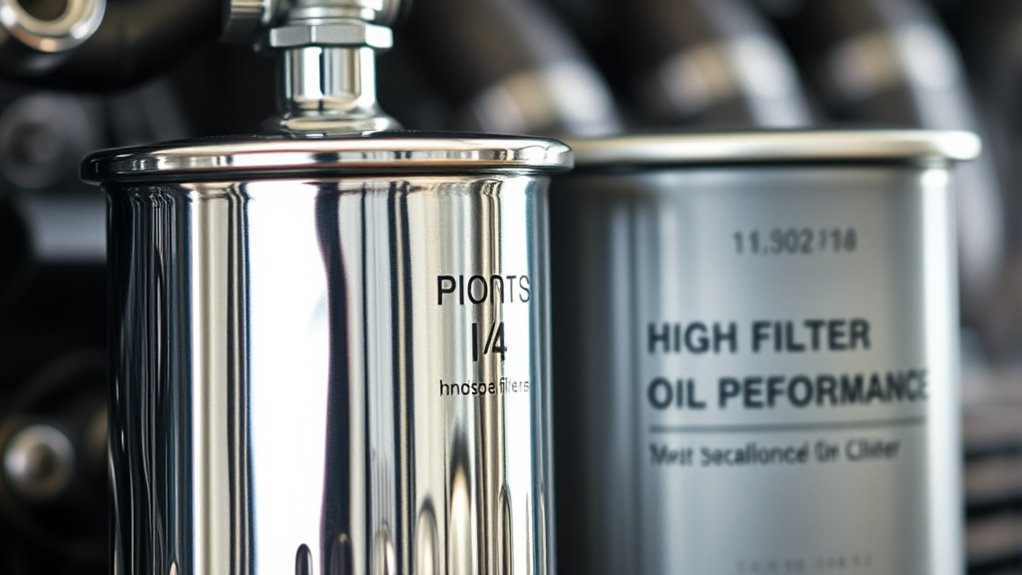
Oil filters play a crucial role in protecting your engine by removing contaminants from the oil before it circulates through the engine components. Clean oil keeps your engine running smoothly and helps improve fuel efficiency because the engine doesn’t have to work as hard.
When an oil filter effectively traps dirt, metal particles, and sludge, it prevents these harmful particles from causing wear or clogging essential parts. This not only prolongs your engine’s lifespan but also helps reduce emissions by ensuring the engine burns cleaner fuel.
A high-quality oil filter ensures that fresh oil flows freely, maintaining optimal lubrication. Better lubrication reduces friction and prevents overheating, which further supports lower emissions.
Regularly replacing your oil filter guarantees your engine stays efficient and environmentally friendly. Ultimately, a good oil filter is a key line of defense, safeguarding performance while contributing to better fuel economy and fewer emissions.
Key Differences Between Performance and Regular Oil Filters
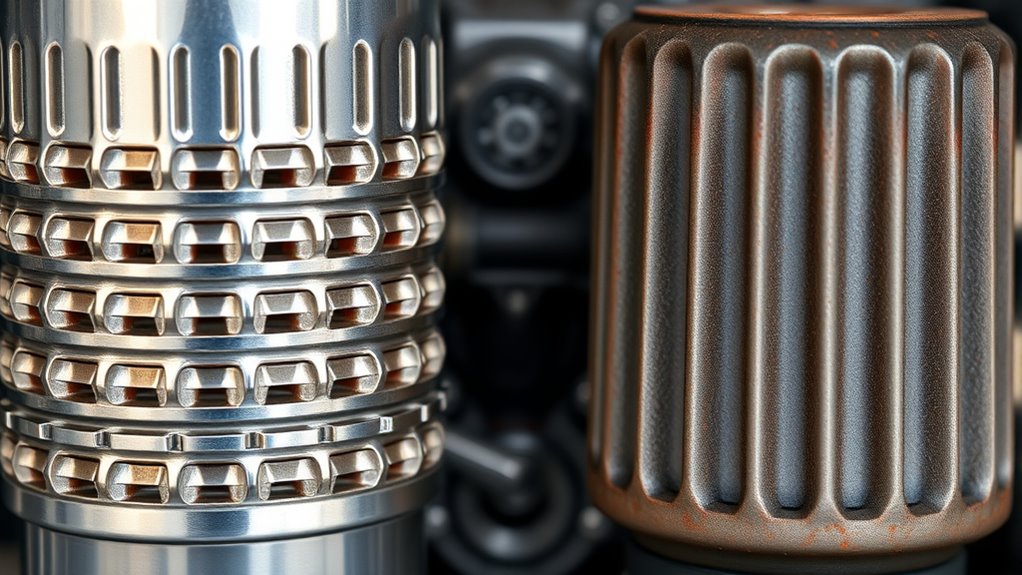
While regular oil filters are designed to meet basic engine protection needs, performance oil filters go a step further by offering improved filtration and durability. The key difference is in the filter materials used; performance filters typically use higher-quality media that captures smaller particles more effectively, helping to prevent engine wear.
These filters often feature advanced synthetic or glass filter media, which increases flow rates without sacrificing filtration capacity. Manufacturing standards also set performance filters apart, as they are built to stricter quality criteria to ensure consistency and strength under demanding conditions.
Performance filters use advanced synthetic or glass media for better flow and filtration under tough conditions.
Regular filters usually adhere to minimum industry standards, making them suitable for everyday driving. Performance filters, however, undergo more rigorous testing and are built to higher standards to handle the stresses of high-performance engines.
This results in longer-lasting filters with superior filtration efficiency, providing better protection for your engine over time.
Are Performance Oil Filters Worth the Extra Cost?
Deciding whether performance oil filters are worth the extra cost depends on your vehicle’s needs and your driving habits. If you care about fuel efficiency, noise reduction, and getting the best out of your engine, a performance filter could be a smart move.
They often offer better filtration, protecting your engine from harmful particles and helping it last longer. You might also notice improved fuel efficiency, which can save you money over time. Plus, they tend to run quieter, making your drives more comfortable.
Another benefit is engine responsiveness—giving you smoother acceleration and a better overall driving experience. While these filters might cost more upfront, the advantages can lead to better engine health and efficiency down the road.
If you mostly take short trips or drive under normal conditions, regular filters might do the job. But if you’re into demanding drives or long distances, investing in a performance filter might be worth it. Ultimately, it’s about how much you value performance and long-term savings.
Benefits of Using Performance Oil Filters for Engine Longevity
Using performance oil filters can really make a difference. They do a better job of trapping tiny particles that regular filters might miss, which helps keep your engine cleaner. When your engine stays cleaner, it runs smoother and more efficiently for a longer time.
Enhanced Filtration Efficiency
Performance oil filters provide better filtration efficiency, catching smaller particles that can cause wear and damage to your engine over time. Thanks to advanced technology and higher-quality materials, they remove debris more effectively. This means:
- You protect your engine’s vital parts from unnecessary stress.
- You lower the chances of costly repairs caused by particle buildup.
- You keep oil flowing freely, preventing your engine from feeling sluggish.
- You extend the life of your engine’s internal components.
This improved filtration results in cleaner oil circulating through your engine, helping it run smoothly for longer. Investing in a performance oil filter is a smart move to protect your engine’s health and keep it performing at its best for years to come.
Extended Engine Life
Because they filter out smaller particles more effectively, performance oil filters help keep your engine components cleaner and less likely to wear out prematurely. They provide advanced filtration, which reduces engine stress and minimizes deposits that can cause damage over time.
When your engine stays cleaner, it runs more efficiently, boosting fuel efficiency and saving you money in the long run. Plus, with better filtration and smoother operation, you’ll notice less noise during startup and operation. That’s thanks to reduced vibrations and smoother oil flow.
Investing in a high-quality performance oil filter means fewer repairs, better engine protection, and extended longevity. This keeps your engine running reliably for years to come.
When Is a Regular Oil Filter Still a Good Choice?
There are still situations where a regular oil filter can serve you well, especially if your driving habits are straightforward and your vehicle isn’t subjected to extreme conditions. If your daily commute is short or you’re focused on maintaining fuel efficiency and keeping noise down, a regular oil filter might be enough. Consider these scenarios:
Regular oil filters are suitable for simple driving, short commutes, and maintaining efficiency without demanding conditions.
- Routine city driving – when fluids stay relatively clean.
- Minimal engine stress – avoiding heavy towing or racing.
- Cost-conscious maintenance – saving money while still providing basic protection.
- Long-term reliability – if your engine isn’t exposed to dirt or extreme heat.
In these cases, a regular oil filter supports smooth engine operation, helps sustain fuel efficiency, and keeps noise levels down. While performance filters are better under demanding conditions, regular filters still offer reliable protection when your driving is simple and predictable.
What Affects Your Oil Filter’s Performance and How to Improve It
Several factors directly influence how well your oil filter performs, impacting your engine’s protection and longevity. Key elements include oil filter upkeep, driving conditions, and filter quality.
Poor upkeep, like neglecting regular oil changes, causes sediment buildup, which reduces filtration efficiency. High engine noise often signals inadequate filtration, risking damage.
To improve performance, opt for quality filters suited to your driving habits. Regularly check and replace filters on schedule, and make sure they are properly installed. Avoid cheap or incompatible filters that might clog early.
Proper oil type and keeping the oil clean also support optimal filter function. Overall, paying attention to these factors helps your engine stay healthy and last longer.
How to Choose the Best Oil Filter for Your Driving Habits
When you’re trying to pick the best oil filter for your car, the first thing to think about is how often you actually drive and when you usually get your oil changed. If you’re someone who drives a lot or takes long trips frequently, you might want to go for a high-performance filter that can handle the extra workload.
Another important factor is your car’s condition and what it typically faces — like heavy loads or extreme temperatures. A more robust filter might be necessary if your engine often battles tough conditions. And of course, your driving style matters too. If you’re pretty aggressive on the road, pushing your engine hard, a durable and efficient filter is a smart choice to keep things running smoothly. On the flip side, if you’re more cautious and drive gently, your standard filter might do just fine.
Driving Frequency and Oil Change
Your driving habits directly influence how often you should change your oil and what type of filter best suits your needs. If you’re frequently caught in stop-and-go traffic or covering long-distance trips, you’ll need more frequent oil changes to protect your engine.
Think about these factors to match your driving style:
- Heavy city driving calls for quicker oil and filter replacements, especially if you notice more tire maintenance needs.
- Long highway trips allow for longer intervals, but don’s neglect your brake systems—they also need regular checks.
- Aggressive driving puts extra strain on your oil, so more frequent changes are a good idea.
- Regular short visits can cause buildup and degradation, making a high-performance filter essential.
Adjusting your oil change schedule helps keep your engine healthy and your vehicle running smoothly.
Engine Conditions and Filters
Engine conditions play an essential role in determining the ideal oil filter for your vehicle, especially considering your driving habits. If your engine runs hotter or experiences more wear, a high-performance filter can help maintain fuel efficiency by keeping contaminants out.
For engines that see frequent, short trips, a filter that handles higher debris levels is vital to prevent buildup that can reduce efficiency. Moreover, the right filter can minimize engine noise by ensuring proper oil flow and reducing pressure fluctuations.
Regular filters may struggle under demanding conditions, leading to decreased fuel economy and increased noise. Selecting a filter tailored to your engine’s specific needs will support optimal performance, fuel economy, and quieter operation, especially if your driving involves heavy loads or stop-and-go traffic.
Personal Driving Style Impact
Choosing the right oil filter depends heavily on how you drive. Your personal preferences and driving environments shape what’s best for your engine.
If you often hit the highway, a high-performance filter can handle constant, long-term stress. For city driving with frequent stop-and-go traffic, a filter with superior debris-catching ability might protect better.
Consider these factors:
- Do you value longevity or quick changes? Choose filters with longer lifespan for frequent use.
- Are you driving in dusty or harsh environments? Opt for heavy-duty, resistant filters.
- Do you prefer a smoother ride or aggressive performance? Performance filters suit thrill-seekers.
- How often do you change your oil? Regular changes may lessen the need for high-end filters.
Matching your personal driving style with the right filter keeps your engine healthier and boosts performance.
Tips for Installing Your Oil Filter Correctly
Installing your oil filter correctly is key to making sure your engine stays well-lubricated and doesn’t leak. First, make sure you have the right tools, like a filter wrench, to get a snug fit.
Before you put the new filter on, wipe the area where it will sit. Cleaning off dirt and old oil helps the filter last longer. Next, apply a thin layer of fresh oil to the rubber gasket on the filter. This helps create a good seal and makes removal easier later on.
Screw the filter on by hand until it’s snug. Then, tighten it an extra half-turn with your tool. Be careful not to over-tighten, as that can damage the gasket. Check the manufacturer’s specs for torque and filter size for the best results.
Proper installation keeps your filter secure while you’re driving. This prevents leaks and keeps your engine’s oil pressure just right. Using the right tools and following these steps helps your filter last longer and keeps your engine running smoothly.
Common Mistakes When Changing Your Oil Filter
A lot of people forget to lubricate the gasket when changing their oil filter, and that can lead to leaks down the line. It’s a simple step, but it makes a big difference. Also, make sure you’re using the right filter size—using one that’s too big or too small can cause issues with your engine’s performance.
Don’t forget to drain the oil properly before swapping out the filter. Skipping this step can cause old oil to mix with the new, which isn’t ideal. Paying attention to these little details will help you get a smooth, successful oil filter change every time.
Forgetting to Lubricate Gasket
Failing to lubricate the gasket on your new oil filter is a common mistake that can lead to leaks or even engine damage. Gasket neglect and lubrication oversight might seem minor, but they can cause serious issues down the line.
When you forget, you risk creating an uneven seal that allows oil to escape. This can lead to engine problems if left unchecked. You also increase the chance of the gasket tearing or cracking during installation.
Not lubricating the gasket can damage your engine because of inadequate oil pressure. It’s a small step that makes a big difference. Skipping it can result in costly repairs from preventable leaks.
Using Incorrect Filter Size
Have you ever noticed that using the wrong oil filter size can cause more problems than you expect? Incorrect sizing can lead to poor filter compatibility, risking leaks or improper sealing.
When you install a filter that’s too small, it may not fully cover the mounting surface, allowing dirt and debris to bypass the filter. On the other hand, a filter that’s too large might not fit properly, damaging the filter housing or creating a tight fit that restricts oil flow.
Always check your vehicle’s specifications and ensure the filter matches the manufacturer’s recommended size. Using the correct filter size guarantees proper fit and maximum filtration.
Avoid shortcuts, as incorrect sizing can jeopardize engine health and lead to costly repairs down the line.
Skipping Oil Drain Properly
Did you remember to properly drain the old oil before removing the filter? Skipping the oil drain can lead to messy spills and potential engine damage during filter replacement. If you neglect this step, you risk:
- Oil leaks that create slippery hazards and waste fluid.
- Contaminants inside your engine, which can speed up wear.
- Clogged drainage systems, making future oil changes more difficult.
- Engine overheating caused by not enough lubrication.
It’s easy to overlook, but missing the oil drain could cause bigger problems than just a stubborn filter. Always make sure you fully drain the oil before changing the filter to protect your engine, prevent spills, and keep things clean and safe.
Proper drainage is a key first step for a successful oil change.
Performance vs Regular Oil Filters: Which Is Right for You?
Choosing between performance and regular oil filters depends on your driving needs and how you use your vehicle. If you drive a lot, use synthetic oil, or want better engine protection, a performance filter might be the way to go. These filters often use superior filter material designed to trap smaller particles, helping your engine stay cleaner longer.
Regular filters are good enough for everyday driving and less demanding conditions. They provide decent filtration at a lower cost.
Here’s a quick comparison:
| Feature | Performance Oil Filter | Regular Oil Filter |
|---|---|---|
| Filter Material | High-quality, synthetic media | Standard paper media |
| Particle Trapping Efficiency | Higher, captures smaller particles | Basic filtration |
| Longevity | Longer-lasting, suited for extended use | Typically replaced more often |
| Cost | Usually more expensive | Budget-friendly |
Choose based on your vehicle’s needs, how you drive, and if you prefer extra protection or saving money.
Frequently Asked Questions
How Often Should I Replace My Oil Filter?
You should replace your oil filter every 3,000 to 5,000 miles, depending on your vehicle and driving conditions.
Keep an eye on the oil filter’s lifespan and look out for replacement signs like decreased engine performance or increased oil use.
Regular checks help prevent clogging or contamination. Check your owner’s manual for specific intervals, but generally, changing the filter with each oil change keeps your engine healthy and lasts longer.
Can Using the Wrong Oil Filter Damage My Engine?
Using the wrong oil filter can definitely damage your engine. Poor oil filter longevity or unsuitable filter material can lead to inadequate filtration, allowing debris to circulate and cause wear.
Always choose a filter compatible with your engine’s specifications to guarantee proper filter material suitability. This helps protect internal components, maintains oil flow, and prevents costly engine damage.
Proper selection and regular replacement are key for peak engine health.
Do Performance Oil Filters Improve Fuel Efficiency?
Performance oil filters can improve fuel efficiency by keeping your oil cleaner, which helps your engine run more smoothly and reduces strain.
When they trap debris effectively, your engine doesn’t have to work as hard, which can boost your fuel economy.
Plus, high-quality filters usually last longer, so you won’t need to replace them as often, saving you money and time.
Are Synthetic Oil Filters Better Than Paper Ones?
Synthetic oil filters are generally better than paper filters because they offer superior filtration and durability. These filters efficiently trap smaller particles, helping to protect your engine and extend oil life.
Paper filters, while cost-effective, tend to clog quicker and may need more frequent replacements. If you want maximum engine protection and performance, investing in synthetic filters is the smarter choice, especially for demanding driving conditions.
How Do I Know if My Oil Filter Is Clogged?
Imagine your engine’s health as a busy highway, and the oil filter as a vigilant gatekeeper. When signs of clogging appear, like a drop in oil pressure, engine sluggishness, or unusual noises, it’s time to check if your oil filter is reaching the end of its lifespan.
A clogged filter hampers oil flow, which can risk damaging your engine. Keep an eye out for these signs and replace it timely to keep things running smoothly.
Conclusion
In the end, choosing the right oil filter is like selecting a loyal guardian for your engine’s health. Whether you go for performance or regular, each has its role.
Think of it as assembling a dream team; your decision should match your driving style and needs.
Don’t forget, even the mightiest warriors need proper care to last—so choose wisely, keep up with maintenance, and your engine will thank you for years to come.
When it comes to performance oil filters vs regular, picking the right one can make all the difference in your engine’s longevity and performance.