2 Stroke Vs 4 Stroke Diesel Engines What Is The Difference?
Are you trying to choose the right diesel engine but feeling overwhelmed by the technical differences? You’re not alone—many people struggle with understanding how 2-stroke and 4-stroke diesel engines compare. Knowing these differences can help you pick the best option for your needs.
The main difference between 2-stroke and 4-stroke diesel engines lies in their operation cycle and design. A 2-stroke engine completes a power cycle with every crankshaft revolution, making it lightweight, quick, and more powerful for its size. However, it is also less fuel-efficient and more polluting.
In contrast, a 4-stroke engine takes two revolutions to complete a cycle, offering better fuel economy, durability, and cleaner emissions. To understand which suits your needs best, consider how each engine type performs across various applications.
Key Takeaways
- 2-stroke diesel engines complete a power cycle in two piston strokes, producing power once every revolution. In contrast, 4-stroke engines do so in four strokes, firing every two revolutions.
- 2-stroke diesel engines are simpler, lighter, and can produce higher power outputs relative to their size. However, they generally have lower efficiency and higher emissions.
- 4-stroke diesel engines are better for fuel efficiency, are more environmentally friendly, and tend to be more durable. They use separate cycles for lubrication and combustion.
- 2-stroke diesels are perfect for lightweight, portable applications. Meanwhile, 4-stroke diesels are suited for heavy-duty, long-lasting industrial and vehicle use.
- 4-stroke diesel engines are often required to meet stricter emissions standards. They are favored for their reliability and lower environmental impact compared to 2-stroke engines.
What Are 2-Stroke and 4-Stroke Diesel Engines?
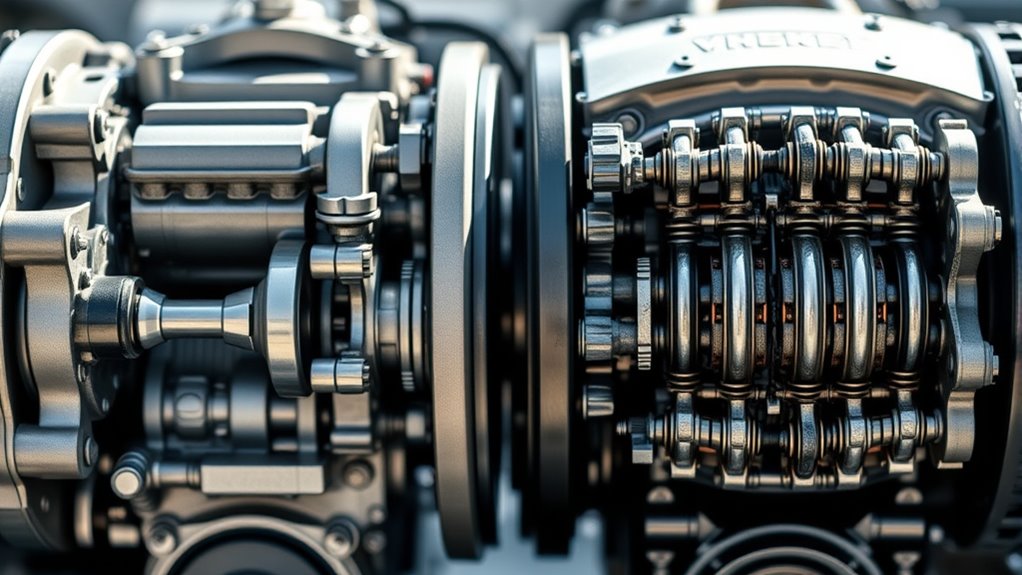
Understanding the difference between 2-stroke and 4-stroke diesel engines is important because they work differently, which affects how they perform and where they’re used.
A 2-stroke engine completes a power cycle in just two piston strokes. It’s simpler and lighter but tends to be louder and less efficient.
In contrast, a 4-stroke engine needs four strokes—intake, compression, power, and exhaust. It’s more complex but usually more fuel-efficient and durable.
Lubrication is also key for both types. In 2-stroke engines, oil mixes with fuel, which can lead to more emissions.
4-stroke engines use separate oil for lubrication, helping reduce emissions and improve environmental impact.
These differences influence their applications: 2-stroke engines are popular for portability and lightweight equipment, while 4-stroke engines are chosen for better longevity and efficiency.
How Do 2-Stroke Diesel Engines Work?
Sure! Here’s the modified version with a more conversational tone:
So, operating a 2-stroke diesel engine is pretty interesting because it combines the entire power cycle into just two piston strokes. Basically, the intake, compression, power, and exhaust processes all happen faster than in a 4-stroke engine. What’s cool is that the power stroke happens every single rotation of the crankshaft, which means the engine can generate power more frequently and smoothly.
And when it comes to fueling, these engines use a pretty precise fuel injection system. It sprays diesel fuel directly into the combustion chamber under high pressure, which helps with quick ignition and efficient burning. All this together makes 2-stroke diesel engines powerful and capable of handling demanding tasks efficiently.
Combustion Cycle Mechanics
A 2-stroke diesel engine completes its power cycle in just two movements of the piston, making it more compact and efficient than a 4-stroke. During combustion, fuel is injected directly into the combustion chamber where compression ignites it.
This process eliminates valves, instead using ports that open and close with piston movement. The design results in fewer parts, reducing manufacturing complexity but increasing emissions.
You’ll notice that combustion occurs in a single stroke, streamlining the cycle. Exhaust gases and fresh air intake happen simultaneously through ports.
The engine’s design allows for higher power output relative to size. However, its environmental impact is higher due to less precise fuel control, and the simplified design’s manufacturing can still present challenges.
Power Stroke Process
The power stroke in a 2-stroke diesel engine happens when compressed air ignites the injected fuel. This creates a controlled explosion that pushes the piston downward.
Because of this process, they deliver power on every revolution, making 2-stroke engines more powerful for their size. But, they tend to be louder, which can be a problem in residential areas or places needing quieter operation.
Plus, 2-stroke engines usually produce more emissions due to incomplete combustion, which makes them less environmentally friendly. The table below shows key differences in their power cycle:
| Aspect | 2-Stroke Diesel Engine | 4-Stroke Diesel Engine |
|---|---|---|
| Power strokes | Every revolution | Every other revolution |
| Emissions | Higher due to less complete combustion | Lower, more complete combustion |
| Noise levels | Usually louder | Quieter |
| Environmental impact | Greater due to emissions | More environmentally friendly |
| Maintenance | Simpler, fewer parts | More complex, more parts |
Fuel Injection System
Unlike in four-stroke engines, fuel injection in 2-stroke diesel engines happens directly into the combustion chamber during the compression stroke. This allows for faster combustion and better efficiency, but it also makes fuel quality and injection timing very important.
High-quality fuel helps improve atomization and reduces deposits that can clog the system. Proper injection timing makes sure the fuel ignites at just the right moment. This maximizes power and cuts down on emissions.
In 2-stroke engines, the injection system is usually simpler but still needs to be precisely calibrated for optimal performance. This means controlling the injection timing accurately, using high-quality fuel, and having reliable injection components to handle higher demands.
All of this helps ensure smooth power delivery and extends the engine’s life.
How Do 4-Stroke Diesel Engines Operate?
A 4-stroke diesel engine works through a four-step cycle: intake, compression, power, and exhaust. Think of it like a really efficient cycle where each part has its turn. During the intake stroke, air is drawn into the cylinder. Then, in the compression stroke, that air gets squeezed really tightly, raising its temperature and pressure.
Next comes the power stroke, where fuel is injected into the hot, compressed air, igniting and creating a combustion that pushes the piston down. This is what actually generates the mechanical power that makes the engine move. Finally, during the exhaust stroke, the burnt gases are pushed out of the cylinder, clearing the way for the next cycle. All these steps happen very rapidly, keeping the engine running smoothly.
Four-Phase Combustion Cycle
Four-stroke diesel engines follow a carefully timed four-phase combustion cycle that boosts efficiency and power. During this cycle, you go through distinct stages: intake, compression, power, and exhaust. Each phase helps ensure complete fuel combustion, lowering emissions and improving the lubrication system.
Intake: The intake valve opens, letting air fill the cylinder.
Compression: The air is compressed to a high pressure, raising its temperature.
Power: Fuel injectors spray diesel, which ignites automatically due to the heat, producing power.
Exhaust: The exhaust valve opens, pushing out the combustion gases.
This cycle impacts the engine’s lubrication by reducing wear and helping it last longer. It also cuts down on environmental impact thanks to cleaner combustion and lower emissions, making four-stroke diesel engines more efficient and eco-friendly.
Intake and Exhaust Processes
During the intake and exhaust phases, the engine’s valves are key in controlling the flow of air and gases. In a 4-stroke diesel engine, the intake valve opens to let in air during the intake stroke and then closes to compress the air in the compression stroke.
During the power and exhaust strokes, the exhaust valve opens so burnt gases can escape. This cycle keeps airflow proper but can also pose lubrication challenges, as oil might enter the intake for some systems.
To meet emission standards, engines use advanced emission control systems that reduce harmful gases during exhaust. Proper timing of valve operation ensures efficient combustion, lowers emissions, and helps the engine run smoothly throughout its cycle.
Mechanical Power Generation
You can understand how a 4-stroke diesel engine generates mechanical power by looking at its four main phases: intake, compression, power, and exhaust. During intake, air enters the cylinder; then, compression raises the pressure and temperature.
In the power phase, the fuel ignites because of compression, pushing the piston down and producing motion. Finally, exhaust releases the combustion gases. This cycle offers benefits like efficiency and durability.
These features attract innovative startups focused on cleaner, smarter engines. To reduce environmental impact, manufacturers optimize these engines for lower emissions. Key features include:
- Precise fuel injection that improves combustion
- Advanced materials that reduce pollutants
- Regenerative systems that boost efficiency
Understanding these mechanics helps to differentiate 4-stroke diesel engines from other types and highlights their role in developing sustainable technology.
What Are the Main Design Differences Between 2-Stroke and 4-Stroke Diesel Engines?
The main design differences between 2-stroke and 4-stroke diesel engines mainly come down to how they complete the combustion cycle. In a 2-stroke engine, each crankshaft revolution combines intake, compression, power, and exhaust in just two strokes. This makes the engine simpler and more compact.
On the other hand, a 4-stroke engine needs four strokes—intake, compression, power, and exhaust—over four crankshaft revolutions. This results in a more complex design. Because of that, 4-stroke engines often have separate lubrication, which helps improve emission control and engine longevity.
In contrast, 2-strokes usually mix oil with fuel for lubrication. This approach can cause higher emissions and less efficient lubrication. The separate lubrication system in 4-strokes helps keep engine parts better maintained and cleaner over time.
How Do Power and Performance Differ in These Engines?
Sure! Here’s a more conversational version of the text:
Your engine’s power mostly comes down to how it creates combustion energy. For example, a 2-stroke engine fires once every cycle, giving it a quicker burst of power, while a 4-stroke engine fires once every two cycles, so it might feel a bit less immediate.
When it comes to performance efficiency, factors like how much fuel the engine uses and its mechanical design come into play. These things determine how well the engine handles loads and how smoothly it runs overall.
Getting a handle on these differences can help you pick the right engine for what you need—whether you’re after maximum power or better efficiency.
Power Generation Methods
Understanding how power is generated in 2-stroke and 4-stroke diesel engines shows the main differences in their performance and efficiency. In a 2-stroke engine, power cycles happen every revolution, so it delivers more frequent power strokes and is generally more powerful in a compact size.
On the other hand, a 4-stroke engine completes a power cycle every two revolutions, which can make for smoother operation. The key differences include how much power they produce, their manufacturing costs, and how efficient they are.
2-stroke engines produce more power per cycle but may emit more pollutants, which impacts the environment. They are also simpler and cheaper to produce because they have fewer parts.
4-stroke engines tend to be more fuel-efficient, but they usually cost more to make. These differences influence how well each type performs, their environmental effects, and their overall cost-effectiveness for different uses.
Performance Efficiency Factors
Power and performance in 2-stroke and 4-stroke diesel engines depend on how effectively each engine turns fuel into usable energy.
2-stroke engines usually produce more power per cycle because they generate a power stroke every revolution. This makes them responsive and able to deliver quick bursts of power.
But this added power often comes with higher environmental impacts due to incomplete combustion and more pollutants.
On the other hand, 4-stroke engines tend to be more fuel-efficient and produce fewer emissions, which helps reduce their environmental footprint.
Manufacturing costs also differ; 2-strokes are generally simpler and cheaper to make, but their shorter lifespan can mean higher long-term maintenance expenses.
In the end, performance efficiency depends on balancing power, fuel economy, environmental effects, and manufacturing costs.
How Fuel Efficiency and Maintenance Costs Compare?
When comparing 2-stroke and 4-stroke diesel engines, fuel efficiency and maintenance costs are key factors to consider. Generally, 4-stroke engines are more fuel-efficient because they complete a power cycle in four strokes, which reduces fuel wastage. They also tend to meet stricter emissions standards more easily, especially if you’re thinking about alternative fuels.
In contrast, 2-stroke engines usually have higher fuel consumption due to their simpler design and faster operation. When it comes to maintenance:
- 2-stroke engines need more frequent repairs because of increased wear and tear.
- 4-stroke engines have longer intervals between maintenance, which can save you money.
- Both types must comply with emissions standards, which can impact their maintenance needs and costs.
Which Diesel Engine Lasts Longer? Durability and Reliability
Both 2-stroke and 4-stroke diesel engines can last a long time, but their durability really depends on their design, build quality, and how they’re used.
Both engine types can last long, but durability depends on design, build quality, and usage.
Generally, 4-stroke engines tend to be more durable because their design helps reduce wear and tear over time, making them more reliable for heavy use.
On the other hand, 2-stroke engines have fewer moving parts, which means less maintenance at first, but they might wear out faster in the long run.
Environmental impact also matters. 4-stroke engines usually produce fewer emissions, which places less strain on their components and can help them last longer.
Manufacturing quality is another key factor. Better-made engines with high-quality parts tend to be stronger and more durable over time.
Good maintenance alongside these factors is critical for a longer engine life for both types.
If you’re after longevity and reliability, a well-built 4-stroke engine usually offers greater durability and resilience.
What Are the Best Use Cases for 2-Stroke and 4-Stroke Engines?
Choosing the right engine type really depends on what you need it for and your operational requirements. If you want something lightweight and capable of high revs for quick tasks, a 2-stroke engine is a good choice because it’s simple and powerful. They’re great for things like chain saws, outboard motors, and handheld tools.
On the other hand, 4-stroke engines are better if you’re looking for efficiency and durability. They’re commonly used in motorcycles, generators, and lawnmowers.
When you’re choosing, think about a few key things:
- Environmental impact: 2-stroke engines usually produce more pollution, so they might not be the best for long-term or eco-friendly use.
- Manufacturing complexity: 4-stroke engines have more parts, which makes them more complex but often more reliable over time.
- Operational needs: For quick, portable jobs, 2-strokes are ideal. For longevity and better fuel efficiency, 4-strokes are the way to go.
Ultimately, your choice comes down to balancing these factors to fit your specific use case.
Pros and Cons of 2-Stroke vs. 4-Stroke Diesel Engines
Understanding the pros and cons of 2-stroke and 4-stroke diesel engines can help you figure out which one fits your needs better.
2-stroke engines are simpler and pack more power into a smaller space, making them great for portable equipment. But they tend to emit more pollutants and create more noise, which can be disruptive.
On the flip side, 4-stroke engines tend to be more fuel-efficient and environmentally friendly because they have complete combustion cycles, which means fewer emissions. They also run more quietly, making them better for places where noise matters.
The downside is that 4-stroke engines are usually bigger, heavier, and more complex. This can lead to higher maintenance costs. If reducing environmental impact and noise is important for you, a 4-stroke might be the better pick.
However, if you prioritize power-to-weight ratio and simplicity, then a 2-stroke engine could be the more suitable option.
Final Tips: Choosing the Right Diesel Engine for Your Needs
Evaluating your specific needs is key to choosing the right diesel engine. Think about the size of the engine and how it matches your workload. Larger engines usually offer more power but might use more fuel.
Choosing the right diesel engine depends on matching size and power to your workload for optimal efficiency.
Consider noise levels too, especially if you’ll be working near homes or inside enclosed spaces. Some engines tend to be louder than others, so pick accordingly.
To make a smart choice, keep these tips in mind:
- Match engine size to your tasks—bigger for heavy-duty jobs, smaller for lighter work.
- Think about noise levels based on where you’ll operate so you don’t cause disturbances.
- Find a good balance between fuel efficiency and power to keep operating costs reasonable while getting the performance you need.
Frequently Asked Questions
Are 2-Stroke Diesel Engines Suitable for Commercial or Industrial Applications?
Yes, 2-stroke diesel engines are suitable for some commercial and industrial applications, especially when a lightweight and compact design is important.
However, you’ll need to consider their higher fuel consumption and more frequent maintenance compared to 4-stroke engines.
While they provide quick power strokes, their fuel efficiency isn’t the best for long-term use.
For tasks that focus on durability and fuel economy, 4-stroke engines might be a better choice.
How Do Emissions Compare Between 2-Stroke and 4-Stroke Diesel Engines?
Imagine a construction site where a 4-stroke diesel engine meets strict emission regulations. You’ll find that 4-stroke engines generally emit fewer pollutants than 2-stroke ones because they burn fuel more efficiently and produce cleaner exhaust.
2-stroke engines tend to have higher emissions due to incomplete combustion, affecting fuel efficiency and compliance. So, if reducing emissions is your goal, 4-stroke diesels are typically a better choice for environmentally-conscious applications.
What Are the Typical Noise Levels of Each Engine Type?
You’ll notice that 4-stroke diesel engines tend to have lower noise levels than 2-stroke engines. This is mainly because they have better noise reduction features and more effective mufflers that dampen exhaust and mechanical sounds.
In contrast, 2-stroke engines are usually louder since they have fewer noise-reducing components working. Overall, if keeping noise down is important, 4-stroke engines generally do a better job.
Can 2-Stroke Diesel Engines Be Used in Hybrid Systems?
Imagine you’re designing a hybrid boat and wondering if a 2-stroke diesel engine can be part of it. Yes, it’s possible, especially if you’re exploring alternative fuel options.
A 2-stroke diesel engine can work in hybrid systems, but you need to consider engine longevity. It generally doesn’t last as long as a 4-stroke engine.
Proper maintenance and new technology improvements could make it feasible for specific hybrid applications.
How Do Startup Times Differ Between 2-Stroke and 4-Stroke Diesel Engines?
You’ll find that 2-stroke diesel engines start faster because they have simpler lubrication systems that allow quicker combustion cycles.
However, their lubrication isn’t as efficient, which means they need more maintenance over time.
In comparison, 4-stroke engines take longer to start because of their more complex systems.
But they offer better lubrication and reliability, which can lower maintenance costs.
Conclusion
Choosing between a 2-stroke and a 4-stroke diesel engine really depends on what you’re looking for.
Did you know that 2-stroke engines are usually about 30% lighter and can generate more power for their size? So, if you need a lightweight, high-power engine for tools like chainsaws or outboard motors, a 2-stroke could be your best bet.
On the other hand, for durability and fuel efficiency, especially in vehicles, a 4-stroke engine tends to be the better choice.
Think about your specific use case to decide which type of diesel engine — 2-stroke or 4-stroke — is the right fit for you.