Mixing Transmission Fluid With Engine Oil: a Costly Mistake to Avoid
Many car owners worry about unexpected engine troubles and costly repairs. One common mistake that many people struggle with is mixing transmission fluid with engine oil. It’s an easy error to make but can lead to serious damage.
Mixing transmission fluid with engine oil is a costly mistake that can cause major engine damage. It compromises lubrication, promotes contamination, and hampers heat transfer, leading to increased wear, overheating, and even transmission failure.
Proper maintenance is crucial—using the right fluids, checking levels regularly, and avoiding spills or mixing. If you keep going, you’ll uncover important tips to prevent these issues and protect your vehicle’s performance.
Key Takeaways
- Mixing transmission fluid with engine oil can cause costly engine damage and shorten your vehicle’s lifespan.
- These fluids have different chemical properties, so if they get mixed, it can lead to contamination.
- Watch out for signs like dark, cloudy fluids, strange odors, sluggish performance, or weird noises.
- Always double-check labels and keep systems sealed to prevent accidental mixing.
- If you notice fluid discoloration, unusual smells, or your vehicle isn’t running right, it’s best to get professional help before it gets worse.
Why Is Mixing Transmission Fluid and Engine Oil Dangerous?
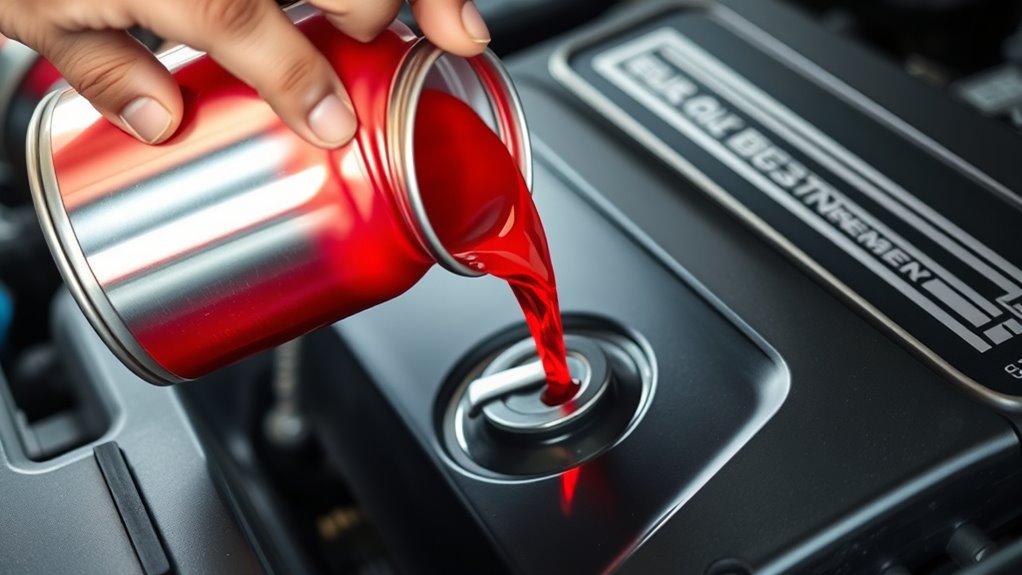
Since transmission fluid and engine oil serve different purposes, mixing them can lead to serious issues. When these fluids combine, they compromise engine cleanliness, allowing contaminants to spread more easily, which can clog oil passages and reduce overall performance.
Fluid degradation accelerates because the chemical properties of transmission fluid aren’t designed for engine conditions. This causes the fluids to break down faster, losing their lubricating and cooling abilities. As a result, you risk increased engine wear and potential damage.
Mixing may also create sludge or deposits that obstruct critical components, escalating repair costs. You might think topping off fluids is harmless, but even small amounts of contamination can have long-term effects.
Maintaining separate, clean fluids ensures your engine stays properly lubricated, cooled and protected from unnecessary wear. Avoid mixing transmission fluid with engine oil to keep your engine running smoothly and prevent costly repairs down the line.
What Do Transmission Fluid and Engine Oil Do in Your Car?
Your engine oil is pretty much like the lifeblood of your engine. It lubricates all the moving parts, so they don’t grind against each other and cause damage. Plus, it helps keep the engine cool by carrying away heat as the engine runs.
On the other hand, transmission fluid is what makes your gear changes smooth and effortless. It also protects the inside parts of your transmission from wear and tear. When both of these fluids are doing their jobs, your car runs more efficiently, staying cool and well-lubricated.
Roles in Vehicle Operation
Understanding the roles of transmission fluid and engine oil is key to knowing how your vehicle runs smoothly. Your engine oil lubricates moving parts, reducing friction and preventing wear, which helps maintain good fuel efficiency.
Proper engine lubrication keeps the engine running smoothly and saves you money on fuel. Meanwhile, transmission fluid makes gear shifts smooth and protects transmission parts from overheating and damage.
Without transmission fluid, shifting can become jerky, and the transmission might fail. Even tire pressure matters because maintaining the right pressure reduces rolling resistance and improves fuel economy.
Both fluids work together to keep your vehicle reliable — engine oil in the engine, transmission fluid in the transmission — ensuring safe and consistent performance on the road.
Lubrication and Cooling Functions
Both engine oil and transmission fluid help your vehicle run smoothly, but they also have key roles in lubricating and cooling your car’s parts. They stop overheating and reduce friction, which helps your engine and transmission last longer.
For engine oils, synthetic blends offer better viscosity grades, so they stay consistent under tough conditions. Transmission fluids are designed to handle high temperatures and strong shear forces without breaking down.
Here’s what they do:
- Lubricate moving parts to reduce wear.
- Dissipate heat to prevent overheating.
- Protect against corrosion and wear.
- Keep the right viscosity for smooth fluid flow.
Using the correct viscosity grades makes sure these fluids do their job well and avoid costly damage. Mixing incompatible fluids can compromise their functions and risk damaging your engine or transmission.
How Do Fluids Get Cross-Contaminated When You Mix Them?
Fluids can get cross-contaminated when they share the same reservoirs or gaskets. Basically, one fluid can seep into another through these little openings. It’s kind of like how a tiny leak can let one thing mix with another without you even noticing.
Spills or messing up during fluid changes can also cause mixing, even if it’s unintentional. If you accidentally spill or don’t handle the fluids carefully, they might end up combining. And, of course, if the fluids aren’t compatible, coming into contact can cause issues or damage. So, it’s important to be careful when dealing with different fluids!
Shared Reservoirs and Gaskets
- Gaskets weaken as they age, which raises the risk of leaks.
- Fluid leaks between reservoirs can spread contaminants, causing problems.
- Shared gaskets make it more difficult to prevent fluid mixing during maintenance.
- Cross-contamination can lead to sensor calibration issues and affect vehicle diagnostics.
Always check the gasket condition and ensure proper separation to avoid costly issues.
Fluid Compatibility and Spillage
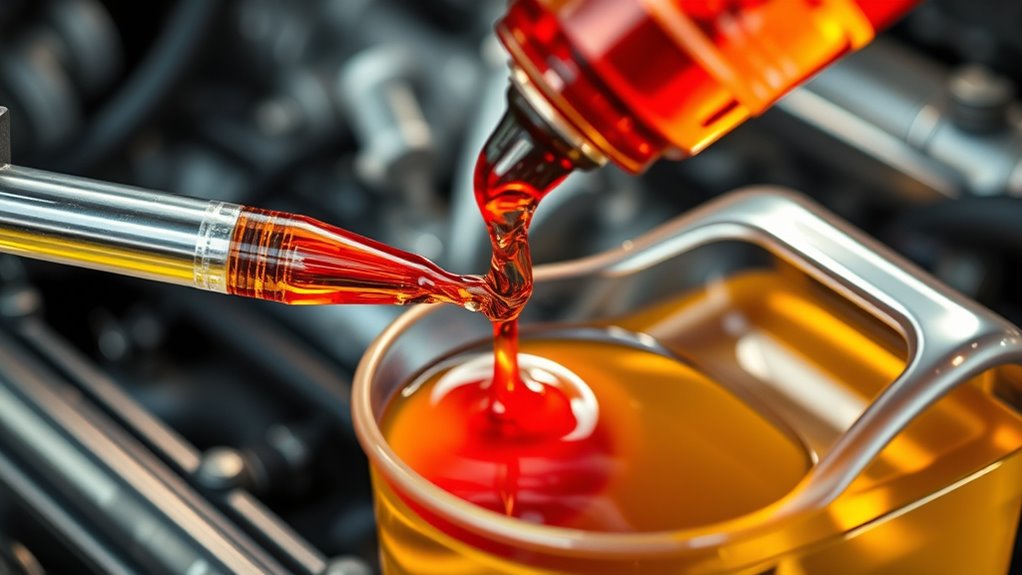
When fluids from different systems mix, it often happens because of spills, leaks, or improper maintenance procedures. You might notice the fluid color change, which signals contamination. Transmission fluid usually has a reddish hue, while engine oil is golden or dark.
Cross-contamination occurs easily if container labels aren’t clear or are overlooked, leading to accidental pouring of the wrong fluid. Spills during fluid top-offs or drained fluid transfers can also cause contamination if not cleaned properly.
This mixing can damage components or reduce system efficiency. Always double-check container labels before adding fluids and work carefully to prevent spills. Proper handling and accurate identification are key to avoiding costly mistakes from fluid incompatibility.
How Can You Tell If Your Fluids Are Contaminated?
Contamination in transmission fluid or engine oil can often be subtle, but recognizing the signs early can save you from costly repairs. Proper fluid identification helps you detect when something’s off.
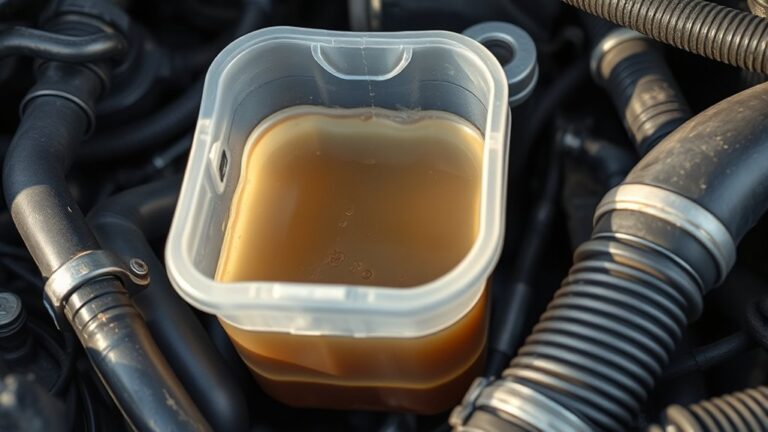
To spot contamination, look for changes in fluid color or clarity—dark, cloudy, or milky fluids could be a sign of mixing or dirt. Visual particles or sludge might also indicate debris or contaminated fluids.
A foul or burnt smell suggests overheating or chemical imbalance. If your engine or transmission responds sluggishly, it could be due to contaminated or degraded fluids.
Regularly checking your fluids is key to preventing contamination. Pay attention to odd odors, color changes, or performance issues. Being vigilant helps you catch contamination early before it causes expensive damage.
Staying informed about fluid identification and keeping levels proper ensures your vehicle runs smoothly and efficiently.
What Risks Does Mixing Fluids Pose to Your Transmission?
Mixing transmission fluid with engine oil isn’t something you want to do. These fluids have different chemical makeups, and when they get mixed, it can cause some real problems. It might lead to poor lubrication, which isn’t good news for your engine or transmission. Over time, this can cause increased wear and tear.
In the worst-case scenario, it could even damage your transmission. And that’s not just a minor issue — it might mean expensive repairs down the road. So, it’s best to keep these fluids separate and stick to the recommended types for your vehicle.
Fluid Compatibility Issues
Ever wonder what can happen if you accidentally mix transmission fluid with engine oil? Combining these fluids creates compatibility issues that can harm your vehicle.
First, fluid degradation happens as both fluids react and lose their effectiveness, which reduces lubrication. Second, contaminants like debris and particles from one fluid can mix into the other, clogging passages or filters.
Third, incompatible fluids may cause chemical reactions that weaken seals and gaskets. Fourth, this mixture can change the fluid’s viscosity, impairing proper lubrication and increasing wear.
Transmission Damage Risk
When transmission fluid and engine oil are mixed, it can seriously damage your transmission. Combining these fluids can lead to clogging, corrosion, and quick wear because each one has its own purpose and chemical makeup.
This contamination makes it tough for technicians to diagnose issues accurately. If you ignore it, you could face costly repairs or even total transmission failure.
Getting a professional fluid exchange is key. They’ll remove the contaminated fluid and replace it with the right type to prevent damage.
Don’t wait to get this done, because delaying can make internal damage worse. That could shorten your transmission’s lifespan and lead to expensive repairs.
Staying proactive protects your vehicle’s transmission and helps it run smoothly longer.
How Does Mixing Affect Your Engine’s Performance and Longevity?
Pouring transmission fluid into your engine oil can seriously harm your vehicle’s performance and shorten its lifespan. This contamination messes up the proper lubrication your engine needs and can cause several problems.
1. Engine Overheating
The wrong type of fluid gets in the way of heat transfer, making the engine heat up more than it should. This can potentially lead to serious engine damage.
2. Reduced Fuel Efficiency
When fluids mix, the engine has to work harder, which means it burns more fuel to keep going.
3. Decreased Lubrication
Transmission fluid doesn’t offer the same lubrication as engine oil. This increases friction and speeds up wear on the engine parts.
4. Shortened Engine Longevity
Constant exposure to incompatible fluids speeds up wear and could cause the engine to fail early.
How Can Quick Fixes Backfire When Fluids Are Mixed?
Quick fixes, like adding extra oils or fluids to deal with small engine problems, can backfire if fluids are already mixed. These quick fixes usually ignore the real issue and just mask the symptoms temporarily.
When transmission fluid and engine oil get blended, pouring in more fluid won’t fix the problem. Instead, it can make things worse and cause more damage. Mixing these fluids can hurt fuel efficiency, making the engine work harder and use more gas.
It can even indirectly affect tire pressure because extra engine strain can wear parts that control tire inflation. Throwing in more fluids might seem like a simple fix, but it won’t solve what’s really wrong. This can lead to more engine wear, higher repair bills, and lower vehicle safety.
Instead of shortcut fixes, it’s best to handle fluid mixing the right way. Have a professional inspect your vehicle to make sure all fluids are correct and working well. This way, your car runs safely and at its best.
How Should You Properly Change and Maintain Your Car’s Fluids?
Regularly changing and maintaining your car’s fluids is key to keeping it running smoothly and efficiently. Here’s how you can do it properly:
- Check fluid levels often. Use the fluid’s color and clarity as signs of quality. If fluids look dark or murky, it’s time for a change.
- Identify the right fluids for each system by carefully reading the container labels. Using the wrong fluid can cause damage and hurt performance.
- Use clean tools and containers when draining or refilling fluids to avoid contamination. Always make sure caps are securely tightened after adding new fluids.
- Follow your vehicle’s maintenance schedule as recommended by the manufacturer. This helps prevent dirt and old fluid buildup, which can hinder your car’s operation.
What Are the Best Tips to Avoid Costly Fluid Mistakes?
To prevent costly fluid-related mistakes, always double-check the type and quantity of fluids before topping off or draining your vehicle. Using the wrong fluid can harm your engine, transmission, or other essential parts.
Pay attention to your owner’s manual for the correct specifications. Maintaining proper tire pressure is also vital, as low or uneven pressure can decrease fuel efficiency and put extra strain on your engine, possibly leading to misjudged fluid levels.
Keep caps and containers sealed tightly to prevent contamination, which can cause costly repairs. Regularly check fluid levels with the vehicle on a level surface and follow the recommended maintenance schedule.
Using a clean funnel reduces spills and mistakes. Avoid mixing different brands or types unless specified by the manufacturer. When in doubt, ask a professional—this simple step can save you money and keep your vehicle running smoothly.
When Should You See a Professional About Fluid Contamination?
If you notice unusual colors, smells, or textures in your transmission or engine fluids, it’s time to see a professional. Fluid contamination can damage hydraulic systems and reduce fuel efficiency, leading to costly repairs.
You should seek help immediately if:
- The fluid looks milky, gritty, or has a burnt smell. This suggests cross-contamination or degraded oil.
- Your vehicle shifts sluggishly or your engine hesitates. These can be signs of hydraulic system problems.
- You notice a big drop in fuel efficiency. Contaminated fluids often affect engine performance here.
- There’s visible debris or discoloration in the fluid. This hints at internal damage or incompatible fluid mixing.
Getting professional help early ensures quick diagnosis and prevents further damage to important systems. Addressing contamination early helps keep your hydraulic system healthy and your fuel efficiency high, saving you money in the long run.
Frequently Asked Questions
Can Mixing Fluids Cause Immediate Engine or Transmission Failure?
Mixing fluids can cause immediate engine or transmission failure because of fluid compatibility issues and chemical reactions.
When different fluids are combined, they might not work well together, leading to the formation of sludge or damaging deposits.
These reactions can impair lubrication, cause overheating, or reduce fluid effectiveness, risking costly repairs.
To avoid this, always use the recommended fluids for your vehicle and never mix transmission fluid with engine oil.
Are There Any Vehicles More Prone to Damage From Fluid Mixing?
Certain vehicles, especially older models or those with sensitive transmission and engine systems, are more prone to damage from fluid mixing.
When transmission contamination occurs or oil degradation happens due to mixing, it can cause serious issues like slipping or overheating.
You should pay close attention to your vehicle’s maintenance because mixing fluids can speed up wear. This can lead to costly repairs or early component failure.
How Much Does Fixing Mixed Fluids Typically Cost?
Fixing mixed fluids can cost anywhere from $200 to over $1,000, depending on how badly the fluids are contaminated and what kind of vehicle you have. The more severe the contamination, the higher the labor and parts costs will be.
You’ll probably need a full fluid flush, parts replacement, and an oil change. It’s a good idea to get a detailed estimate from a trusted mechanic so you know what you’re dealing with specifically.
Will Mixing Transmission Fluid and Engine Oil Void Vehicle Warranty?
Verily, mixing transmission fluid and engine oil can jeopardize your vehicle’s warranty because fluid compatibility issues may cause engine or transmission damage.
Manufacturers often see this as a warranty risk, especially if incorrect fluids lead to part failure. While accidental mixing might not always void your warranty outright, it’s best to check your owner’s manual or talk to your dealer.
This way, you can be sure your repairs won’t be hindered later. Remember, sticking to recommended fluids keeps your vehicle running smoothly and avoids potential warranty issues.
Can Additives Exacerbate Issues Caused by Mixed Fluids?
Additives can make problems worse when mixed with incompatible fluids because they react unpredictably.
These reactions can lead to sludge, foaming, or even corrosion, which can cause more damage to your engine or transmission.
Always check if the fluids are compatible before adding anything, and avoid using additives if the fluids are already mixed.
Taking these simple steps can help you avoid costly repairs and keep your vehicle running smoothly.
Conclusion
Mixing transmission fluid with engine oil is a sneaky mistake that can quietly cause serious damage to your vehicle.
If you’re not careful, it can lead to expensive repairs down the road. By staying alert and following proper maintenance routines, you can avoid these hidden issues.
Regular check-ups and getting professional advice promptly will help keep your car running smoothly.
This way, you steer clear of the quiet problems that can come from mixing those fluids incorrectly.
With proper care, your vehicle will give you reliable performance and peace of mind on every trip.
Remember, paying attention to these details is key to avoiding costly mistakes like mixing transmission fluid with engine oil.