Timing Chain Replacement Time: Factors & Cost Breakdown
Are you worried about the cost and hassle of replacing your timing chain? Many car owners feel overwhelmed because this repair can be time-consuming and pricey, but you’re not alone. Understanding what affects the cost and timeline can help ease some of that stress.
Replacing a timing chain typically takes 2 to 8 hours, depending on your vehicle’s make, engine complexity, and access difficulty. Factors like worn guides, tensioners, and seals add to the cost, which can range from $500 to over $2000.
Labor costs and part quality also influence expenses. Proper maintenance and driving habits can extend your chain’s life.
If you want detailed insights on costs and what affects them, stay tuned for more information.
Key Takeaways
- Replacement time varies depending on the engine, usually taking between 2 to 8 hours based on the vehicle’s design.
- If the engine is hard to access or if extra repairs are needed, the labor time can really add up.
- Costs depend on parts quality, the make and model of your vehicle, and local labor rates.
- Replacing related parts like water pumps and seals can also increase both the overall cost and the time required.
- Good maintenance and driving habits can help extend the timing chain’s lifespan, helping you delay its replacement.
How Does a Timing Chain Work and Why Is It Important?
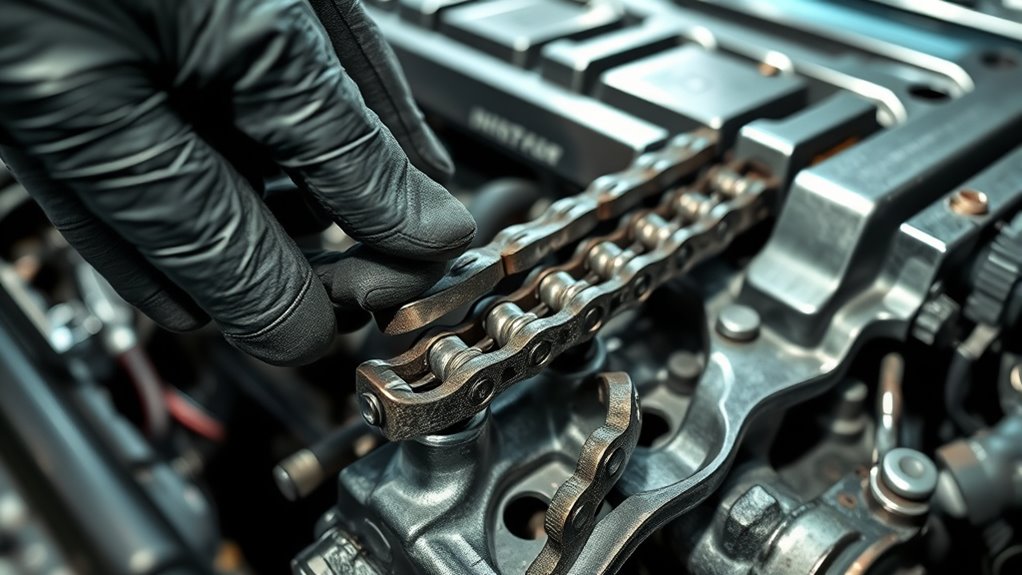
A timing chain is a key part that keeps your engine’s valves and pistons moving in sync. It makes sure they work together so your engine runs smoothly.
The chain connects the crankshaft and camshaft, turning the pistons’ up-and-down motion into the opening and closing of the valves. Proper lubrication reduces friction and wear, helping prevent early failure.
The chain links the crankshaft and camshaft, enabling valve operation and reducing wear through proper lubrication.
Regular oil changes are important to keep the chain well-lubricated. The tensioner adjustment keeps the chain tight, which stops slack that could cause skipping or jumping.
If the chain gets loose or stretched, it can mess up your engine’s timing. That may lead to poor performance or even damage. Since these parts are vital, maintaining correct tension and lubrication is crucial for lasting engine health.
Understanding how the timing chain works shows why fixing issues early with proper tensioner adjustments and routine maintenance is so important.
Signs Your Timing Chain Might Need Replacing
When your timing chain begins to wear or stretch, you might notice some warning signs that indicate it’s time for a replacement. One common sign is unusual engine noise, like rattling or knocking sounds, especially during startup or acceleration. These noises often mean the timing chain is loose or slack, which can affect how well your engine runs.
You may also experience rough idling or have trouble starting your vehicle, since the timing chain is vital for proper engine operation. Regular maintenance can help prevent these issues, but ignoring these signs could lead to more serious damage to your engine.
| Warning Signs | What They Mean |
|---|---|
| Rattling noise | The chain might be loose or worn, indicating it needs replacing. |
| Engine misfire | When the timing chain stretches, it can mess up engine timing. |
| Difficulty starting | Possible chain issues affecting timing and engine startup. |
Factors That Affect Your Timing Chain’s Longevity
Several factors can influence how long your timing chain lasts, and understanding them can help you prevent costly repairs. Regular maintenance schedules are essential; neglecting timely inspections or replacements speeds up wear.
Skipping scheduled tune-ups might cause your chain to stretch or develop slack, which can lead to failure. Proper lubrication techniques are also crucial—using the recommended oil and keeping oil levels adequate helps keep the chain well-lubricated, reducing friction and wear.
Poor lubrication results in more metal-to-metal contact, speeding up deterioration. Environmental factors like extreme temperatures and dust exposure also impact longevity since they cause components to age faster.
Finally, the quality of parts matters. Aftermarket or low-quality chains are more likely to wear out quickly. Sticking to your vehicle’s maintenance schedule and using correct lubricants can greatly extend your timing chain’s lifespan and help you avoid unexpected breakdowns.
How Driving Habits Impact Timing Chain Durability
Your driving habits directly affect how quickly your timing chain wears out. Aggressive acceleration, abrupt braking, and frequent high RPM driving put extra strain on engine components, speeding up chain wear.
On the other hand, smooth acceleration and steady cruising help reduce stress and can make your timing chain last longer. Keeping your driving comfortable by avoiding rapid throttle changes puts less tension on the chain and helps preserve its lifespan.
Your driving style also impacts fuel efficiency. Smoother driving not only saves you money at the pump but also reduces engine wear overall.
Consider these habits to protect your timing chain:
- Gradually accelerate and decelerate instead of sudden starts and stops
- Stick to your engine’s ideal RPM range and avoid high-speed driving
- Get regular maintenance checks to catch early signs of wear
Common Causes of Timing Chain Wear and Damage
Timing chain wear and damage can happen for a bunch of mechanical and environmental reasons that speed up its breakdown. One of the most common causes is not enough lubrication. When the oil isn’t doing its job, the metal parts grind against each other, which speeds up wear and risks early failure.
Lack of proper lubrication accelerates timing chain wear, causing metal parts to grind and risking early failure.
Contaminants like dirt or debris in the oil can also cut down on lubrication efficiency. This increases friction and causes damage. Manufacturing defects are another big issue; if the timing chain is poorly made or has flaws in the material, it’s more likely to stretch, crack, or break over time.
Poor maintenance habits, like ignoring worn parts or using the wrong type of oil, can make things worse. High mileage, extreme temperatures, and aggressive driving can also put extra stress on the chain. Understanding these causes is key.
It helps you see why regular inspections and proper upkeep are crucial for preventing excessive wear and making your timing chain last longer.
What Affects the Cost of Timing Chain Replacement?
The cost of replacing a timing chain can really depend on a few different things. First off, your vehicle’s make and model can make a big difference since some cars have more complicated setups than others. That means parts and labor might cost more or less depending on what you drive.
Then there’s the engine itself. If your engine is more complex or has a tricky design, it can take more time and effort to get the job done, which can bump up the cost. Don’t forget about the local labor rates—if you’re in an area where mechanic rates are higher, that will also influence how much you end up paying. And of course, the price of parts, like the chain itself and any associated components, will play a role in the final bill.
Vehicle Make and Model
The make and model of your vehicle greatly influence the cost of timing chain replacement because parts and labor costs depend on how complex the design is and how accessible the components are. Some cars have timing chains that are easier to reach, which lowers labor expenses.
Other vehicles might require extensive disassembly, increasing the overall cost. Newer models often focus on fuel efficiency and emission standards, which can make their timing systems more complicated and expensive to replace.
Vehicles with advanced emission control systems generally have higher replacement costs. Some makes have timing chains integrated with other parts, making repairs more challenging. Fuel-efficient models might have more intricate engine designs, affecting the price.
Engine Complexity and Design
Ever wondered why some timing chain replacements cost more than others? It mainly depends on your engine’s design and how complex it is.
Some engines are pretty straightforward, making the job easier and cheaper. Others have intricate setups, like multiple timing chains or hidden parts, which need more work and special tools.
The design impacts how accessible the parts are and how many components are involved. Plus, using high-quality, durable materials can last longer but also increases the initial cost.
Complex engines usually require more precise parts and careful handling, which means more labor and higher expenses. Understanding your engine’s setup can help you get a sense of the potential costs for timing chain replacement.
Labor and Parts Costs
Consider these key factors:
- The complexity of accessing the timing chain can impact how many hours the job takes.
- The cost of replacement parts like guides, tensioners, and the chain itself also plays a role.
- Plus, it’s really important to get the camshaft synchronization just right for your engine to run smoothly.
Engines with higher mileage or more complex timing setups usually need more labor, which increases the cost.
Budget for these variables so you can better estimate your overall replacement expense.
Timing Chain Replacement Cost Breakdown
Understanding how much it costs to replace your timing chain can seem a bit overwhelming, but let’s break it down. You’ll want to consider the price of the parts, what the labor will charge, and whether any other components need to be swapped out along the way. So, let’s go through these costs step by step so you have a clear picture of what to expect and how everything adds up.
Part Cost Estimates
When estimating the cost to replace a timing chain, the parts involved can vary a lot depending on your vehicle’s make and model. You might want to look into retrofit kits, which can sometimes be a more budget-friendly alternative to OEM parts.
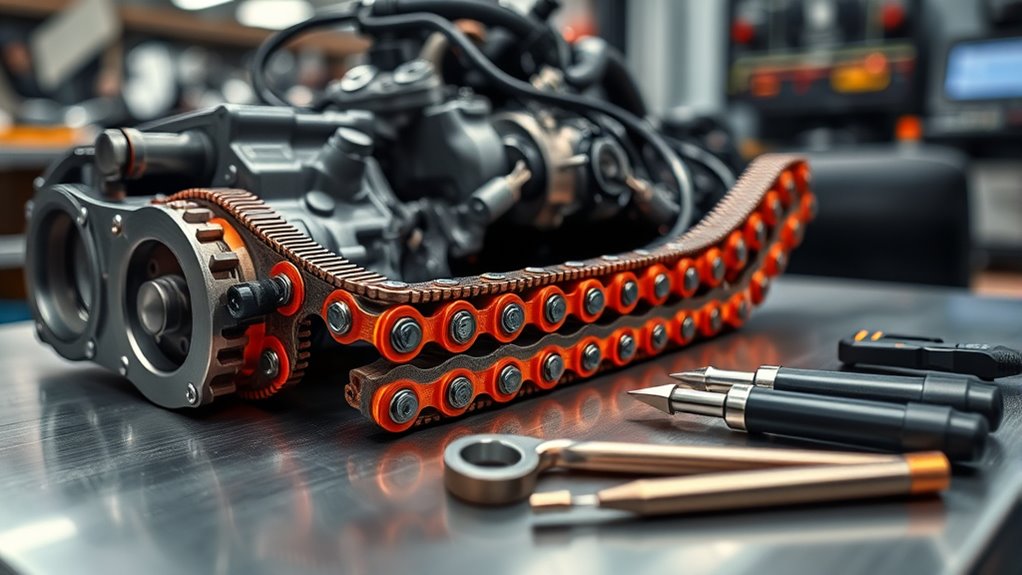
Aftermarket options are also available and often come at lower prices. They generally offer similar quality, so it’s worth comparing. The main components include the timing chain, tensioners, guides, and sprockets—these are all essential for the engine’s timing.
Prices for these parts can differ based on brand and quality. Whether you choose OEM or aftermarket parts, be sure to verify their quality standards. While aftermarket parts might save you money upfront, choosing good quality parts helps avoid costly repairs later.
Careful selection of parts can help keep your replacement project within budget and ensure your engine runs smoothly.
Labor Charges Breakdown
The cost of labor for replacing a timing chain can vary widely depending on the vehicle and the shop you choose. Typically, labor includes removing components like the valve cover and timing chain cover, which allows access to the chain.
During this process, you’ll need timing chain lubrication to guarantee smooth operation afterward. A significant part of the labor cost involves engine timing synchronization, which requires precise adjustments to align the camshaft and crankshaft correctly.
This step is essential for proper engine performance and avoiding future issues. Expect to pay for skilled technicians who understand the intricacies of timing chain replacement, ensuring your engine runs smoothly and efficiently afterward.
Keep in mind, the more complex your vehicle’s engine setup, the higher the labor charges are likely to be.
Additional Replacement Items
In many cases, replacing the timing chain means you’ll also need to swap out other engine components to make sure everything works properly. These additional parts help keep your engine running smoothly and prevent future problems. The material of the timing chain influences the replacement schedule and how long it lasts.
It’s common to replace parts like tensioners and guides at the same time because worn components can cause the timing to go off early. Addressing these issues now can save you from more repairs down the line.
You’ll often also replace the water pump since it’s easy to access during timing chain work. Camshaft and crankshaft seals are also checked and replaced if needed to avoid leaks and keep the engine sealed tight.
Handling these items during the repair helps you avoid future issues, saving both time and money in the long run.
Additional Costs During the Repair Process
During a timing chain replacement, unexpected costs can quickly add up beyond the basic parts and labor. You might uncover additional repairs, like replacing worn tensioners or guides, which can increase the total cost.
Unexpected costs can arise during a timing chain replacement, from additional repairs to hidden damages and unforeseen delays.
If your vehicle’s maintenance schedule isn’t up to date, more extensive work may be needed, adding to the expense. It’s also important to check if your warranty covers some or all of the repairs, as this can significantly reduce what you pay out of pocket.
Sometimes, the chain has caused damage to other components like pistons or valves, which might need attention. Plus, unforeseen complications that cause delays or require special tools can lead to extra costs.
Always keep in mind the potential for hidden expenses, especially if your vehicle hasn’t been maintained regularly or your warranty protections are limited. Being prepared for these unexpected costs can help you manage the overall repair process more smoothly.
Tips to Extend Your Timing Chain’s Life
To keep your timing chain running smoothly and avoid costly repairs, regular maintenance is key. Taking care of it can extend its lifespan, helping your engine run efficiently, saving fuel, and meeting emission standards.
Start by regularly checking for oil leaks and making sure your engine oil is clean and at the right level. Good lubrication reduces wear and tear on the timing chain. Using quality fuel also helps prevent carbon buildup and engine knocking, which can strain the chain further.
Stick to your vehicle’s recommended maintenance schedule because timing chain components tend to last longer when properly serviced. Changing your engine oil regularly is essential for prime lubrication and preventing early wear.
Use high-quality fuel to maintain efficiency and reduce emissions. Following the manufacturer’s schedule can help you catch potential issues early and keep everything running smoothly.
When to See a Professional About Your Timing Chain
If you start hearing weird noises from your engine or your car just doesn’t feel as smooth as it used to, it might be a sign you should check in with a professional. Sometimes, your timing chain could be the culprit, and catching it early can save you a lot of trouble down the road.
These warning signs aren’t something to ignore — left unattended, they can lead to more serious—and expensive—damage. So, if you notice anything unusual, it’s a good idea to get expert advice sooner rather than later.
Unusual Engine Noises
These sounds might also come from issues with the timing chain tensioner or misalignment. Such problems can impact your fuel efficiency and even disrupt the coolant system, leading to overheating.
Don’t ignore these noises, as they could point to serious engine problems. When you notice abnormal sounds, it’s best to see a professional promptly.
Look out for rattling or slapping sounds during startup or acceleration, a sudden loss of power or misfires, or engine overheating and coolant system irregularities.
Engine Performance Issues
| Symptom | Effect | When to Seek Help |
|---|---|---|
| Power Loss | Reduced acceleration and sluggishness. | Immediately. |
| Misfires | Rough running and poor fuel efficiency. | As soon as you notice. |
| Rough Idling | Inconsistent engine tone. | ASAP. |
| Check Engine Light | Possible timing or sensor issues. | At the first sign. |
Ignoring these problems could lead to costly repairs and poor engine performance.
Frequently Asked Questions
How Long Does a Timing Chain Replacement Typically Take?
Replacing a timing chain usually takes about 2 to 4 hours, depending on your car’s make and model. If the chain is worn out, you might notice issues like rough idling or misfires.
Getting it replaced on time helps your engine run smoothly and keeps it performing at its best. It also prevents further damage that could happen if you wait too long.
Keep in mind, more complex engines might take longer and cost more to fix.
Can I Replace the Timing Chain Myself?
You can replace the timing chain yourself, but only if you’re confident with car repairs. Less than 20% of DIYers succeed without issues.
Gather the essential DIY tools and follow safety precautions like disconnecting the battery and wearing gloves.
Remember, this job requires precision and patience; a mistake could damage your engine.
If you’re unsure, it’s smarter to seek professional help to avoid costly repairs later.
What Are the Risks of Delaying Timing Chain Replacement?
Delaying timing chain replacement can lead to serious engine damage because the chain’s durability decreases over time. If it breaks, you might end up with costly repairs like fixing valves or pistons.
It’s best to follow your manufacturer’s recommendations, as they schedule replacements based on how long the chain typically lasts. Ignoring this advice can result in complete engine failure.
How Often Should I Have My Timing Chain Inspected?
You should schedule timing chain maintenance and inspections every 60,000 to 100,000 miles, or follow your vehicle’s manufacturer recommendations.
Regular check-ups help catch wear or damage early, preventing expensive repairs down the road.
During inspections, a mechanic looks for signs of stretching, cracks, or leaks.
Staying consistent with timing chain inspections keeps your engine running smoothly and reduces the chance of unexpected breakdowns.
What Warranties Are Available for Timing Chain Replacements?
Imagine driving, trusting your car’s heartbeat—the timing chain. Warranty coverage varies; many include parts and labor for a set period, offering peace of mind.
Service plans often extend coverage, protecting you from surprise costs. Some manufacturers provide lifetime warranties, emphasizing durability.
Always read the fine print, but know that choosing an extensive warranty guarantees your vehicle’s essential parts are safeguarded.
This helps keep your journey smooth and worry-free.
Conclusion
Taking care of your timing chain isn’t just about avoiding costly repairs. It’s about keeping your engine’s heartbeat steady and reliable.
Stay alert to signs of wear, understand what influences its lifespan, and trust experts when needed. This way, you help ensure your car’s rhythm stays consistent.
Neglecting small issues like a ticking noise might lead to a costly failure and a silent engine on the road. So, listen closely and act early.
Remember, maintaining your timing chain is key to smooth operation and avoiding surprises. Protect your engine and keep your car running smoothly for miles to come.