20W40 Vs 10W40: Which Viscosity Is the Best for Your Engine in Winter?
Starting the engine on cold winter mornings can be a real hassle, and many car owners worry about engine wear and performance during those chilly months. You’re not alone—choosing the right motor oil for winter can make all the difference in how smoothly your vehicle runs.
Navigating the options might seem overwhelming, but understanding viscosity ratings can help simplify your decision.
If you want better cold starts and smoother engine operation in winter, 10W40 is usually the better choice because its lower cold-temperature viscosity allows quicker oil flow. However, if you’re in a region with milder winter temperatures, 20W40 can still provide good protection and engine longevity.
Choosing the right viscosity depends on your climate, vehicle, and driving habits.
To identify which option suits your needs best and how to switch effectively, keep exploring.
Key Takeaways
- 10W40 flows better in cold temperatures, so your engine starts quicker and runs more smoothly during winter.
- 20W40 provides better protection when the engine is hot, but it may resist flow more during very cold starts.
- For extremely cold climates, 10W40 is usually the best choice because of its superior cold-start performance.
- If your winters are milder, 20W40 can be a good option for protecting your engine and prolonging its life.
- Always check your vehicle’s manual to pick the right viscosity based on your climate and engine needs.
What Do the 20W40 and 10W40 Viscosity Ratings Mean?
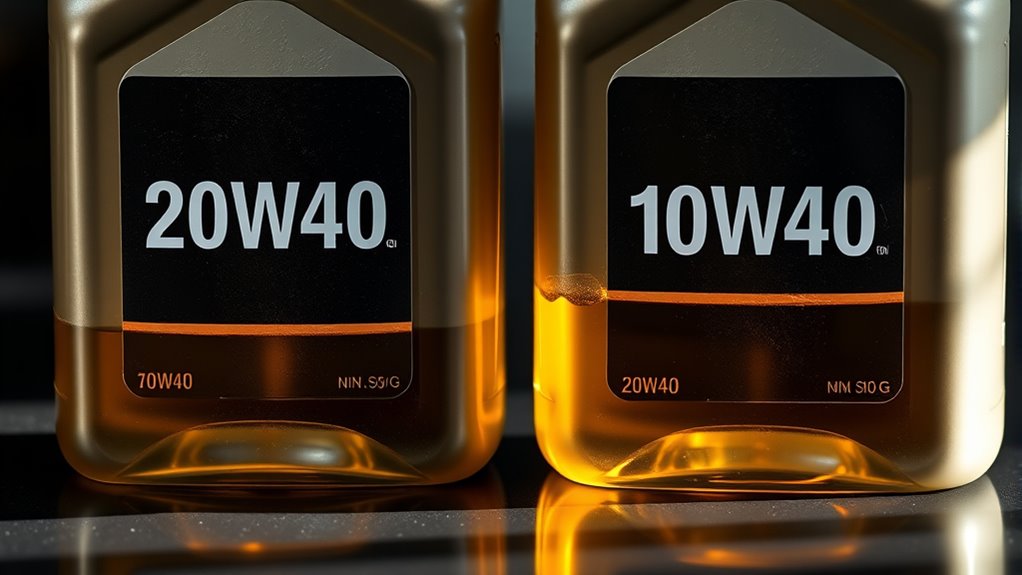
Understanding the viscosity ratings of motor oils like 20W40 and 10W40 is important because they show how the oil performs at different temperatures. These ratings help you decide if the oil is right for your engine, especially if you’re upgrading or want better fuel efficiency.
The “W” stands for winter, indicating how well the oil flows in cold weather. The number before the W shows the viscosity at low temperatures. A 10W40 oil flows better in colder weather than a 20W40, making starts easier and operation smoother.
This better cold flow can help your engine warm up faster and run more smoothly. Choosing the right viscosity rating ensures your engine performs well, wears less, and runs more efficiently over time.
How Cold Temperatures Affect Engine Oil Performance
When the temperatures dip, thicker engine oil can really have a harder time circulating through your engine. That can make cold starts tougher because the oil isn’t flowing as easily as it should. You might notice that a lower-viscosity oil, like 10W40, flows more smoothly, which helps your engine start more easily in the cold.
Oil Thickness at Low Temperatures
Cold temperatures really affect engine oil by making it thicker and harder to flow. When oil is too thick, it doesn’t circulate well, which can cause more wear on your engine at startup.
Thicker oil also creates more resistance, putting extra stress on engine parts and risking early damage. Plus, high viscosity makes it harder for the oil to filter out dirt and debris.
This means contaminants can build up, speeding up engine wear. Using oil that’s not suited for cold weather causes more friction and stress until it warms up.
Choosing oil with the right low-temperature viscosity helps it flow better, reduces wear, and keeps the oil cleaner. That way, your engine runs more smoothly during winter.
Cold Start Efficiency
At low temperatures, the viscosity of engine oil greatly affects how easily your engine starts and runs smoothly. Thicker oils like 20W40 resist flow more in cold weather, making cold starts harder and potentially increasing engine noise.
This extra effort can cause your engine to work harder, leading to reduced fuel efficiency. On the other hand, thinner oils like 10W40 flow faster when it’s cold, making startup easier and helping the engine reach its best operating conditions quicker.
This improved flow decreases engine noise during startup and ensures smoother operation. Picking the right viscosity for winter improves cold start efficiency, reduces strain on your engine, and helps save fuel.
In general, thinner oils tend to perform better in low temperatures, keeping your engine running smoothly and efficiently.
Which Oil Viscosity Is Better for Winter Cold Starts?
When it’s really cold outside, how easily your engine oil flows can make a big difference in starting your car smoothly. If you go with a lower viscosity oil, like 5W30 or even 0W20, it flows much better in those chilly temperatures. That means your engine can turn over faster and start more easily.
On the other hand, thicker oils like 10W40 or 20W50 tend to resist flow when it’s cold, which can make that initial start a bit tougher. So, for winter cold starts, it’s generally better to choose a lighter, lower viscosity oil to keep everything running smoothly.
Cold Start Performance
During winter, choosing the right oil viscosity can really make a difference in how quickly your engine starts and runs smoothly. Thinner oils like 10W40 flow more easily in cold temperatures, helping your engine start faster.
In contrast, thicker oils such as 20W40 might resist flow, making starting more difficult. When thinking about cold start performance, consider how oil viscosity impacts ease of start-up.
Synthetic oils generally do better in winter because they maintain better flow and offer improved protection during cold starts compared to conventional oils.
Proper engine oil recycling is also important to prevent environmental harm. Ultimately, selecting the right viscosity can boost reliability and reduce wear on cold mornings.
Oil Flow Ease
Choosing the right oil viscosity directly affects how easily your engine’s oil flows in cold weather. When the temperature drops, thicker oils resist flow, making it harder for the engine to get lubrication during startup.
A lower viscosity, like 10W40, allows oil to circulate more quickly and smoothly when it’s cold. This helps your engine get proper lubrication faster and reduces startup struggles.
In contrast, higher viscosity oils like 20W40 are thicker and may take longer to reach essential engine parts. That could increase wear during cold starts.
Having good oil flow is important because it impacts engine protection and overall performance.
Picking the right viscosity means you’ll experience easier cold starts, better engine lubrication in winter, and less strain when starting your car in chilly weather.
Thick or Thin Oil: How They Impact Your Engine in Cold Weather
In cold weather, the viscosity of your engine oil matters a lot because it affects how well your engine starts and runs. Thin oils, like 10W40, flow more easily at low temps, making startup smoother and reducing strain. Thick oils, like 20W40, resist flowing, which can lead to sluggish starts and more engine noise.
Thinner oils improve cold start performance but might not protect as well at high temperatures. Synthetic blends can help by improving flow and lowering engine noise during winter since they maintain better viscosity.
Thicker oils can give better protection in extremely cold conditions but may slow down startup and cause extra wear. Choosing the right oil depends on your climate and driving habits. Generally, thin oils circulate faster in winter, ensuring your engine gets lubrication right away.
When Should You Use 10W40 Instead of 20W40 in Winter?
Opting for 10W40 instead of 20W40 in winter is often the better choice when you need easier engine starts and smoother operation in cold conditions. The lower winter viscosity allows your engine oil to flow more quickly, reducing engine wear caused by thick, sluggish oil during cold starts.
This minimizes friction and provides better lubrication immediately after startup. Choosing 10W40 can also improve fuel efficiency since your engine doesn’t have to work as hard to circulate the oil, saving you fuel over time.
If you live in an area where temperatures drop below freezing regularly, 10W40 will offer better protection against cold-induced engine stress. Overall, when cold weather is a concern, using 10W40 helps your engine run more efficiently, reduces wear from cold starts, and enhances winter performance.
Pros and Cons of Using 20W40 Oil During Cold Months
Although 20W40 oil is thicker than what’s recommended for cold months, some vehicle owners still consider using it during winter. The main advantage is that it provides sturdy engine protection, reducing engine wear, especially if your engine isn’t in top condition.
However, its increased viscosity can lead to some drawbacks.
Harder cold starts happen because the thicker oil flows slowly at lower temperatures, making it harder to start the engine.
It can also reduce fuel efficiency since the engine has to work harder to circulate the thicker oil.
Plus, while it offers good lubrication once warmed up, cold starts may put more stress on engine parts, increasing the risk of wear.
Advantages and Disadvantages of 10W40 in Freezing Temperatures
Sure! Here’s the modified version with a more conversational tone:
—
When it’s really cold outside, 10W40 oil tends to flow more easily than thicker oils, which is a plus because it helps your engine start up more smoothly. That means your engine can get lubricated faster, reducing wear during those chilly mornings.
But, on the flip side, because 10W40 is relatively thinner when cold, some people worry it might not provide as much protection when the engine heats up. It can also thin out a bit too much at high temperatures, which could potentially impact lubrication efficiency. So, it’s important to think about these factors to make sure your engine stays protected and runs smoothly throughout the winter months.
Cold Weather Viscosity Performance
When temperatures drop sharply, 10W40 motor oil offers noticeable advantages because of its lower cold-weather viscosity. This helps your engine circulate oil more quickly during startup, which improves fuel efficiency and reduces engine noise.
You’ll benefit from faster lubrication at startup, which minimizes wear, and better cold engine performance. Plus, easier oil flow means improved fuel economy.
Keep in mind that while 10W40 handles cold weather better, its thinner consistency might slightly reduce protection at high temperatures or under heavy loads. In winter, though, the lower viscosity makes starting easier and keeps the engine running smoother.
This results in less strain on engine components and smoother operation, making it ideal for cold climates. Overall, 10W40 offers a good balance of cold weather performance without sacrificing too much protection.
Lubrication Efficiency Challenges
While 10W40 motor oil offers clear advantages in freezing temperatures, it also presents certain lubrication efficiency challenges. Its thinner consistency at low temperatures can improve cold starts but might not provide ideal lubrication for some engine designs.
This impacts fuel economy because inadequate lubrication can increase friction and wear. How well your engine handles thinner oils depends on its design; not all engines are suited for 10W40 in winter.
| Pros | Cons |
|---|---|
| Easier cold starts | Reduced film strength at low temps |
| Better fuel economy | Possible increased engine wear |
| Compatibility with many engines | Less protection for older or heavy-duty engines |
Which Viscosity Helps Prevent Engine Damage When It’s Freezing?
Choosing the right engine oil viscosity is key to preventing engine damage in freezing temperatures. Cold weather protection depends a lot on choosing the correct lubricants, since thicker oils can have trouble flowing when it’s really cold.
Choosing the correct engine oil viscosity is essential for preventing cold weather engine damage.
In freezing conditions, thinner oils like 10W40 flow more easily, helping ensure proper lubrication from the start. This can prevent metal-on-metal contact and reduce wear. Here are three main reasons why:
- Quick Start-up – Thin oils circulate faster, protecting engine parts immediately.
- Flowability – They reach critical components more efficiently at low temperatures.
- Reduced Engine Stress – Proper lubrication lessens strain on engine parts and cuts the risk of damage.
If you’re in a colder climate, 10W40 is a better choice for cold weather protection than thicker options like 20W40. Always select engine lubricants that stay fluid in freezing temps to keep your engine safe.
How to Choose the Best Winter Oil Based on Your Vehicle and Climate
Selecting the right winter oil depends on your vehicle’s specifications and the climate you face. If your winters are cold, go for a lower viscosity oil like 10W40. It flows better at low temperatures, which helps improve fuel efficiency and makes starting your engine easier.
In milder winters, 20W40 might be enough. It offers better engine protection over time and helps maintain engine longevity.
Think about your climate and your routine. Here’s a quick guide:
| Climate Type | Recommended Oil Viscosity | Key Benefit |
|---|---|---|
| Very Cold Winters | 10W40 | Better cold start, fuel efficiency |
| Milder Winters | 20W40 | Engine protection, longevity |
| Variable Winters | Check vehicle manual | Balances efficiency and protection |
Always look at your vehicle’s manual for manufacturer recommendations. Choose an oil that strikes the right balance between fuel efficiency and engine protection for your climate.
Tips for Switching to Winter-Appropriate Motor Oil
Switching to winter-appropriate motor oil involves a few simple but important steps to keep your engine running smoothly in cold weather. First, check your vehicle’s owner’s manual for the recommended oil viscosity and specifications for winter use.
Switch to winter motor oil by consulting your owner’s manual and following essential maintenance steps.
Then, choose an oil like 10W40 if it’s really cold outside, because lower-viscosity oils flow better and help improve fuel efficiency. Finally, follow these key tips:
- Drain the old oil completely to prevent mixing or contamination.
- Use high-quality winter motor oil designed for cold-weather performance.
- Check your oil level regularly to ensure proper lubrication and emissions control.
These steps make sure your engine starts more easily, burns fuel more cleanly, and produces fewer emissions. Proper switching helps your vehicle run smoother, use less fuel, and stay eco-friendly during harsh winter months. Always follow the manufacturer’s recommendations for maximum safety and performance.
Frequently Asked Questions
Can Using the Wrong Oil Damage My Engine in Winter?
Using the wrong oil can cause engine wear during winter, especially if it doesn’t suit cold starts. Thick oil like 20W40 may not flow well in low temperatures, which can put extra strain on your engine.
This can lead to poor lubrication, faster wear, and difficulty starting your vehicle. To protect your engine, always choose an oil viscosity that’s suitable for winter conditions.
Doing so helps ensure smooth cold starts and reduces the risk of engine damage in cold weather.
How Often Should I Change My Winter-Specific Engine Oil?
You should change your winter-specific engine oil every 3,000 to 5,000 miles or every three to six months, whichever comes first.
The frequency mainly depends on your driving habits and the winter oil lifespan, which is shorter because cold temperatures stress the oil more.
Regularly checking the oil level and condition helps keep your engine protected during winter months.
Does Synthetic Oil Perform Better in Cold Weather Than Conventional Oil?
Yes, synthetic oil performs better in cold weather than conventional oil because it flows more easily at low temperatures, which helps the engine start faster.
It also provides better lubrication and keeps your engine running smoothly during winter, reducing wear and tear.
Synthetic oils resist thickening in cold conditions, so your engine runs more reliably.
Are There Any Additional Additives Recommended for Winter Engine Oils?
Think of your winter oil as armor against the cold. Additional additives can give it crucial protection.
Look for winter oil blends that include anti-wear agents, antioxidants, and pour point depressants. Make sure these additives are compatible with your engine oil to avoid any issues.
These improvements help maintain viscosity, improve cold start performance, and prevent engine wear. This makes your engine more resilient during harsh winter months.
How Do Oil Viscosity Choices Affect Fuel Efficiency During Winter Months?
Your oil viscosity choice has a big impact on fuel efficiency during winter.
Lower viscosity oils like 10W40 flow better at cold temperatures, which reduces engine strain and helps improve fuel economy.
Cold weather can cause oils to thicken, so choosing one that resists this helps keep your engine running smoothly.
Using the right viscosity ensures your engine runs efficiently, saving fuel during the colder months when thicker oils can cause more friction and lower mileage.
Conclusion
Choosing the right oil for winter depends on your climate and vehicle.
While 10W40 flows better in freezing temperatures, 20W40 might be better for milder cold conditions.
Don’t worry if switching options feels confusing—just check your owner’s manual or ask a mechanic.
Using the proper viscosity helps protect your engine from cold starts and keeps it reliable year-round.
With a little attention, your engine will stay happy, no matter how cold it gets!
When it comes to winter driving, understanding the difference between 20W40 and 10W40 can make a big difference in engine performance.