What Do Bad Spark Plugs Look Like? Signs & Visual Guide
Many car owners struggle with diagnosing engine issues caused by faulty spark plugs. You’re not alone—bad spark plugs can lead to rough idling, poor fuel economy, or difficulty starting your vehicle. Recognizing the early signs of wear is key to avoiding bigger problems down the road.
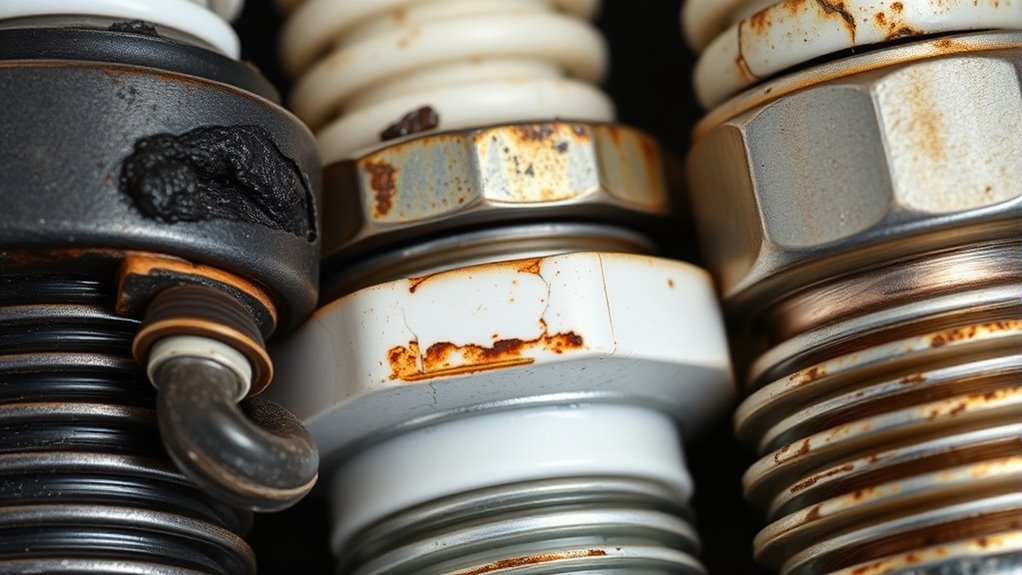
Bad spark plugs typically show signs of wear or damage that can affect your engine’s performance. Look for carbon deposits, oil fouling, or white ash buildup on the electrodes and insulator.
Cracks, chips, or discoloration indicate structural issues. Excessive deposit buildup, overheating signs, or broken insulators are also common clues.
Recognizing these signs early helps you avoid bigger problems. Keep going to uncover detailed tips on spotting these issues effectively.
Key Takeaways
- Bad spark plugs often have heavy carbon buildup, oil fouling, or white ash on the electrodes and insulators.
- Look for cracked, chipped, or discolored ceramic insulators, which can signal damage or overheating.
- Excessive erosion, worn electrodes, or burned insulators mean the spark plug isn’t functioning properly.
- Overheating signs include blistered, white, or pale insulators, along with burnt or discolored electrodes.
- You might also notice corrosion, rust, or orange deposits, all pointing to deterioration and possible electrical failure.
What Are the Quick Signs Your Spark Plugs Might Be Bad?
Your vehicle’s spark plugs are essential for engine performance, so it’s good to know when they might be failing. One quick sign is a rough engine idle or misfires, which can disrupt ignition timing. This can cause your car to idle unevenly or hesitate when you give it gas.
Rough idling or misfires may indicate failing spark plugs affecting engine performance.
You might also notice your fuel economy taking a hit. Worn spark plugs can cause incomplete combustion, leading to wasted fuel. If your engine feels sluggish or if starting your car becomes more difficult, it could be related to spark plug problems.
Increased emissions or strange smells coming from your exhaust can also be clues. These might mean your spark plugs are misfiring or ignition is delayed. These early warning signs are useful for catching issues before they turn into costly repairs.
Pay attention to how your car runs. Rough idling or poor fuel economy are good indicators that your spark plugs might need checking or replacing. Catching these signs early can save you time and money.
Visual Clues to Spot Worn or Damaged Spark Plugs
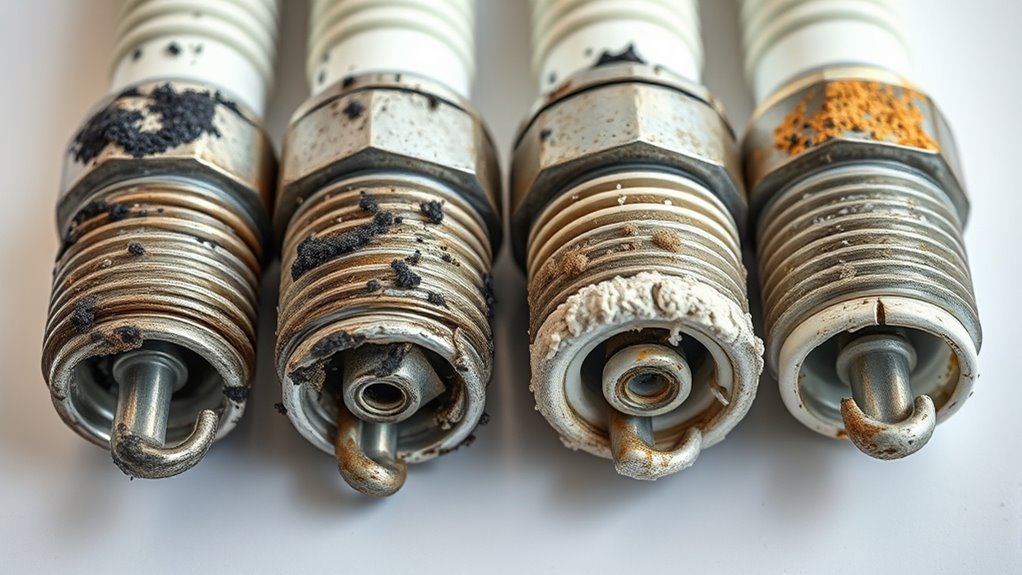
Because visual inspections can reveal early signs of spark plug wear, it’s important to know what to look for. Worn or damaged spark plugs often show a buildup of carbon deposits, which look black and soot-like on the electrode and insulator.
You might also notice chipped or eroded electrodes, indicating excessive wear that can disrupt the ignition system’s performance. Cracks or chips on the ceramic insulator signal damage and significantly reduce spark efficiency.
A burn or discoloration—such as white or blistered areas—can indicate overheating. These visual clues impact engine performance by causing misfires, rough idling, or hard starting.
Regular inspection helps catch issues early before they lead to more serious ignition problems or engine setbacks. By paying attention to these signs, you can ensure your spark plugs are in good condition and your engine runs smoothly.
How Do Good and Bad Spark Plugs Differ in Appearance?
Good spark plugs typically have a shiny, clean metal electrode with minimal buildup, clear insulators, and no signs of damage or discoloration. They help your engine run smoothly and efficiently, keeping noise steady.
When comparing good and bad spark plugs, look for these differences:
- Electrode Condition: A good plug’s electrode is shiny and smooth. A bad one might have carbon buildup, erosion, or glazing on it.
- Insulator Clarity: Healthy plugs have clear, intact insulators. Cracks or discoloration mean trouble.
- Deposits and Discoloration: Excess deposits or burnt colors suggest poor combustion. This can hurt fuel efficiency and cause rough engine noise.
- Physical Damage: Cracks, chips, or burn marks are signs of a bad spark plug. These issues can lead to misfires and lower engine performance.
These visual clues will help you tell a good spark plug from a worn or damaged one, making sure your engine runs well.
Step-by-Step: Inspecting Your Spark Plugs for Damage
To accurately assess whether your spark plugs are in good shape, start by removing each one carefully from your engine. Use a spark plug socket and wrench to loosen them, then inspect visually.
Look for signs of spark plug corrosion, which appears as white or greenish deposits on the metal parts. These indicate moisture or chemical buildup.
Check the electrode for erosion—if it looks rounded or worn down, it may hinder proper spark delivery.
Examine the insulator for cracks, chips, or discoloration that signal damage.
Clean the spark plug with a wire brush if necessary, but replace severely corroded or eroded plugs.
By closely inspecting these elements, you’ll identify potential problems early, ensuring your engine runs smoothly.
Proper inspection and prompt replacement of damaged spark plugs can improve fuel efficiency, power, and overall engine health.
What Do Fouled Spark Plugs Look Like and Why Does It Matter?
Fouled spark plugs often look different from clean ones and can cause your vehicle to run poorly. Recognizing these signs is important because they can lead to misfires, worse fuel economy, and rough idling.
First, check the spark plug color. A black, carbon-sooted appearance means too much fuel or oil is burning, which makes ignition harder.
Next, look for corrosion on the electrode. White or brown crust indicates corrosion, which weakens the spark and reduces its effectiveness.
Oil fouling shows up as a wet, oily look on the plug. This suggests oil is leaking into the combustion chamber and fouling the plug.
Finally, if the tips are burned or melted and look white or blistered, it means the plug is overheating. This can cause misfires and damage the plug itself.
Identifying Worn Electrode Tips and Improper Gaps
Worn electrode tips and improper gaps are common signs that your spark plugs need attention and can significantly affect engine performance. Over time, the electrode tips can become rounded, eroded, or develop buildup deposits, which reduce the spark’s effectiveness.
When inspecting spark plugs, look for signs of wear like excessive erosion or deposits that might block proper ignition. An incorrect gap—either too wide or too narrow—can disrupt spark formation, leading to missed or weak ignitions.
To check the gap, use a feeler gauge and compare it to your vehicle’s specifications. Worn tips and improper gaps can lower fuel efficiency and cause engine misfires, rough idling, or power loss.
Replacing or gapping your spark plugs correctly ensures a strong spark, improving combustion and extending your engine’s life. Regular inspections help catch these issues early, so your engine runs smoothly and efficiently.
Cracks, Breaks, and Insulation Damage in Spark Plugs
Cracks, breaks, and insulation damage can develop in spark plugs, and overlooking these issues can lead to serious engine problems.
Damage to the insulator or ceramic, cracks, or breaks weaken the spark plug’s ability to produce a proper spark, which affects ignition system performance.
Damaged insulators and cracks impair spark quality, compromising ignition and engine performance.
Look out for these signs:
- Cracks in the ceramic insulator — these can cause misfires and poor combustion.
- Physical breaks or fractures — often from impact or intense heat, which impair spark integrity.
- Chipped or damaged ceramic insulation — reduces spark reliability and engine consistency.
- Discolored or burnt insulator — indicates overheating and can lead to further damage, reducing engine performance.
How Deposits and Build-Up Signal a Problem
Deposits and buildup on your spark plugs can be a sign that something’s not quite right with your engine. When those deposits start to form, it can really affect how well your engine runs. These buildups might come from things like oil leaks or certain fuel additives, and they can make your spark plugs less effective.
As the deposits accumulate, you might notice your engine misfiring more often, losing power, or using more fuel than usual. It’s a good idea to keep an eye on these signs, so you can address the issue before it leads to more serious problems.
Types of Deposits
The types of deposits that form on spark plugs can reveal a lot about underlying engine issues. Recognizing these deposits helps you diagnose problems affecting fuel efficiency and emission control.
- Light Ash Deposits: White or grayish and powdery, indicating oil consumption or burning valve seals, which can harm emissions.
- Dark Carbon Buildup: Black, tar-like deposits suggest incomplete fuel combustion, reducing fuel efficiency and increasing emissions.
- Oily Deposits: Greasy layers point to oil leaks into combustion chambers, negatively impacting fuel use and emission systems.
- Corrosion or Rust: Orange or brown deposits reveal moisture or corrosion, degrading spark effectiveness and engine performance.
Understanding these deposits helps you determine when spark plug maintenance is needed for effective engine efficiency and emission control.
Causes of Build-Up
Have you ever wondered what excessive buildup on your spark plugs might be signaling? It often points to issues with spark plug materials breaking down or deposits forming faster than they should.
Poor fuel mixture adjustments, whether too rich or too lean, can cause fuel additives and carbon residues to accumulate on the electrode and insulator. Over time, these deposits build up, impairing spark delivery and ignition performance.
Using low-quality fuels or incorrect spark plug types also speeds up this process. If the engine runs too rich, unburned fuel can leave oily deposits, while a lean mixture might cause overheating that damages the plug surface.
Recognizing these causes helps you prevent excessive buildup and keeps your engine running smoothly.
Effects on Performance
Ever notice your engine hesitating or losing power unexpectedly? That’s a sign your performance is suffering from bad spark plugs. Deposits and build-up can cause:
- Engine misfire, leading to rough idling and inconsistent acceleration.
- Reduced fuel efficiency, as your engine struggles to burn fuel properly.
- Difficulty starting, since spark delivery becomes unreliable.
- Lower power output, making it harder to accelerate or climb hills smoothly.
These issues happen because poor spark plug performance impacts how well your engine runs. When deposits block spark quality, your engine can’t operate smoothly, affecting overall performance.
Addressing these problems early helps keep your engine running smoothly and boosts fuel economy. Ignoring signs can lead to more serious damage and costly repairs.
When Should You Replace Spark Plugs Based on Visual Signs?
You can often tell it’s time to replace your spark plugs by looking at their condition. If you see excessive wear, oil fouling, or deposits like carbon build-up, it’s a clear sign they need to be replaced.
Worn or dirty spark plugs can hurt your fuel efficiency. They make your engine work harder and use more fuel. Checking your spark plugs visually helps catch issues like misfires or poor combustion early.
Worn spark plugs reduce fuel efficiency and cause engine issues; regular visual checks help catch problems early.
Pale or white insulators show overheating, which can damage your engine over time. Cracks, corrosion, or electrode erosion are also signs you should replace your spark plugs. Regular inspection keeps your engine running smoothly.
Replacing spark plugs at the first signs of trouble helps maintain peak performance and fuel economy. It can save you money and prevent bigger problems down the road.
Essential Tools and Tips for an Effective Spark Plug Inspection
If you want to inspect your spark plugs properly, you’ll need a few basic tools—stuff like a spark plug socket, a ratchet wrench, and a torque wrench. It’s always a good idea to follow some safety steps too, like disconnecting the battery and slipping on a pair of gloves. That way, you stay safe and avoid any injuries.
When you’re ready to inspect, make sure you’re working in a well-lit area so you can see everything clearly. Be gentle with the components and handle everything carefully to keep the process smooth and thorough.
Necessary Inspection Tools
Inspecting spark plugs effectively requires the right tools, as they guarantee accurate assessment and prevent damage. To evaluate spark plug conditions properly, you’ll need:
- A socket wrench and spark plug socket to remove and inspect the plug without damaging the materials.
- A visual inspection light to check for deposits, cracks, or erosion, which can affect ignition timing.
- A wire brush or spark plug cleaner for gently removing debris, ensuring a clear view of the electrode.
- A spark tester to verify proper spark output, confirming ignition timing and overall engine performance.
These tools help identify issues like fouling or worn electrodes, which directly impact spark plug materials and ignition timing. Proper inspection guarantees you catch problems early and maintain engine efficiency.
Inspection Procedure Tips
Effective spark plug inspection hinges on following the right procedures and using proper tools. Start by disconnecting the battery to prevent accidental sparks.
Remove the spark plug carefully using a spark socket, and make sure you have a torque wrench for reinstalling to avoid damage. When inspecting, look for signs of wear, corrosion, or deposits that could affect ignition timing or fuel mixture.
Check the electrode gap with a feeler gauge, ensuring it matches your vehicle’s specifications. Clear, consistent gaps help maintain proper ignition timing and fuel efficiency.
Use a flashlight to get a close view of the insulator and electrodes. Proper tools and keen observation help you identify issues early, preventing misfires or engine problems.
Safety Precautions Needed
Have you gathered the right tools and taken necessary safety measures before starting your spark plug inspection? Safety is essential to avoid injuries and ensure accurate results.
First, wear gloves to protect your hands from dirt and sharp edges. Second, disconnect the battery to prevent accidental sparks or electrical shorts.
Third, use safety glasses to shield your eyes from debris or brake dust. Fourth, work in a well-ventilated area and avoid open flames, especially when inspecting spark plug color or material.
Be cautious about the spark plug’s heat. It can be hot even after the engine cools.
Keep in mind that spark plugs can have a variety of signs—like listing the spark plug material or checking the color—that indicate wear or damage.
Prioritize safety to make your inspection effective and safe.
Frequently Asked Questions
Can Bad Spark Plugs Cause Engine Misfires?
Yes, bad spark plugs can cause engine misfires. When they wear out or get fouled, ignition coil issues can come up, making it hard to produce a proper spark.
This can lead to incomplete combustion, which results in misfires. Fuel system problems might also make things worse because worn-out spark plugs can’t ignite the fuel-air mixture properly.
You’ll notice rough idling, hesitation, or a loss of power—these are clear signs that something’s off with your spark plugs or related parts.
How Do I Differentiate Old vs. Damaged Spark Plugs Visually?
Did you know that worn spark plugs can reduce your engine’s fuel efficiency by up to 30%?
You can tell old from damaged spark plugs by inspecting their materials.
If they’re covered in carbon deposits or if the metal has eroded, especially around the electrodes, it’s time to replace them.
Damaged spark plugs often show severe electrode wear, with gaps widened or electrodes broken.
This indicates they’re no longer functioning properly and should be replaced.
What Color Indicates a Healthy Spark Plug?
A healthy spark plug usually shows a light tan or grayish color on the insulator tip, which means the combustion is happening properly.
If you notice excessive carbon buildup or oil on the spark plug, cleaning might help if it’s just minor. But if you see corrosion or damage, it’s time to replace it.
Regular visual checks can help you decide when to clean your spark plugs or go ahead with replacement. This way, you keep your engine running smoothly.
Are There Visual Signs of Corrosion on Spark Plugs?
Yes, you can spot corrosion on your spark plugs visually. Look for white or greenish deposits on the electrodes, which indicate corrosion. Also, check for electrode damage like pitting or erosion.
Carbon buildup shows up as dark, oily soot on the electrode and insulator. It often causes misfiring.
If you notice any of these signs, it might mean your spark plug is deteriorating and needs cleaning or replacement.
How Often Should Spark Plugs Be Visually Inspected?
You should visually inspect your spark plugs every 20,000 to 30,000 miles, or as recommended by your vehicle’s manufacturer. Regular inspections help you catch any issues early and keep your engine running smoothly.
Keep your maintenance records in mind and follow the manufacturer’s guidelines. Pay attention if you notice signs of wear or corrosion, as those might be clues to check your spark plugs sooner.
Doing this ensures your spark plugs stay in good shape, which helps your engine perform at its best. Regular checks are a simple step to keep everything running smoothly.
Conclusion
Keeping an eye on your spark plugs isn’t just about spotting issues; it’s about understanding your engine’s silent signals. Regular inspections often reveal subtle signs like deposits or cracks, which can cause performance hiccups.
By staying attentive and proactive, you can prevent small problems from turning into costly repairs. Your spark plugs tell a story—listen carefully to keep your vehicle running smoothly.
Remember, if your spark plugs look damaged or worn, it’s time to replace them. Catching these signs early can save you money and help you avoid unexpected breakdowns. Regular checks for bad spark plugs are key to maintaining a healthy engine.