What Is The Difference Between 15w 50 Vs. 10w 40 Engine Oil?
If you’ve ever worried about choosing the right engine oil for your vehicle, you’re not alone. Many car owners struggle with understanding the different options and what works best for their driving conditions.
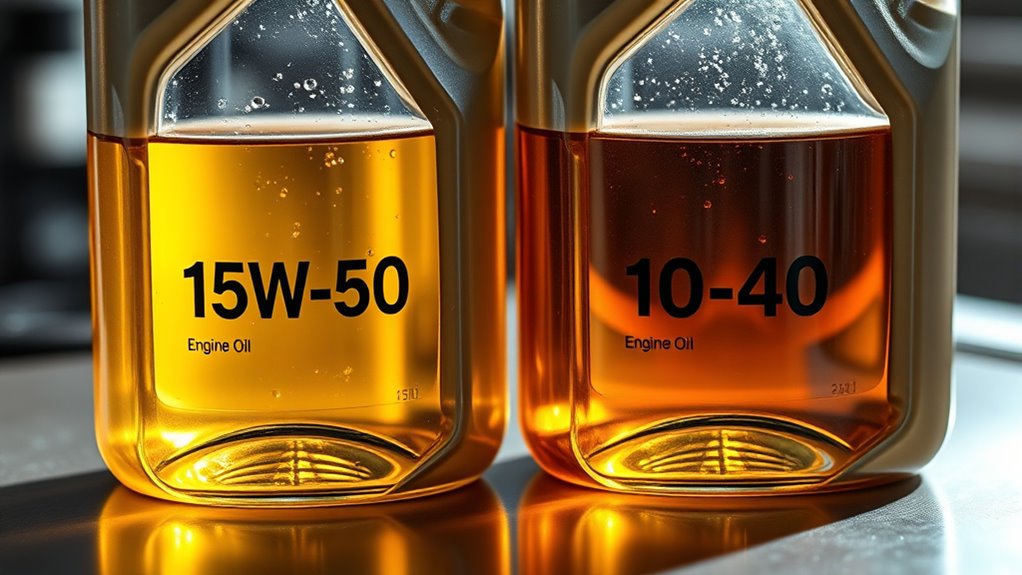
The main difference between 15W-50 and 10W-40 engine oils is their viscosity, which affects how they perform in different temperatures and driving conditions. 15W-50 is thicker at operating temperature, offering better protection under heavy loads and hot conditions.
Meanwhile, 10W-40 flows more easily during cold starts, helping your engine start smoothly in chilly weather.
If you’d like to understand which oil suits your climate and vehicle better, there’s more to take into account.
Key Takeaways
- 15W-50 is thicker at operating temperature, so it offers better protection under high heat and heavy loads compared to 10W-40.
- 10W-40 flows more easily during cold starts, helping your engine start more smoothly in colder climates. Meanwhile, 15W-50 isn’t as ideal for cold starts.
- 15W-50 provides better durability and a stronger film of oil for demanding driving conditions and higher-mileage engines.
- 10W-40 is better for cold weather performance and can improve fuel economy, especially on short trips and in winter conditions.
- Your choice depends on your climate and driving needs. 15W-50 is better suited for hot climates and heavy-duty use, while 10W-40 works well in colder environments.
What Is Engine Oil Viscosity and Why Does It Matter?
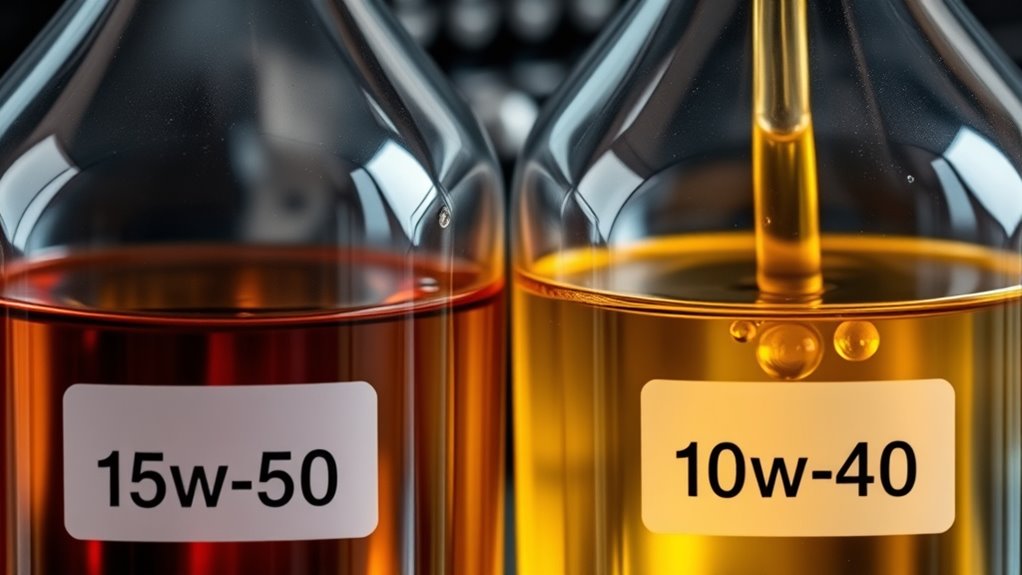
Understanding engine oil viscosity is important because it tells you how well the oil flows at different temperatures. Viscosity affects how your engine performs under various conditions, making sure it gets the right lubrication.
Understanding engine oil viscosity ensures optimal flow and lubrication across temperature ranges.
Thicker oils block less heat and resist flow more, while thinner oils flow easily but might not protect as well at high temperatures. Oil additives help improve properties like wear protection and corrosion resistance, which can also influence viscosity.
Your engine depends on the right balance of these additives to work at its best. When choosing oil, understanding viscosity helps you pick the right grade for your climate and driving habits.
High or low viscosity impacts how quickly the oil circulates. This affects startup performance, engine wear, and fuel efficiency.
In short, knowing how engine formulations and oil additives affect viscosity helps you make smarter choices to keep your engine healthy and running longer.
How Do 15W-50 and 10W-40 Compare in Viscosity and Performance
You’ll probably notice that 15W-50 is thicker than 10W-40 when the engine is at operating temperature. Basically, it has a higher viscosity, which means it’s more resistant to flow. This makes a difference when you’re talking about how the oil performs under different conditions, like cold starts or when the engine is running hot.
In colder weather, the 10W-40 tends to flow better because it’s thinner at low temperatures, making startup easier. On the other hand, 15W-50 holds up better in high temperatures and heavy engine loads, offering more protection in those scenarios. So, knowing how each oil behaves can really help you pick the best one for your vehicle’s specific needs.
Viscosity Characteristics Comparison
When comparing 15W-50 and 10W-40 engine oils, their viscosity properties are key to how they perform. The ratings show how the oil flows at different temperatures, affecting engine protection and efficiency.
15W-50 is thicker at operating temperatures, which means it offers better oil longevity and film strength, especially under heavy loads. On the other hand, 10W-40 flows more easily during cold starts, providing quicker lubrication in cold weather.
Both oils have good viscosity stability, but their differences matter depending on your climate and engine needs. If you’re dealing with high temperatures, 15W-50’s thicker consistency provides extra protection. For milder climates, 10W-40’s lower viscosity helps ensure smoother operation and easier cold starts.
Performance Under Different Conditions
Both 15W-50 and 10W-40 oils perform differently under various operating conditions, mainly because of their viscosity differences.
In extreme temperatures, 15W-50 provides better lubrication at high heat, helping to protect engine parts and extend engine life. Meanwhile, 10W-40 flows more easily in cold starts, making it reliable for startup and initial lubrication.
Under normal conditions, both oils offer adequate protection. However, their performance can impact how often you need to recycle the oil. Thick 15W-50 may require more frequent oil changes, which affects oil recycling frequency.
On the other hand, 10W-40’s lower viscosity can reduce oil consumption and make recycling more efficient. Understanding these differences helps you choose the right oil to maximize performance and longevity based on your driving environment.
How Temperature Changes Affect Your Engine Oil’s Behavior
When the temperature drops, your engine oil becomes thicker. This can make it harder for your engine to start up and run smoothly because the oil isn’t flowing as easily. On the flip side, when it’s really hot outside, some oils thin out more than they should. That can lead to less effective lubrication, which might speed up wear and tear on your engine.
Cold Starts Thickening
Ever wondered how your engine oil responds during those chilly winter mornings? When temperatures drop, oil thickens, making cold starts harder. This thickening can reduce fuel economy because the engine has to work harder to turn thick oil, and it can also shorten the oil’s lifespan due to increased stress on its viscosity.
Thicker oil creates more resistance during startup. It also delays proper circulation, which affects engine lubrication. That means your engine isn’t getting the oil it needs as quickly as it should.
All of this extra effort during cold starts wastes fuel. Over time, thickening speeds up oil breakdown, reducing its overall lifespan. Choosing the right oil, like 10w 40 for colder climates, helps minimize these issues by flowing more easily when cold.
This supports better fuel economy and extends the oil’s lifespan, keeping your engine running smoothly in winter.
Hot Weather Effects
As temperatures rise, engine oil gets thinner and flows more easily, which can impact how well your engine is protected.
Different engine oil types, with their specific viscosity ratings, react differently to hot weather.
Higher viscosity oils, like 15w 50, stay thicker at higher temperatures, offering better protection against wear during the heat.
On the other hand, lower viscosity oils such as 10w 40 become even thinner when hot, which helps circulation and improves fuel economy.
However, they might provide less film strength under extreme conditions.
It’s important to pick an oil with the right viscosity ratings for your climate.
If you’re in a very hot environment, choosing oil that keeps its viscosity helps prevent breakdown and keeps your engine protected.
Viscosity Stability
Temperature fluctuations directly impact how stable your engine oil’s viscosity remains, which is crucial for maintaining proper lubrication and engine protection. When temperatures change, oils with better viscosity stability perform more reliably.
Synthetic blends are designed to resist thinning at high temperatures and thickening in cold weather, helping keep viscosity consistent. Oil additives, like viscosity modifiers, also improve stability—especially in multi-grade oils like 10w 40 and 15w 50.
15w 50 oil tends to hold its viscosity better under extreme heat, making it a good choice for heavy-duty or high-mileage engines. Cold weather can make thicker oils struggle, but quality additives help expand the oil’s viscosity range, reducing startup wear.
Choosing the right oil depends on how well it maintains viscosity across temperature changes.
Is 15W-50 or 10W-40 Better for Cold Starts?
When it comes to cold starts, thinner oils generally flow more easily, providing better lubrication right from startup. Between 15W-50 and 10W-40, the 10W-40 oil is better suited for cold weather because its lower cold-start viscosity allows it to circulate more quickly.
If you live in colder climates or often face freezing temperatures, using 10W-40 can help your engine start smoother and reduce initial wear. For engine upgrades or vehicles under heavy loads, thicker oils like 15W-50 might be beneficial once the engine warms up, but they’re less ideal for cold starts.
Sticking to your vehicle’s Maintenance Schedule and choosing the right oil for your climate will help optimize cold start performance. If cold weather is a primary concern, 10W-40 offers better flow during startup, protecting your engine from the start.
How Do These Oils Protect Your Engine and Prevent Wear?
These oils create a super thin layer of lubrication that helps keep metal parts from rubbing directly against each other. By doing this, they help protect your engine from wear and tear.
Plus, they’re pretty smart—they stay stable whether it’s hot or cold outside, so your engine stays protected no matter the weather. And on top of that, they also help prevent rust and corrosion, which can cause a lot of damage over time. So, in the long run, these oils do a great job of keeping your engine running smoothly and lasting longer.
Lubrication Film Formation
Effective lubrication depends on the oils’ ability to form a durable film between moving engine parts, stopping metal-to-metal contact that causes wear and damage. Both 15w-50 and 10w-40 oils create this protective layer through their unique viscosity properties.
Using synthetic blending helps boost this film by improving flow during cold starts and keeping it thick under high temperatures. These oils also benefit from recycling processes, which keep them cleaner and better at protecting engine components.
Remember these key points:
- Proper film formation reduces friction and wear.
- Viscosity influences how well oil sticks during various temperatures.
- Synthetic blending improves film stability.
- Oil recycling maintains oil purity and protects the film’s integrity.
This combined approach maximizes engine protection over time.
Temperature Stability Effect
Temperature stability is essential because engine oils need to perform reliably across a wide range of temperatures.
15w 50 and 10w 40 oils include synthetic blends designed to keep viscosity steady in both hot and cold conditions, preventing issues like thinning or thickening. This consistency helps ensure your engine is protected during winter startups and summer high-temperature driving.
Stable oils also help your oil filters work better by consistently trapping contaminants, reducing wear, and preventing sludge buildup. Without proper temperature stability, oils can break down or lose their lubricating properties, which can increase engine wear.
Wear and Corrosion Prevention
Both 15w 50 and 10w 40 engine oils actively defend your engine against wear and corrosion by forming a protective film on metal surfaces. This reduces friction and prevents metal-to-metal contact, keeping internal components sliding smoothly.
To improve protection, these oils include additives that combat corrosion caused by moisture and acids. They also help reduce metal fatigue by lowering wear during startup and operation.
Additionally, these oils aid in improving fuel economy by minimizing internal resistance. They maintain a stable viscosity that supports consistent lubrication across different temperatures.
Which Oil Helps Improve Fuel Efficiency and Power?
When choosing between 15w-50 and 10w-40 oil, it’s important to consider how each affects your vehicle’s fuel efficiency and power.
Thinner oils like 10w-40 flow more easily at lower temperatures, which helps reduce engine drag and improves fuel economy during cold starts.
10w-40 oil flows more easily in cold weather, reducing engine drag and enhancing fuel efficiency during start-up.
Thicker oils like 15w-50 provide better lubrication for high-performance engines but can slightly decrease fuel efficiency because they create more resistance.
Engine oil additives play a crucial role—high-quality additives improve oil flow and reduce friction, boosting power and efficiency.
Synthetic oils typically outperform conventional ones because they contain more refined base oils and advanced additives.
This gives synthetic oils better flow characteristics and engine protection.
As a result, synthetic oils help your engine run more smoothly, waste less energy, and deliver more power, ultimately improving fuel efficiency over time.
When Should You Use 15W-50: Ideal Conditions and Vehicles
15W-50 oil is best suited for specific conditions and vehicles that need thicker lubrication in demanding situations. You should consider using this oil if your vehicle often operates in high temperatures or carries heavy loads. It provides better protection for engine parts in tough conditions.
Additionally, 15W-50 is great for engines with higher mileage or those involved in towing and hauling. Make sure your engine is certified to handle this thicker oil, especially if it was designed for higher viscosities.
Proper disposal of used oil is important for the environment. Always recycle your oil responsibly. Here are some situations where 15W-50 might be the right choice:
- When driving in hot climates or under high heat
- For heavy-duty trucks, construction machines, or towing vehicles
- When your engine has higher mileage and needs extra protection
- If your vehicle manufacturer recommends 15W-50
Use this viscosity for tough driving conditions where thicker oil can provide extra durability.
Why Choose 10W-40 Instead of 15W-50 for Your Car?
Choosing 10W-40 instead of 15W-50 can be better because it improves fuel efficiency and makes cold starts easier, especially in moderate climates. This oil is thinner when cold, helping your engine start smoothly without much effort.
It usually contains synthetic blends, which flow better and offer better protection in cold weather. Plus, 10W-40 has advanced additives that help protect your engine from wear and keep it cleaner longer.
These additives reduce sludge buildup and friction, which can extend the engine’s lifespan. On the other hand, 15W-50 is thicker at startup, increasing resistance and slightly decreasing fuel economy.
How Climate and Driving Conditions Guide Your Oil Choice
Your engine oil’s effectiveness really depends on the climate and driving habits you deal with daily. Hot weather or lots of stop-and-go driving can speed up oil breakdown, so picking the right oil is key.
Think about these factors:
Consider your climate and driving habits to choose the best engine oil for optimal performance.
- If you’re driving in extreme heat, a thicker oil like 15W-50 helps keep its viscosity and protects engine parts. Synthetic blends with oil additives can also boost high-temperature stability.
- In cold climates, a thinner oil like 10W-40 flows more easily during startup, which reduces wear and tear. Synthetic blends make cold starts smoother and easier.
- For short trips often, the oil might not warm up enough. In that case, synthetic blends with additives prevent quicker oxidation and breakdown.
- If you’re doing long highway drives, you’ll want an oil formulation that resists thinning over time. Synthetic blends are better because they last longer and stay durable.
Matching your climate and driving style ensures your oil provides steady protection, especially when taking advantage of the benefits of synthetic blends and oil additives.
Common Mistakes to Avoid When Picking Between 15W-50 and 10W-40
Many car owners make critical mistakes when selecting between 15W-50 and 10W-40, often by ignoring their vehicle’s specific needs and operating conditions.
One common error is choosing based solely on price or brand, rather than understanding how synthetic blends or engine classifications influence performance.
For example, some assume thicker oils like 15W-50 are suitable for all engines, but that’s not true for light-duty or passenger cars designed for thinner oils. Using the wrong oil can lead to poor lubrication or engine wear.
| Mistakes to Avoid | Key Takeaway |
|---|---|
| Ignoring engine classification | Always check your vehicle’s recommended oil type. |
| Overlooking synthetic blends | Consider synthetic blends for better temperature stability. |
| Choosing based on climate only | Match oil viscosity to your engine’s specifications. |
| Ignoring operating conditions | Adjust oil choice to driving patterns and load. |
Avoid these mistakes to ensure your engine performs at its best and lasts longer.
Frequently Asked Questions
Can I Mix 15W-50 and 10W-40 Engine Oils Safely?
You shouldn’t mix 15W-50 and 10W-40 engine oils, as their viscosity differences can affect performance.
The oil composition varies because these oils have different additives designed for specific viscosities. Combining them might cause inconsistent lubrication and wear.
This is especially true under changing temperatures. For the best engine health, stick to one type and check your vehicle’s manual for the recommended oil viscosity.
Mixing different oils could lead to unexpected engine problems down the line.
How Often Should I Change 15W-50 Versus 10W-40?
You should change 15w-50 and 10w-40 engine oils roughly every 3,000 to 5,000 miles, but it really depends on how you drive.
Synthetic blends can help the oil last longer, so you might be able to extend those intervals a bit.
Since 15w-50 is often used under high-stress conditions, it might need more frequent changes.
Check your vehicle’s manual, think about your driving habits, and stay consistent with oil changes to keep your engine running smoothly.
Are These Oils Suitable for High-Mileage Engines?
You might be busy trying to figure out if these oils are good for high-mileage engines. Usually, synthetic oils are better than conventional ones for older engines because they handle oil recycling more effectively and keep their viscosity longer.
While 15w-50 can give extra protection for high-mileage engines, 10w-40 is often a good choice for engines with moderate wear. Always check your engine’s age and stick to your manufacturer’s recommendations.
And don’t forget to look for oils designed specifically for high-mileage vehicles—they can offer even better protection as your engine ages.
Do Fuel Additives Impact the Performance of 15W-50 or 10W-40?
Fuel additives can positively impact the performance of both 15w-50 and 10w-40 oils. They help clean engines, improve lubrication, and boost cold weather performance by reducing sludge buildup and ensuring smoother starts.
Synthetic blends especially benefit from additives, which help maintain their effectiveness in high-mileage engines. Just be sure to choose additives suited for your oil type and climate.
This way, you can maximize engine protection and efficiency, especially in cold weather conditions.
Which Oil Is Better for Towing or Heavy-Duty Use?
For towing or heavy-duty use, 15w-50 offers better protection. Think of it as your vehicle’s superhero cape, especially in synthetic blends that resist breakdown under stress. Regular oil changes keep your engine running smoothly, but choosing the right oil is crucial.
If you’re hauling heavy loads, go with 15w-50. It’s like giving your engine a sturdy, reliable safety net. Heavy lifting deserves serious protection, and this oil helps ensure your engine can handle the extra demand.
Conclusion
Choosing between 15W-50 and 10W-40 depends on your climate, driving style, and vehicle needs. Don’t just pick any oil—know what works best for your engine’s health and longevity.
By understanding their differences, you can avoid sending your engine on a wild goose chase. Remember, it’s better to be safe than sorry, so take the time to select the right oil.
If you’re in a hotter climate or drive hard, 15W-50 might be the better choice. But if you want something suitable for cooler weather, 10W-40 could be more appropriate.
In the end, choosing the right engine oil—whether it’s 15W-50 or 10W-40—is key to keeping your engine running smoothly and avoiding unnecessary headaches down the road.