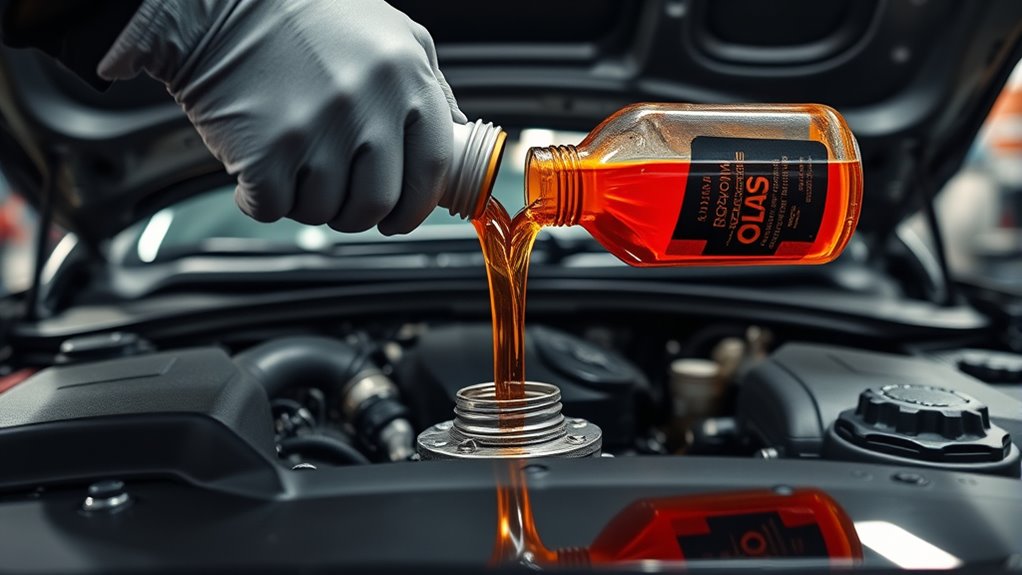
Adding Transmission Fluid: Should You Leave the Car Running?
Many car owners know the frustration of checking their transmission fluid and unsure if they’re doing it right. You’re not alone—this can be confusing and even risky if done improperly.
Adding transmission fluid isn’t just about pouring in the right amount; it’s also about safety and accuracy.
You should always turn off your engine before adding transmission fluid to guarantee accurate level readings and stay safe. Leaving the car running can cause safety hazards from hot fluids and moving parts, and it may give false indications of fluid level.
Properly checking and topping up with the engine off helps prevent overfilling or damage.
Keep in mind, following the right procedure can save you trouble, and there’s more valuable advice ahead to help you do it right.
Key Takeaways
- It’s usually best to turn off the engine before adding transmission fluid for safety reasons.
- Leaving the engine running can cause inaccurate readings because of how the fluid and vehicle move.
- Running the engine while filling increases the risks of moving parts and heat-related hazards.
- Check the transmission fluid level with the engine off, then start and warm up your car before rechecking.
- Always follow your vehicle manufacturer’s instructions to make sure you’re doing it right.
Should I Keep My Car Running When Adding Transmission Fluid?
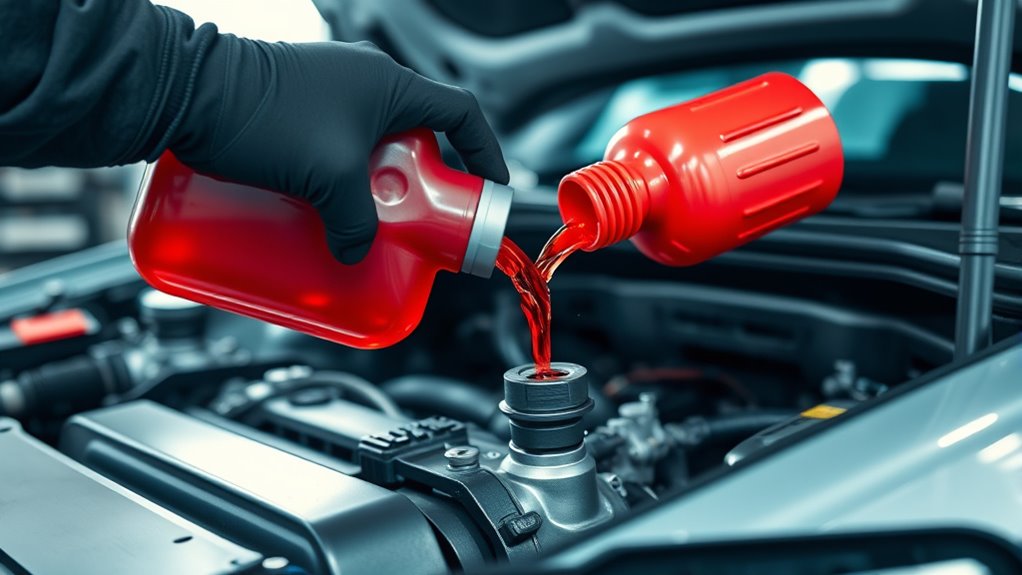
It’s generally best to turn off your car before adding transmission fluid. Leaving the engine running can cause inaccurate readings and potential safety hazards.
When you check or top off fluid, hot or running engines can hide issues like coolant leaks or brake fluid problems. This could lead to overheating or dangerous situations.
If you notice coolant leaks, adding transmission fluid with the engine on might cover up the problem temporarily, but it won’t fix the underlying issue. The same goes for low brake fluid levels—it’s a sign of brake system problems that need attention. Adding transmission fluid won’t help and could cause confusion.
Turning off your car helps the transmission fluid level stabilize, giving you an accurate reading. It also lowers risks related to engine heat or moving parts. Always prioritize safety and accuracy by turning off your vehicle before adding transmission fluid or inspecting related systems.
Why Checking Transmission Fluid Levels Matters
Checking your transmission fluid regularly is super important because it helps you stick to the right procedures and catch potential issues early on. If the fluid level is too low, you might notice problems with shifting or even risk damaging your transmission. On the other hand, if the fluid has degraded or turned dark, it could cause your transmission to overheat. By keeping an eye on the fluid’s condition and knowing the signs of problems, you can keep your transmission in good shape and avoid facing costly repairs down the road.
Proper Checking Procedures
Ensuring your transmission fluid is at the right level is key for smooth shifting and avoiding costly repairs. Proper checking procedures help you assess transmission security and fluid quality effectively.
To do this, start by parking on a level surface and warming up the engine. Then, shift through all gears and leave the car in Park.
Locate the transmission dipstick. Remove it, wipe it clean, then reinsert it. Pull it out again to check the fluid level and color.
Make sure the fluid is within the marked range and has a clear, reddish hue. Properly checked fluid helps keep your transmission secure, maintains the right viscosity, and extends your vehicle’s lifespan.
Impact of Low Levels
When your transmission fluid level drops too low, it can cause serious problems that affect how your vehicle runs. Low fluid levels lead to increased transmission temperature, which can cause overheating and damage to parts.
They also make your transmission more prone to contamination from dirt and debris, which can impair its function.
| Effect of Low Fluid Levels | Potential Consequence |
|---|---|
| Overheating | Reduced transmission lifespan |
| Increased Contamination | Slower shifting, possible damage |
| Reduced Lubrication | Bearings and gears wear out |
| Fluid Aeration | Harmful air pockets in fluid |
Keeping your fluid at the right level helps prevent these issues. It ensures smooth operation and a longer life for your transmission.
Signs of Fluid Degradation
As transmission fluid degrades over time, you might notice subtle signs that show it’s no longer working properly. Changes in fluid chemistry and your vehicle’s transmission history can help reveal these issues.
- Gritty or burnt smell indicates the fluid has broken down or become contaminated.
- Sluggish shifting suggests the fluid isn’t providing proper lubrication anymore.
- Lingering or unusual noises like whining or clunking are clues of fluid degradation.
- Discolored or murky fluid signals it’s time for a fluid check and possibly a replacement.
Keeping an eye on these signs helps maintain your transmission’s health. Regularly checking your fluid levels and noticing these indicators can catch problems early, saving you money and keeping your vehicle running smoothly.
Understanding Transmission Types and Their Effects on Filling Procedures
Knowing whether your vehicle has a manual or automatic transmission is pretty important when it comes to adding or checking transmission fluid. Each type uses different kinds of transmission fluids, and using the wrong one can actually harm your car’s system. So, it’s a good idea to understand these differences to ensure you’re filling it up correctly.
Getting the right fluid and following the right procedures not only keeps your vehicle running smoothly but also helps prevent any potential damage down the road. Sometimes, a simple mistake with the wrong fluid can lead to expensive repairs, so taking a moment to understand your transmission type can save you a lot of trouble.
Manual vs. Automatic Transmissions
Manual and automatic transmissions are quite different in how they’re designed and how they operate. This directly affects how you add transmission fluid.
With a manual, you usually check and fill through a small access point, like a dipstick or fill plug. Automatic transmissions often have a sealed system that needs specific procedures for maintenance.
Here’s what you should keep in mind:
- Manual transmissions typically require you to manually check the fluid level with a dipstick.
- Automatic systems might need vehicle diagnostics to assess the fluid’s condition.
- Filling procedures are different—manuals are generally easier to access.
- Proper maintenance is key to preventing damage and keeping your transmission working smoothly.
Knowing these differences helps you add the right type of fluid properly and take care of your vehicle with the right diagnostics.
Transmission Fluid Types
Have you ever wondered why different transmissions need specific types of fluid? The answer is in their unique designs, which affect things like temperature regulation and resistance to contamination.
Each transmission, whether manual or automatic, requires specialized fluids that suit its operating conditions. Using the wrong fluid can cause poor lubrication, excessive wear, and even damage.
Automatic transmissions usually need hydraulic fluids with friction modifiers, while manuals often use motor oil or gear-specific fluids. Choosing the right fluid helps keep temperatures in check and reduces contamination risks.
Properly filling your transmission with the right fluid ensures smooth shifting and helps extend its lifespan. Always check your vehicle’s manual to find the correct fluid for your transmission type.
How to Properly Add Transmission Fluid: A Step-by-Step Guide
Adding transmission fluid correctly is key to keeping your vehicle shifting smoothly. Proper levels help prevent fluid contamination and keep everything running smoothly.
Maintaining proper transmission fluid levels ensures smooth shifting and prolongs your vehicle’s transmission life.
Here’s a simple step-by-step guide:
- Park your car on a level surface and shut off the engine. Engage the parking brake for safety.
- Find the transmission fluid dipstick, usually near the back of the engine. Take it out and wipe it clean with a rag.
- Reinsert the dipstick fully, then pull it out to check the fluid level. If it’s low, add the recommended transmission fluid in small amounts.
- Use a funnel to pour fluid slowly, checking the level often to avoid overfilling. Overfilling can cause contamination too.
Regular maintenance means keeping the fluid clean and at the right level. This helps prevent problems like fluid contamination and can extend your transmission’s life.
What Are the Risks of Leaving the Engine Running During Fluid Top-Up?
Leaving your engine running while topping off transmission fluid can be risky for both safety and your vehicle. An overheated engine is a real concern because, as you add fluid, the engine may work harder, increasing the chances of overheating and damage.
Plus, keeping the engine on drains your battery faster, especially if your electrical system isn’t in the best shape. This might leave you stranded or cause starting issues later on.
| Risk | Explanation | Consequence |
|---|---|---|
| Engine Overheating | Running increases heat buildup in the engine | Damage to pistons, head gasket |
| Battery Drain | Continuous engine operation consumes power | Difficult starts later |
| Mechanical Wear | Excessive idling causes wear on engine components | Shortened engine life |
| Safety Hazard | Moving parts and hot fluids pose risks | Injury or vehicle damage |
Always turn off your engine before topping off to avoid these risks.
Common Mistakes to Avoid When Filling Transmission Fluid
Filling transmission fluid might seem simple, but making certain mistakes can lead to costly repairs or affect how your car performs. One common mistake is not checking the transmission level with the dipstick or sight glass. Always verify you’re adding fluid correctly.
Avoid costly repairs by always checking transmission fluid levels correctly before adding.
Also, never add fluid without checking the right temperature. Overfilling when cold or adding fluid when hot can give you false readings. Here are some other mistakes to avoid:
Treat the process as a one-size-fits-all task. Always follow your vehicle’s specific instructions.
Don’t ignore fluid temperature. Adding fluid when it’s too hot or cold can mess up the reading.
Be careful not to fill beyond the maximum level. Overfilling can cause foaming and poor lubrication.
Finally, use the correct type of transmission fluid. Using the wrong kind can damage internal parts and cause problems.
How to Check Your Transmission Fluid Level After Adding Fluid
After adding transmission fluid, it’s important to check the level to make sure you added the right amount. Start the engine and let it warm up to normal operating temperature.
Park the vehicle on a level surface and find the transmission fluid dipstick. Pull it out and wipe it clean with a cloth.
Reinsert the dipstick fully, then remove it again to check the fluid level. Make sure the fluid is within the marked range.
If the level is low, add small amounts of fluid and check again. Keep doing this until the proper level is reached.
Doing accurate checks helps with vehicle diagnostics and keeps your transmission running smoothly.
| Indicator | Meaning |
|---|---|
| Low Level | Needs more fluid |
| Correct | At the ideal level |
| Overfilled | Could cause transmission problems |
| Warm Check | Ensures an accurate reading |
| Level Consistency | Keeps the transmission working properly |
When Should You Consult a Professional for Transmission Fluid Issues?
While checking and adjusting your transmission fluid levels can often be straightforward, it’s better to seek professional help in certain situations. If you notice persistent issues or unusual symptoms, consider consulting a mechanic.
Seek professional help if you experience persistent transmission issues or unusual symptoms.
You should see a professional if:
- Your transmission slips or hesitates during shifts, which could point to fluid problems or need for maintenance.
- The fluid looks dark, burnt, or smells burnt, hinting at contamination or incompatible fluid.
- You’ve experienced delayed or rough shifting even after adding fluid, which might mean there’s underlying transmission damage.
- You’re unsure about the right fluid type or compatibility—using the wrong fluid can cause serious damage.
A professional can diagnose transmission issues accurately, do fluid replacements properly, and keep your transmission in good shape for the long run. Don’t ignore signs of trouble or compromise on fluid compatibility, as it might lead to costly repairs down the road.
The Benefits of Maintaining Correct Transmission Fluid Levels
Maintaining the correct transmission fluid levels is essential because it guarantees your vehicle shifts smoothly and operates efficiently.
When your transmission fluid is at the proper level, it reduces wear and tear on components, which helps extend the lifespan of your transmission. Proper fluid levels ensure the transmission works as designed, improving shifting performance and preventing costly repairs.
Regular checks help you compensate for fluid evaporation, which naturally happens over time, especially in hot climates. When fluid levels are kept in check, your transmission stays well-lubricated and cooled, preventing overheating and breakdowns.
Consistent maintenance also helps you catch potential issues early, saving you both time and money. Overall, maintaining correct transmission fluid levels is a simple but crucial step to keep your vehicle running smoothly, reliably, and efficiently for miles ahead.
Summing Up: Best Practices for Safe Transmission Fluid Refill
To make sure you get a safe transmission fluid refill, it’s really important to check the fluid level carefully and accurately. Don’t just guess — take your time to get it right. It’s best to follow your vehicle manufacturer’s instructions closely for the proper procedures. When you do this, it helps keep your transmission healthy and can save you from future problems down the road.
Properly Check Fluid Level
Have you checked your transmission fluid level lately? Keeping an eye on it is key to diagnosing issues and stopping problems caused by fluid evaporation.
Here’s how you can check it properly: Park your car on a level surface and let the engine run until it’s warm.
Find the transmission dipstick, usually near the engine, and pull it out. Wipe it clean, then reinsert it fully and pull it out again.
Check the fluid level— it should be within the marked safe zone. If it’s low, add the recommended fluid sparingly.
Be careful not to overfill, as that can cause transmission problems. Regular checks help keep your transmission running smoothly and last longer.
Follow Manufacturer Instructions
Following the manufacturer’s instructions is essential to guarantee you add transmission fluid safely and correctly. Every vehicle has specific procedures for checking and refilling fluid, which are designed to assure transmission safety.
Ignoring these guidelines can lead to overfilling or underfilling, risking damage to components. Always check the recommended fluid type and the correct dipstick or fill point location.
Pay close attention to engine temperature; many cars require the engine to be at a certain temperature for accurate readings. If the instructions advise leaving the engine off, do so.
Following the manufacturer’s recommendations helps prevent issues and guarantees maximum transmission performance. Clear adherence to these instructions makes fluid refilling simpler, safer, and protects your vehicle’s longevity.
Frequently Asked Questions
Can I Add Transmission Fluid Without Turning off the Engine?
You shouldn’t add transmission fluid without turning off the engine. For safety, always start with the engine off to prevent damage and ensure correct fluid levels.
Running the engine while adding fluid can give you inaccurate readings and may cause leaks or damage. It’s best to turn it off first to avoid these issues.
If you’re repairing a fluid leak, make sure the engine is off before you start. This helps prevent further problems.
Proper procedure ensures accurate levels and keeps your transmission in good shape.
How Often Should I Check My Transmission Fluid Levels?
Think of your transmission fluid as the lifeblood of your car. It needs regular check-ups.
You should check your transmission fluid levels at least every 30,000 miles or once a year, especially during transmission maintenance. Regular checks help prevent fluid contamination.
This keeps your transmission shifting smoothly and helps it last longer. Don’t wait for trouble to appear—staying proactive keeps your vehicle running happily.
What Signs Indicate My Transmission Fluid Needs Replacing?
You should consider replacing your transmission fluid if you notice slipping gears, delayed shifting, or strange noises, as these signs indicate fluid contamination.
Over time, fluid breakdown affects your transmission’s lifespan and can lead to poor performance. If the fluid smells burnt or looks dark and gritty, it’s a clear sign it’s time for a change.
Regularly checking your transmission fluid can help prevent costly repairs and extend its lifespan.
Is It Safe to Top off Transmission Fluid Myself?
Yes, it’s safe for you to top off your automatic transmission fluid yourself, but only if you follow the proper steps. You need to check the fluid level accurately with the engine off and the vehicle on a level surface.
Adding too much or too little can cause serious transmission problems. If you’re unsure, it’s better to consult your owner’s manual or a professional.
Don’t risk motherboard-level damage to your car’s heart—your transmission!
What Type of Transmission Fluid Is Best for My Vehicle?
You should choose a transmission fluid that matches your vehicle’s specific transmission compatibility, which is often listed in the owner’s manual.
Look for the right fluid viscosity for the best performance, as too thick or thin fluid can cause issues.
Always opt for reputable brands to guarantee quality, and if you’re unsure, consult your vehicle’s manufacturer or a mechanic to pick the best transmission fluid for your car.
Conclusion
Remember, keeping your car’s transmission fluid at the right level is key to smooth driving. Always follow the proper steps and avoid cutting corners—your vehicle isn’t the place to test your luck.
If you’re unsure, it’s better to seek professional advice rather than winging it. When adding transmission fluid, playing it safe and sticking to best practices is the way to go.
This way, you won’t end up in hot water. Taking care of your transmission fluid helps ensure your car runs smoothly and reliably.