Car Overheats Only When Accelerating: 6 Causes and Solutions
Many drivers have experienced that frustrating moment when their car starts to overheat, especially during acceleration. It can be stressful trying to figure out what’s going wrong, but don’t worry—you’re not alone. Understanding the common causes can help you tackle the problem more confidently.
If your car overheats only during acceleration, it could be due to a failing thermostat that’s stuck closed, restricting coolant flow.
A worn or leaking water pump might also struggle to circulate coolant efficiently.
Engine load increases heat, especially if the radiator isn’t clear of debris or if there’s a blocked airflow.
Transmission issues and coolant leaks can worsen the problem.
Continuing investigation can help you identify the exact cause and keep your engine cool.
Key Takeaways
- A failing water pump can cause overheating during acceleration because it doesn’t circulate coolant properly.
- A clogged or damaged radiator blocks heat from escaping when the engine load increases.
- Coolant leaks or low coolant levels reduce cooling efficiency, especially when the engine demands more.
- A thermostat that’s not working right can stop coolant from flowing properly at higher speeds, leading to overheating.
- Air pockets in the cooling system can mess up coolant flow, mainly when the engine is working harder.
How to Check Your Car’s Cooling System for Problems
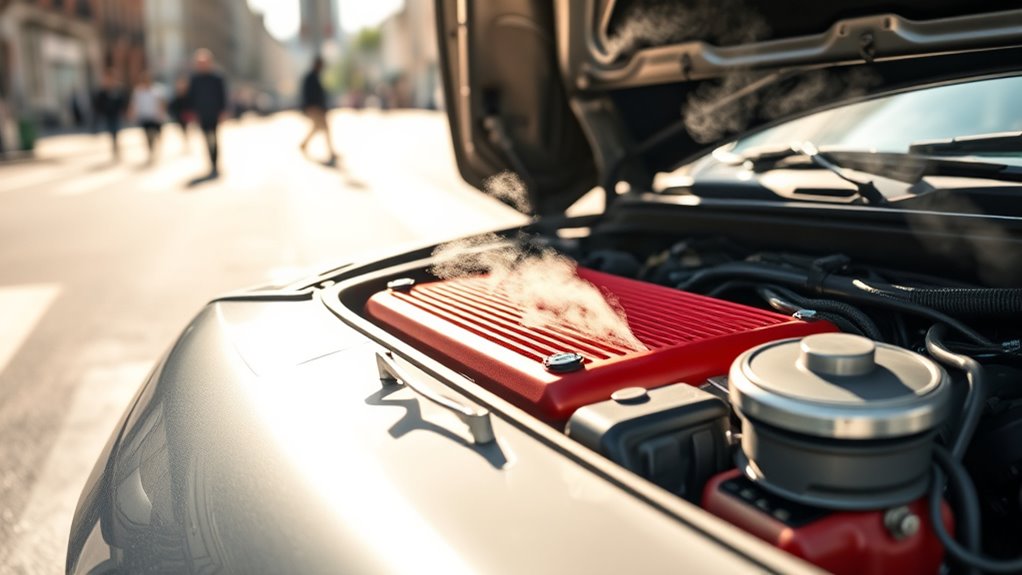
To check your car’s cooling system for problems, start by inspecting the radiator and hoses for leaks, cracks, or signs of corrosion. Cooling system leaks can cause engine overheating, especially during acceleration, so look for puddles or wet spots under your vehicle.
Inspect radiator and hoses for leaks, cracks, or corrosion to prevent overheating.
Examine the hoses for any bulges, cracks, or soft spots, which may indicate deterioration. Also, inspect the radiator cap; a faulty cap can prevent proper pressure buildup, leading to overheating.
Make sure the cap seals tightly and isn’t damaged or corroded. If you notice coolant leaks or corrosion around the radiator or hoses, these are clear signs of trouble.
Furthermore, check the coolant level. If it’s low, topping it off might help temporarily, but persistent loss suggests a leak or other issue.
Addressing radiator cap issues and fixing any leaks early helps maintain proper cooling system pressure and reduces overheating risks during acceleration.
Signs Your Thermostat Might Be Failing
If you notice your engine’s temperature gauge acting a bit unusual—like it jumps around or stays high even when everything seems okay with the cooling system—there’s a good chance your thermostat might be giving you trouble. It’s one of those small parts that can cause big headaches if it fails.
You might also see your car overheating, especially during acceleration or when it’s idling. These are pretty clear signs that something’s off. Catching these warning signs early can really save you from dealing with more serious engine issues down the road.
Erratic Temperature Fluctuations
When your car’s temperature gauge jumps unpredictably or swings between hot and cold, it often means your thermostat isn’t working right. Erratic fluctuations can happen because of coolant leaks or radiator damage, both of which mess with consistent coolant flow.
If there’s a coolant leak, the fluid level drops, making it harder for the thermostat to keep the temperature steady. Radiator damage can also stop heat from dissipating properly, causing sudden temperature swings. You might see your gauge spike or dip without any clear reason.
These fluctuations usually mean your thermostat is sticking or failing to open and close properly. That can mess up its ability to maintain a steady engine temperature. Fixing coolant leaks and radiator issues quickly will help keep things running smoothly and avoid bigger overheating problems.
Engine Overheating Symptoms
One clear sign your thermostat might be failing is if your engine starts overheating even when there are no visible leaks or radiator damage. When this happens, you might also notice the coolant temperature rising or see your dashboard temperature warning light flickering.
You could also experience decreased fuel efficiency because a stuck thermostat can cause your engine to run too cold or too hot. Sometimes, you might even notice inconsistent tire pressure, which can actually be a sign of broader cooling system issues affecting overall vehicle performance.
| Symptom | Possible Cause | Effect on Vehicle |
|---|---|---|
| Engine overheating at acceleration | Thermostat stuck or failing | Reduced fuel efficiency, potential engine damage |
| Fluctuating temperature gauge | Coolant flow disruption | Increased wear and tear |
| Coolant leaks | Faulty thermostat gasket | Engine overheating, lower coolant levels |
| Strange smells or steam | Head gasket or radiator issues | Speeds up overheating problems |
How to Identify a Failing Water Pump
Wondering how to tell if your water pump is failing? One common sign is a coolant leak around the front of your engine, which could mean the water pump is having issues.
If your engine temperature only rises during acceleration, that might be linked to the water pump not circulating coolant properly. Keep an eye out for a few key signs.
Look for visible coolant leaks near the water pump or under your vehicle. Overheating during acceleration but running normally at idle is another good clue.
Unusual whining or grinding noises coming from the pump can also signal trouble. If you see steam escaping from the radiator or under the hood, that’s a red flag.
Even if your coolant levels are full, engine overheating could be due to a failing water pump. If any of these symptoms appear, it’s time to take action.
Addressing a problem early can prevent more serious engine damage down the line. Regularly check for leaks and listen for strange sounds to stay ahead of water pump failure.
Can Engine Load or Transmission Issues Cause Overheating?
Engine load and transmission issues can significantly contribute to overheating if they cause your engine to work harder than usual.
Engine load and transmission problems can lead to overheating by increasing engine strain and heat production.
When your engine faces increased load, like during heavy acceleration or towing, it needs more power, which raises engine compression and temperatures.
Transmission problems, such as slipping or overheating, can also put extra strain on the engine as it tries to compensate for inefficient power transfer.
A poor fuel mixture—either too rich or too lean—can make things worse by leading to incomplete combustion and higher internal temperatures.
If the engine is working harder because of these issues, it produces more heat, which puts stress on your cooling system.
Over time, this excess heat can cause overheating during acceleration.
Fixing transmission problems and ensuring the fuel mixture is balanced are key to preventing overheating under load.
Regular maintenance and diagnostics can help find and solve these underlying issues before they get worse.
When to Take Your Car to a Mechanic for Overheating
If your car is overheating during acceleration despite checking for obvious issues like low coolant levels, it’s time to see a mechanic. Don’t ignore warning signs such as flickering dashboard indicators or unusual temperature readings.
Also, if your temperature gauge spikes only when you press the gas, professional diagnosis is necessary. Pay attention to warning lights related to the brake system or engine temperature, as they can signal more serious problems.
A mechanic can run a detailed inspection to identify underlying issues causing overheating, like a failing radiator or cooling fan.
Consider visiting a mechanic if you notice persistent overheating despite topping up the coolant, dashboard warning lights flickering or staying on, or unusual smells or steam inside the vehicle.
The brake system feeling less responsive or making noise, or the engine running rough or misfiring during acceleration are also signs it’s time to get professional help.
Prompt intervention can prevent engine damage and ensure your vehicle’s safety.
Quick Tips for Preventing Overheating During Acceleration
Want to keep your car from overheating when you hit the gas? First off, check that your coolant levels are topped up and in good shape. It’s a simple step that can make a big difference.
Also, try to avoid letting your engine sit idle for too long. Idling can cause the engine temperature to rise unnecessarily, especially on hot days.
Just keeping these easy tips in mind can help you stay cool and avoid overheating while you’re driving.
Maintain Coolant Levels
Ever wonder why your car might overheat when you accelerate? One key step is maintaining proper coolant levels. Low coolant can cause engine temperatures to spike, especially under increased demand.
Regularly check for coolant leaks and top off the reservoir if levels are low. Make sure the radiator airflow isn’t obstructed by debris or dirt, which can impair cooling efficiency. A clean radiator helps with peak heat dissipation.
Consistent coolant levels also prevent overheating caused by trapped air pockets that hinder circulation. Keep an eye out for cracks or corrosion in the radiator, as these can lead to leaks.
Proper coolant maintenance not only helps prevent overheating during acceleration but also keeps your engine healthy. Remember to check for leaks regularly, keep the radiator free of debris, top off coolant when needed, and inspect for cracks or corrosion. If necessary, air out the cooling system to ensure everything runs smoothly.
Avoid Excessive Idling
Excessive idling can cause your engine to overheat, especially during acceleration. Idling puts strain on your cooling system and wastes fuel, making overheating more likely.
To avoid this, try to limit unnecessary stops and don’t run your engine longer than needed. The more you idle, the hotter your engine gets, and it’s harder to keep it cool when you start moving again.
| Idle Duration | Impact on Engine |
|---|---|
| Short | Less heat buildup and better fuel economy |
| Long | More heat, higher risk of overheating |
| Frequent Stops | Strains your cooling system and can lead to issues |
| Extended Idle | Can cause coolant temperature to rise |
Minimize idle time to help your cooling system stay in good shape, boost fuel efficiency, and prevent overheating during acceleration.
Frequently Asked Questions
Can a Clogged Radiator Cause Overheating Only During Acceleration?
Yes, a clogged radiator can cause overheating only during acceleration. When you hit the gas, your engine’s cooling system needs to work harder to dissipate heat.
If the radiator is blocked, it can’t cool the engine effectively during these high-demand moments. This causes the engine to overheat specifically when you’re accelerating.
A well-functioning cooling system keeps the engine at the right temperature and prevents spikes. So, checking and cleaning your radiator can help keep things running smoothly no matter how you’re driving.
Could a Faulty Radiator Cap Lead to Overheating When Accelerating?
A faulty radiator cap can be like a leaky faucet, causing your engine to overheat during acceleration. When the cap doesn’t seal properly, it can lead to coolant leaks and lower radiator pressure, which makes it harder to transfer heat away.
As you accelerate, the pressure inside the system increases and might escape through the faulty cap, making the cooling system less effective. That can cause the engine to get hotter than it should during fast driving.
Check the radiator cap because it’s a simple fix that could prevent your engine from turning into a fiery furnace. A quick replacement can keep your engine running cool and avoid costly repairs later on.
How Does Engine Timing Affect Overheating Under Acceleration?
Engine timing plays a crucial role in preventing overheating during acceleration. When the timing is off, your engine doesn’t run efficiently, which creates excess heat and puts extra strain on the cooling system.
During engine diagnostics, you might find that the timing is too advanced or too retarded. This can cause cooling issues that only show up under high load or fast acceleration.
Getting the timing right ensures proper combustion, reduces how much heat builds up, and helps your cooling system keep the engine’s temperature in check.
Can Transmission Problems Contribute to Overheating During Acceleration?
Did you know that transmission problems cause about 15% of overheating issues? Yes, transmission problems can contribute to overheating during acceleration because a faulty transmission can strain the engine and increase heat.
A compromised cooling system or low transmission fluid reduces efficiency, causing excess heat buildup. When your transmission isn’t working correctly, it can make the engine work harder, leading to overheating.
Regular maintenance of your cooling system and fluid levels can prevent this. Keeping everything in check helps keep your engine cooler and avoids those overheating problems.
Is a Slipping Clutch Linked to Overheating When Accelerating?
A slipping clutch can be linked to overheating during acceleration because clutch slip causes excess friction, which generates additional heat.
This heat can transfer to the transmission, raising its temperature. As the clutch struggles to engage properly, the transmission works harder, leading to more heat buildup.
You should have the clutch checked promptly, as persistent slip can cause further damage to both the clutch and transmission components.
Conclusion
Think of your car’s cooling system as its heartbeat—vital and delicate. When overheating happens only during acceleration, it’s like a silent warning bell, urging you to check beneath the hood.
Addressing issues now is like tending to a garden before weeds take over. Keep your engine’s health in focus, and your journey will stay smooth, like a steady stream flowing effortlessly.
Don’t let overheating be the storm that darkens your road ahead. Act before it rages, especially if your car overheats only when accelerating.