How to Address Transmission Rattling Noise When Accelerating: Causes, Prevention, and Maintenance Tips
If your transmission rattles when you accelerate, you’re not alone. Many drivers struggle with this annoying noise that can make your ride less smooth and signal potential issues ahead.
Transmission rattling can happen for a few reasons, like worn or loose parts, contaminated fluid, or internal damage. These issues can be confusing and frustrating, but the good news is they’re often manageable.
To start, check and top off your transmission fluid regularly. Keeping the fluid clean helps prevent issues and keeps your transmission running smoothly.
Next, inspect your mounts for cracks or looseness. Loose or damaged mounts can cause rattling sounds when you accelerate, so replacing them can often solve the problem.
Considering timely repairs is important to prevent further damage. Addressing minor issues early can save you money and hassle down the road.
Maintaining clean fluid and fixing small problems early helps reduce noise and wear on your transmission. Staying on top of these maintenance tips really makes a difference.
Keep a close eye on how your vehicle behaves. Recognizing early signs of trouble allows you to take effective steps to keep your transmission smooth and quiet.
Key Takeaways
- Regularly check and maintain transmission fluid levels and quality to prevent contamination and keep things running smoothly.
- Inspect and tighten or replace worn or loose transmission mounts to reduce vibrations and rattling noises.
- Address clutch issues promptly to make sure it engages properly and reduce internal stress that can cause noise.
- Schedule routine transmission inspections every 30,000 to 60,000 miles so you can catch any wear or damage early.
- Seek professional diagnosis if rattling persists after topping up fluid or if you notice unusual smells, shifting problems, or heat.
What Causes Rattling Sounds When You Accelerate?
When you hear rattling sounds while accelerating, it often means something in your transmission or drivetrain is loose or not working right. A common culprit is issues with clutch engagement, which can cause vibrations and noise as the clutch struggles to connect smoothly with the transmission.
Rattling when accelerating often signals transmission or clutch problems needing prompt attention.
If the clutch isn’t engaging properly, it can lead to misalignment in the transmission system, causing rattling sounds when you accelerate. Poor alignment can make parts not fit together properly, creating unwanted movement or vibrations.
You might notice these noises become louder as you speed up or while shifting gears. Recognizing these signs early can help prevent more serious damage. Even if the rattling seems minor, ignoring it could lead to costly repairs down the line.
Pay attention to these sounds as a warning sign. Addressing the issue early can save you time and money and keep your vehicle running smoothly.
How Can You Diagnose Transmission Rattling Issues?
Diagnosing transmission rattling issues involves paying close attention to when and how the noise occurs, as well as inspecting key components for signs of wear or damage. Listen carefully during acceleration, shifts, or idling to identify patterns.
Check for changes in transmission fluid lifespan, as degraded fluid can cause noise or rough shifts. Early clutch engagement issues may also contribute to rattling, especially if the clutch feels stiff or slips.
Look out for the following indicators:
- Unusual noises during gear shifts or acceleration
- Sudden change in transmission fluid color or smell
- Slipping or difficulty engaging gears
- Vibrations or rattling sounds when the vehicle is in motion
Can Transmission Fluid Problems Cause Rattling?
Sure! If your transmission fluid is low or looks dirty, you might notice some rattling noises, especially when you’re accelerating. It’s pretty common for poor fluid levels or bad quality to mess with how smoothly your transmission shifts and runs.
Fluid Levels and Quality
Could low or contaminated transmission fluid be behind that rattling noise during acceleration? Yes, fluid levels and quality are really important. When the fluid gets contaminated, dirt and debris can change its viscosity, making it less effective at lubricating.
This can cause parts to vibrate or rattle as they struggle to move smoothly. Low fluid levels increase metal-to-metal contact, which can also create noise. Dirty or degraded fluid messes with hydraulic pressure and lubrication.
Regular checks help keep the fluid clean and at the right level. Replacing old or dirty fluid ensures it works properly and reduces rattling caused by fluid problems.
Impact on Transmission Performance
Transmission fluid problems can seriously impact your vehicle’s performance. You might notice a rattling noise when you accelerate. This noise often signals issues like poor fluid quality or incorrect levels.
When the fluid isn’t lubricating properly, it hampers transmission tuning and smooth operation. That rattling could be a sign your transmission isn’t working at its best. If you ignore it, you might experience slipping or delayed shifts.
Contaminated or degraded fluid also reduces noise insulation, making rattling more noticeable. Persistent fluid issues strain transmission parts and decrease overall performance, increasing the risk of costly damage.
Regular maintenance keeps the transmission fluid clean and at the right level. This helps preserve proper transmission tuning and minimizes rattling noises. Catching and fixing fluid problems early keeps your transmission running smoothly and prevents performance issues.
What Mechanical Components Lead to Transmission Rattling?
Worn clutch plates, loose transmission mounts, and damaged gear synchronizers are common culprits when you start hearing rattling sounds coming from your transmission. These parts play a big role in keeping your transmission shifting smoothly and operating properly.
When any of these components start to fail or become loose, it can lead to that annoying rattling noise, especially when you’re accelerating. It’s like your transmission is trying to tell you something’s off. So, if you notice that noise, it’s a good idea to have a mechanic take a look and see which part might be causing the issue.
Worn Clutch Plates
When clutch plates become worn, they can cause a rattling noise when you accelerate. This often happens because the clutch wear reduces the friction needed for smooth gear engagement. You might also feel a shuddering or grinding sensation during acceleration.
Worn clutch plates can’t transfer power effectively, leading to vibrations and noise. Key signs include increased clutch pedal play, a slipping clutch especially when you’re accelerating, and unusual noises like rattling or grinding. You might also find it difficult to shift gears smoothly.
It’s important to address worn clutch plates early to prevent more serious damage. If you notice these symptoms, inspecting and replacing the clutch components can restore proper performance and get rid of that annoying rattling noise.
Loose Transmission Mounts
When mounts are worn or damaged, the transmission shifts slightly, which can interfere with smooth clutch engagement and disrupt transmission fluid efficiency.
This movement can create persistent vibrations that you hear as rattling sounds. Over time, the fluid may leak or become less effective at lubricating and cooling the system, making performance worse.
Also, faulty mounts can lead to improper clutch engagement, causing uneven power transfer and louder rattling noises.
To fix this, check your transmission mounts regularly and replace any that are loose or cracked. Ensuring they’re secure helps keep the alignment right, reduces vibrations, and keeps your transmission running smoothly during acceleration.
Damaged Gear Synchronizers
When synchronizers wear out or don’t work right, gear shifting gets noisy and vibrations start to happen.
This usually points to worn or broken synchronizer rings that block proper gear engagement.
Regular clutch adjustments can help keep your shifts smooth and reduce stress on the synchronizers.
Ignoring these issues can lead to bigger damage and more costly repairs later on.
Watch out for signs like difficulty shifting, grinding noises, or delays in gear engagement.
Fixing worn synchronizers early keeps your transmission running smoothly.
How Do Worn or Damaged Parts Make Your Transmission Noisy?
Worn or damaged transmission parts can cause noticeable rattling noises when you’re accelerating. These problems disrupt the smooth operation of the system. As parts wear out, they may no longer fit or move properly, leading to metallic clinks and vibrations.
Damaged bearings or loose components can create vibrations that resonate, producing rattling sounds. Insufficient transmission lubricants increase friction, causing parts to overheat and wear faster. This often makes noise become more apparent.
Sometimes, noise insulation masks these issues, but if you listen closely, worn parts will still make audible sounds. Regular checks can help catch these problems early and keep your transmission running smoothly.
How Can Regular Maintenance Prevent Transmission Rattling?
Regular maintenance plays a vital role in preventing transmission rattling by ensuring all components stay in proper working order. Staying on top of routine checks helps identify issues early, like inadequate transmission lubrication or misaligned gears, which can cause rattling when accelerating.
Proper transmission lubrication reduces friction and wear, keeping internal parts smooth and quiet. Regularly inspecting and maintaining gear alignment ensures gears engage properly, avoiding unnecessary noise.
Moreover, checking fluid levels and replacing transmission fluid at recommended intervals prevents contamination and corrosion that can lead to rattling. Addressing minor issues promptly can save you from costly repairs and vibrations that worsen over time.
To maximize performance, consider these maintenance tips:
- Regularly check and top off transmission fluid
- Schedule gear alignment services as needed
- Follow manufacturer recommended maintenance intervals
- Inspect transmission components for wear or damage
How Often Should You Have Your Transmission Inspected?
Scheduling regular inspections of your transmission helps catch issues early before they cause rattling noises when accelerating. Usually, you should have it checked every 30,000 to 60,000 miles or as your manufacturer recommends.
During these inspections, a technician will check the transmission fluid levels, gear alignment, and overall condition. Proper lubrication keeps everything running smoothly, while good gear alignment prevents unnecessary strain that can lead to rattling sounds.
| Inspection Frequency | Key Focus Areas |
|---|---|
| Every 30,000-60,000 miles | Transmission fluid, gear alignment |
| Annually or after heavy use | Check for leaks and fluid quality |
| Every 60,000 miles or more | Look for signs of wear and tear |
| After transmission problems | Early diagnosis and repairs |
Following this schedule helps keep your transmission healthy, reduces noise issues, and extends its lifespan.
DIY Steps to Reduce Transmission Rattling at Home
First off, take a good look at your transmission mounts. See if they’re cracked, damaged, or maybe just a bit loose. Worn-out mounts can definitely cause that rattling noise you’re hearing. If you notice anything off, it might be worth tightening or replacing them.
Next up, check your transmission fluid. Make sure it’s at the right level and looks clean. If the fluid’s low or filthy, it can cause noise when you accelerate. topping up or changing the fluid can often make a noticeable difference.
Doing these simple things at home can really help cut down on that rattling sound without the need to call in a mechanic.
Inspect Transmission Mounts
Have you noticed a rattling noise that worsens when you accelerate? Check your transmission mounts first. Worn or damaged mounts can cause excessive movement, leading to rattling sounds. To inspect:
- Visually examine mounts for cracks or signs of wear.
- Look for excessive engine or transmission movement.
- Secure any loose bolts or fasteners.
- Ensure proper clutch adjustment, as slippage can stress mounts.
While inspecting, don’t forget to check your transmission fluid levels, since low levels can affect performance. Proper clutch adjustment helps reduce stress on the transmission and mounts. If the mounts are damaged, replacing them can significantly reduce rattling.
Tighten any loose bolts and keep an eye on how components move during acceleration. Regular maintenance helps keep your transmission stable and minimizes noise.
Check Transmission Fluid
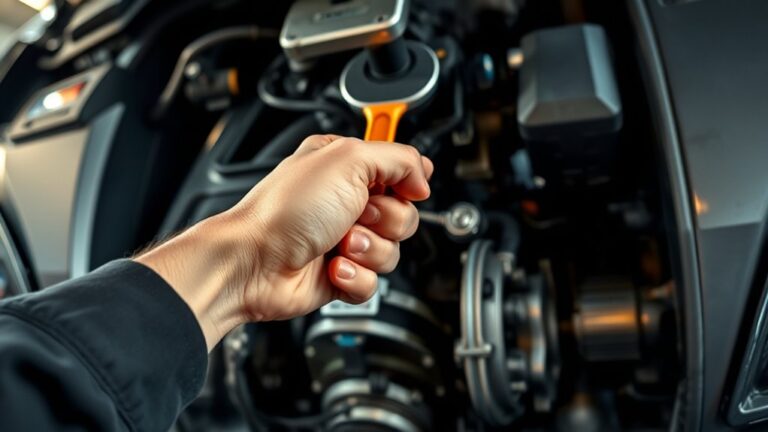
Wondering if low transmission fluid could be causing that rattling noise when you accelerate? A quick fluid check can show if your transmission needs some attention. First, find the transmission fluid dipstick, usually marked.
Keep your engine warm, then pull out the dipstick, wipe it clean, reinsert it, and pull it out again to check the level. If the fluid is low or looks dark and dirty, it’s time to top up or replace it.
Here’s a simple guide:
| Step | What to Do | Tips |
|---|---|---|
| 1 | Locate dipstick | Usually near the engine |
| 2 | Check fluid level | Make sure engine’s warm |
| 3 | Examine fluid color | Clear or pink is good |
| 4 | Add transmission fluid | Use recommended type |
| 5 | Recheck fluid | Confirm level and condition |
When to Seek Help for Transmission Rattling Problems?
Recognizing when a transmission rattling noise needs a professional look is key to avoiding bigger problems down the road. If the noise keeps going or gets worse even after you’ve checked the transmission fluid and made sure the gears are well-lubricated, it’s time to see a mechanic.
Unusual rattling, especially during acceleration, could mean internal parts are worn or damaged. Ignoring these signs might lead to costly repairs or even total transmission failure.
You should see a mechanic if you experience continuous rattling after topping off the transmission fluid, or notice a loss of smooth shifting or delays.
A burning smell or overheating while driving is a red flag. Also, if you suddenly find it hard to shift gears or the gears slip, get it checked out.
Getting an early diagnosis can stop small issues from turning into bigger ones. A professional inspection can identify problems like low transmission fluid, worn clutch packs, or internal damage—keeping your car running safely and smoothly.
Don’t wait if the noise persists or gets worse. Timely help can save you money and keep your transmission in good shape.
How Your Driving Habits Affect Transmission Wear and Noise
Your driving habits really impact how quickly your transmission wears out and whether it develops noise issues. If you tend to accelerate aggressively, run at high RPMs, or shift gears suddenly, you’ll put more strain on your transmission parts, which can lead to faster aging and rattling sounds.
Smooth acceleration—taking your time and easing into gear—makes for a more comfortable ride and helps your transmission last longer. Being gentle with your driving not only extends the lifespan of your transmission but also saves fuel and reduces stress on the components.
Here’s how different habits affect your transmission and driving experience:
| Habit | Effect on Transmission | Impact on Comfort |
|---|---|---|
| Rapid acceleration | Causes extra wear and noise | Less smooth, more uncomfortable |
| Abrupt gear shifts | Can damage internal parts | Bumpy ride, less comfortable |
| Gentle, steady driving | Reduces wear and noise | Smoother ride |
Frequently Asked Questions
Can Aftermarket Parts Cause Transmission Rattling Noise During Acceleration?
Yes, aftermarket parts can cause transmission rattling noise during acceleration. When you install performance parts or different transmission components, they might not fit perfectly or could interfere with existing parts.
This can lead to vibrations or rattling sounds when you press the gas. To avoid this, make sure your aftermarket transmission parts are compatible with your vehicle, and have a professional install them.
Regular maintenance helps catch issues early and keeps everything running smoothly.
Do Engine Mounts Influence Transmission Noise and Vibrations?
Engine mounts primarily influence engine alignment and drivetrain resonance, which can affect transmission noise and vibrations. When mounts weaken or fail, they let the engine and transmission move too much, causing clattering and rattling sounds during acceleration.
You’ll notice more vibrations, especially at higher speeds. Regularly inspecting and replacing worn mounts helps keep the engine and transmission securely in place, reducing noise.
It also helps improve stability and ensures your ride is smooth and quiet.
How Does Towing Impact Transmission Health and Rattling Issues?
Towing puts extra stress on your transmission, increasing the risk of rattling issues and wear. It can cause misalignment or overheating, which affects smooth operation.
To protect your vehicle, avoid overloading, maintain proper fluid levels, and use the correct towing equipment. Regularly check transmission alignment and look for signs of damage.
Proper maintenance keeps your transmission healthy, reducing rattling noise and extending its lifespan if you tow often.
Are Transmission Noises More Common in Automatic or Manual Vehicles?
Transmission noises are generally more common in manual vehicles because gearing depends on precise clutch engagement. If you don’t fully disengage the clutch, you might hear rattling or grinding sounds when shifting.
In automatic transmissions, the system handles gear changes internally, so these noises are less common. But if you notice clicking or whining sounds, it could mean something’s wrong with your transmission, no matter what type you have.
Regular maintenance is key to keeping these noises away and ensuring your transmission runs smoothly.
Can Climate Changes Affect Transmission Rattling Frequency?
Climate effects and temperature fluctuations can definitely influence transmission rattling frequency, like a roller coaster ride shaking with each dip.
When temperatures rise or fall unexpectedly, metal parts expand or contract, causing parts to loosen or fit differently. This can lead to more noticeable rattling noises when you accelerate.
Staying on top of regular maintenance helps, as it keeps your transmission components well-lubricated and resilient against these climate effects.
Conclusion
Addressing transmission rattling early can save you money and prevent costly repairs down the line. Regular maintenance, attentive driving habits, and prompt inspections help keep your transmission in top shape.
Remember, a noisy transmission isn’t just an inconvenience; it’s a warning sign. Are you truly listening to what your vehicle’s noises are conveying?
Taking care of it now ensures smooth rides and peace of mind for miles to come. If you notice rattling when accelerating, don’t ignore it. Addressing transmission rattling promptly can avoid bigger issues later.