Why Does Misfire Happen When Starting A Car? Let’s Find Out
Having your car misfire when starting can be really frustrating. Many drivers struggle with this issue and wonder what’s going wrong right from the start.
A misfire when starting your car usually happens because key components like spark plugs, ignition coils, or fuel injectors aren’t working properly or are worn out, causing incomplete combustion.
Cold weather, weak batteries, or fuel system issues can also make your engine struggle to start smoothly.
If these parts aren’t functioning correctly, you’ll notice rough idling or stalls soon after ignition. Keep going to uncover detailed causes and simple fixes for this common problem.
Key Takeaways
- Misfires during startup often happen because worn spark plugs or faulty ignition parts can’t produce strong sparks.
- Cold weather can cause fuel issues and condensation, making combustion less efficient and leading to misfires.
- A low battery voltage weakens the spark, making it tough for the engine to ignite fuel properly.
- Clogged fuel injectors or filters mess with fuel delivery, which can cause incomplete combustion when starting the engine.
- Wiring problems or corroded terminals interrupt electrical flow, affecting ignition timing and causing misfires during startup.
Why Does My Car Misfire When Starting?
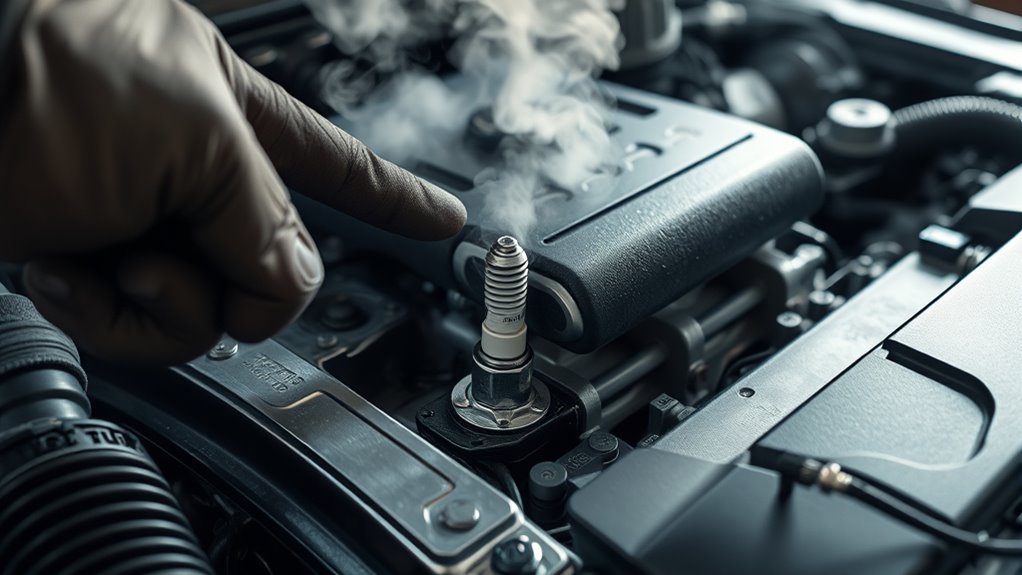
When you try to start your car and it sputters or stalls, it’s often because the engine isn’t firing properly, leading to a misfire. You might notice unusual engine noise—rough idling, knocking, or shuddering—that signals something’s off.
A misfire can cause your engine to shake, making it feel less smooth than usual. One common cause is a poor fuel mixture or not enough fuel reaching the engine, which leads to incomplete combustion.
This problem affects more than just noise; it also reduces fuel efficiency, making your car burn more gas than it should. You might also feel sluggish acceleration or hesitation when turning the key.
These signs suggest your engine isn’t firing correctly, especially during startup. Catching misfires early can prevent bigger damage and help your car run better.
Ignoring these symptoms can cause your fuel efficiency to worsen and engine noise to get worse, possibly leading to more serious issues later on.
What Common Causes Lead to Startup Misfires?
Several common issues can cause your engine to misfire during startup, disrupting smooth ignition and combustion. These problems usually involve key parts like spark plugs, the ignition coil, or fuel injectors.
Poor engine tuning can also lead to misfires, especially if the air-fuel mixture isn’t optimized for startup. Faulty emission controls, such as a clogged catalytic converter, can restrict exhaust flow and cause misfiring.
Here’s a quick overview of typical causes:
| Cause | Explanation |
|---|---|
| Spark plug issues | Worn or dirty plugs prevent proper ignition |
| Ignition coil failure | Weak sparks lead to incomplete combustion |
| Fuel delivery problems | Clogged injectors disrupt fuel flow |
| Emission system faults | Malfunctioning sensors affect engine tuning |
| Poor engine tuning | Incorrect air-fuel mix impacts startup firing |
Fixing these issues helps ensure a smooth start and reduces misfires.
How Fuel System Problems Can Cause Your Car to Misfire
Fuel system problems can directly cause your car to misfire during startup by disrupting the delivery of the right amount of fuel to the engine. One common issue is fuel contamination, where dirt, water, or debris mix with the fuel, clogging fuel filters and affecting the flow.
When fuel isn’t clean, it can lead to inconsistent combustion, causing misfires. Furthermore, injector clogging occurs when dirt or deposits block the fuel injectors, preventing proper atomization of fuel into the combustion chamber.
This leads to an uneven mixture of air and fuel, making the engine struggle to start smoothly. Over time, these problems reduce fuel efficiency and can cause rough idling or misfires during startup.
Keeping your fuel system clean and replacing filters regularly can help prevent these issues. Diagnosing problems like fuel contamination or injector clogging early ensures your engine gets the right amount of fuel for a smooth start every time.
Are Faulty Spark Plugs Responsible for Startup Misfires?
Faulty spark plugs are a common cause of startup misfires because they directly impact the engine’s ability to ignite the air-fuel mixture. When your car misfires during startup, it’s often due to worn or damaged spark plugs that can’t produce a strong enough spark.
Inspecting your spark plugs is crucial. Look for signs like carbon build-up, worn electrodes, or cracks, as these issues prevent proper combustion. That makes it harder for the engine to start smoothly.
Testing your ignition coils is just as important. Weak or failing coils can cause weak sparks or no spark at all, leading to misfiring. Replacing faulty spark plugs and ensuring your ignition coils are working correctly can significantly improve cold starts.
Regular checks of these components help prevent misfires and keep your engine running reliably from the very first turn of the key.
Can Poor Engine Compression Cause Starting Troubles?
If your spark plugs and ignition components check out fine, but your car still struggles to start, poor engine compression might be the culprit. Low compression in the cylinders prevents your engine from generating enough power to turn over smoothly.
If your spark plugs and ignition are fine, low engine compression may be preventing smooth starting.
This can result in difficulty starting, especially when the engine is hot or has an overheating issue, which can further damage piston seals and valves. Moreover, if your transmission is slipping, it could signal internal problems affecting engine power delivery, making startup even harder.
Over time, poor compression can cause incomplete combustion, leading to rough idling or misfires once the engine finally starts. In severe cases, the engine may struggle to turn over at all. While it can be hard to diagnose, understanding the role compression plays can help you know when to seek professional help.
Addressing compression issues early helps prevent further damage and ensures a smoother start every time.
How Electrical Issues Like Battery Problems Trick Your Engine Into Missing
If your battery voltage isn’t steady, it can send uneven power to your engine, which might cause it to misfire when you’re starting up. It’s like the engine’s not getting the smooth, consistent juice it needs to run properly.
Also, if the battery terminals are corroded or the connections are loose, that can mess with the electrical flow as well. That disruption can trick your engine into missing or sputtering, making it seem like there’s a bigger problem than there really is.
Even though these electrical issues might seem small, they can really affect how reliably your engine starts and runs.
Battery Voltage Fluctuations
When your battery can’t hold a steady charge, it causes inconsistent voltage supply to the engine’s components. This fluctuation can lead to misfires during startup, as the spark plugs may not fire correctly due to not enough power.
Regular spark plug maintenance helps ensure efficient combustion, but if the battery isn’t charged properly, the engine struggles to generate the needed sparks. Usually, a failing battery leads to lower voltage, causing hesitation or misfire.
To avoid this, check your battery’s health regularly and make sure it’s charging properly. Keeping the battery in good shape helps stabilize voltage, reducing misfire risks during cold starts or when first starting the engine.
Poor Connection Effects
Electrical issues like a failing battery can cause poor connections in your vehicle’s wiring system, which can make your engine miss or misfire. When connection points, especially around the ignition coil, become loose or corroded, the electrical flow gets interrupted.
This disruption causes inconsistent sparks, making your engine vibrate or run unevenly during startup. If the ignition coil isn’t getting a stable current, it can’t produce the high-voltage spark needed for combustion.
As a result, your engine may misfire or hesitate, especially during cold starts. Keeping connections secure and clean along the wiring and to key components like the ignition coil can help prevent these problems and keep your engine running smoothly.
How Cold Weather Affects Your Car’s Starting and Causes Misfires
Cold weather can really make it harder for your car to start smoothly, often causing misfires. When temperatures drop, ice can form in key engine areas, making it tough for fuel and air to ignite properly.
A cold engine’s oil gets thicker, which means more resistance and sluggish starts. Plus, the battery’s capacity drops in the cold, reducing your chances of a reliable start.
| Effect | Cause | Result |
|---|---|---|
| Ice formation | Condensation freezes | Blocked fuel lines |
| Cold engine | Oil thickens | Less lubrication |
| Battery weakness | Lower chemical activity | Weak spark |
These problems lead to misfires because the fuel mixture might not ignite correctly, or the spark isn’t strong enough. So, your engine has a hard time running smoothly until it warms up.
Proper winter maintenance can help reduce these issues and keep your car running better in cold weather.
How to Diagnose Why Your Car Is Misfiring When You Start It?
When your car misfires during startup, figuring out the cause is key to fixing it right away. First, listen for irregular engine vibrations or rough idling, as these can signal a misfire.
Next, check the spark plugs and ignition wires. Worn or fouled plugs often cause misfires and can also lower fuel efficiency. Using an OBD-II scanner can help identify error codes related to misfiring cylinders, giving you clues about possible fuel system or sensor problems.
Inspect the fuel injectors for clogs or leaks, since poor fuel delivery can lead to startup misfires. Also, look at the ignition coils—faulty coils can interrupt spark delivery. Remember, persistent misfiring affects both performance and fuel economy.
DIY Fixes to Help Resolve Startup Misfires Before Seeing a Mechanic
If you think your startup misfire might be caused by spark or fuel delivery issues, there are some simple fixes you can try before calling a mechanic. First, check the ignition timing to make sure it’s set right; incorrect timing can lead to misfires when starting.
Next, look for exhaust leaks around the exhaust manifold or headers, as leaks can mess up engine pressure and cause misfiring.
Check for exhaust leaks around the manifold, as they can disrupt engine pressure and cause misfiring.
Here are some easy fixes:
- Tighten or replace faulty spark plug wires to improve spark delivery.
- Swap out worn-out spark plugs to ensure proper ignition.
- Seal exhaust leaks with a high-temperature gasket or tape.
- Double-check that the engine’s ignition timing is correct and adjust if needed.
These quick steps often clear up minor misfires and save you both time and money. If misfiring keeps happening, it’s best to see a mechanic for a thorough diagnosis.
When Should You Take Your Car to a Professional for Startup Misfire Problems?
If your engine is running rough all the time, it might be time to take your car to a professional. Don’t just brush it off—serious startup misfires can be more than just annoying; they can point to underlying issues that need fixing.
And if the check engine light comes on, it’s definitely a sign you shouldn’t ignore. Plus, if you find yourself struggling to start your car repeatedly, that’s a clear signal something’s not right. Addressing these problems early can prevent them from turning into bigger, more expensive repairs down the line.
Persistent Engine Roughness
- You notice consistent engine vibration during startup that doesn’t go away.
- The roughness is accompanied by abnormal fuel pressure readings.
- The engine struggles to idle or stalls shortly after starting.
- You feel uneven engine performance despite basic checks.
These symptoms point to underlying issues like fuel system problems or misfiring cylinders. Dealing with them early can prevent more damage and costly repairs.
Getting a professional to diagnose if faulty fuel pressure regulators, spark plugs, or other parts are causing this persistent roughness is a good idea. Don’t wait—taking action quickly can save you money and keep your engine running smoothly.
Check Engine Light Activated
A noticeable check engine light during startup is a clear sign that your vehicle’s onboard diagnostics have detected a problem, often linked to misfiring or other engine issues. If this light comes on, it’s time to see a professional.
The ignition system plays a key role in ensuring proper firing of your engine’s cylinders, and any malfunction here can trigger the warning light. Likewise, issues with the air intake, such as a clogged filter or sensor faults, can disrupt airflow and cause misfires.
Ignoring these signs may lead to further damage, increased emissions, or decreased fuel efficiency. When your check engine light activates at startup, it’s best to consult a mechanic promptly for diagnostics and repairs.
This way, you can keep your engine running smoothly and reliably, avoiding bigger problems down the line.
Repeated Starting Difficulties
Repeated difficulties when starting your car shouldn’t be ignored, as they often point to underlying issues that need professional attention. If your engine keeps struggling to turn over, it could be caused by things like fuel contamination, where impurities interfere with combustion, or incorrect ignition timing that affects spark delivery.
If you notice any of these signs, it’s a good idea to see a mechanic. Persistent misfires during startup, rough running or stalling right after starting, unusual fuel smells, or difficulty starting even after multiple tries all indicate problems that need expert diagnosis.
Getting these issues checked out early can prevent further damage, help ensure your car starts reliably, and keep your engine running smoothly. Don’t wait if these problems continue—address them as soon as possible.
Frequently Asked Questions
Can Using the Wrong Fuel Cause Starting Misfires?
Yes, using the wrong fuel can cause starting misfires. Fuel contamination from incorrect fuel types can clog your fuel system, leading to fuel injection issues.
When your engine doesn’t get the proper fuel, it struggles to balance the air-fuel mixture, which can cause misfires during startup.
Always make sure you use the recommended fuel to prevent contamination and avoid problems with fuel injection that can make your car hard to start.
Do Emission Control Systems Impact Startup Engine Performance?
Think of emission control systems as traffic cops for your engine: they can slow down startup if they’re not in sync.
Yes, they impact startup engine performance, often through engine calibration and fuel enrichment processes. When cold, these systems adjust fuel mixes to keep emissions low.
But if calibration is off or these systems are mismanaged, it can cause misfires. Your engine then struggles to start smoothly, kind of like cars stuck in traffic.
How Does Engine Oil Quality Affect Cold Start Misfires?
Your engine oil quality directly impacts cold start misfires. Low-quality oil or oil with high viscosity can make it harder for the engine to run smoothly when starting up.
Contaminants like dirt or metal particles can clog essential components, increasing the chance of misfires during startup.
Using the right, clean oil with the proper viscosity helps ensure smooth engine performance, reduces friction, and minimizes misfires when you start your vehicle.
Can Aftermarket Modifications Contribute to Startup Misfires?
You should know that aftermarket modifications can increase your risk of startup misfires. Studies show that 30% of repair issues come from aftermarket parts not matching OEM standards.
These modification risks often cause mismatched sensors, improper fueling, or electrical issues, leading to misfires during startup.
Your best move is to ensure any aftermarket parts are high quality and professionally installed. This can prevent potential misfire problems and keep your engine running smoothly.
What Role Do Sensors Play in Starting Engine Misfires?
Sensors play a crucial role in starting engine misfires by providing essential data to the engine control unit (ECU).
If your sensors aren’t properly calibrated or if signal interference occurs, the ECU might get incorrect info about engine conditions.
This can throw off fuel mixture and timing, which may cause misfires.
Keeping sensors calibrated and reducing signal interference can help prevent startup misfires and keep your engine running smoothly.
Conclusion
When your car misfires on startup, it’s like trying to wake a sleeping giant—sometimes stubborn, sometimes quick to fire. Troubleshoot the spark, inspect the fuel, check compression, and consider the weather.
By diagnosing carefully and fixing proactively, you clear the way for a smooth engine roar. Don’t let misfires keep you stranded.
Take action, restore confidence, and let your engine wake up, perform, and run like it’s brand new. Resolving misfire issues early ensures your engine runs smoothly from the get-go.