Hot Tips: What to Do if Your Engine Coolant Overheats
Feeling stranded with an engine coolant overheating is a common worry for many drivers. You’re not alone; engine issues can be stressful, especially if you’re unsure what steps to take. Knowing how to handle it can make all the difference in avoiding costly repairs.
If your engine coolant overheats, pull over safely, turn off the engine, and let it cool for at least 15 minutes. Avoid opening the radiator cap right away to prevent burns.
Check coolant levels in the reservoir—top up if needed, but only when the engine is cool. Look for leaks or damage and inspect for any signs of boiling or steam.
If you keep experiencing issues, it’s time to seek professional help. Find more tips to avoid damage and keep your vehicle running smoothly.
Key Takeaways
- Safely pull over and turn off the engine right away to prevent any more damage.
- Let the engine cool down for at least 15 minutes before opening the hood.
- Once cooled, check the coolant level and add more if needed, using the correct mixture.
- Look for leaks, damaged hoses, or radiator problems. If you see issues, it’s a good idea to get professional help.
- Don’t open the radiator cap while the engine is still hot to avoid burns and injuries.
What Causes Engine Coolant Overheating?
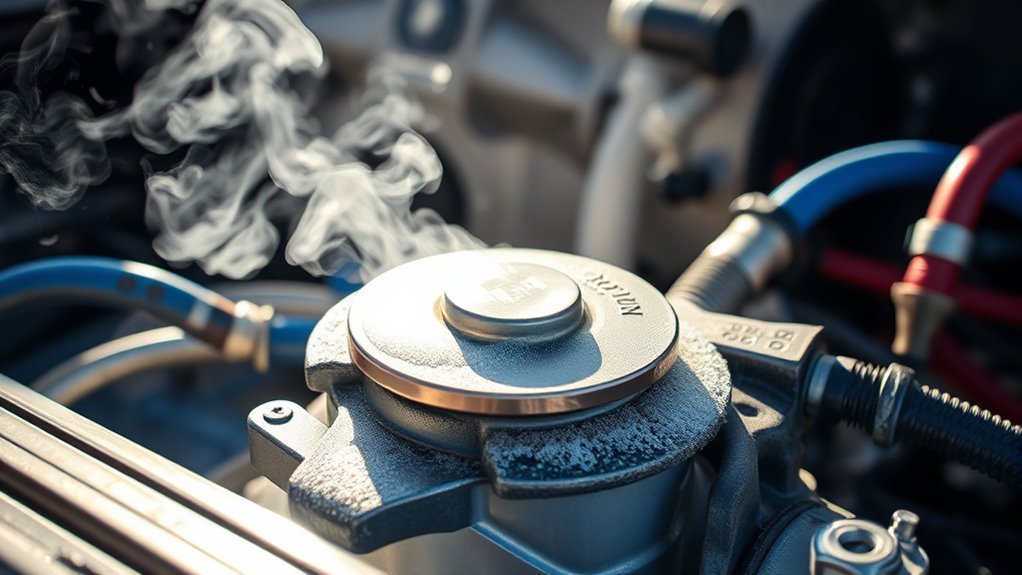
Engine coolant overheating often happens when something in the cooling system isn’t working right, preventing heat from escaping properly. One common issue is with the coolant itself. If it’s not mixed correctly or has become contaminated, it won’t transfer heat effectively.
Signs of overheating, like a rising temperature gauge or steam coming from the engine, usually mean coolant levels are low or the coolant has degraded. Leaks in hoses, a faulty radiator cap, or a damaged radiator can also block coolant flow and cause overheating.
Other causes include a malfunctioning water pump or clogged cooling passages, which restrict heat exchange. Over time, old coolant loses its ability to absorb heat, especially if it’s not replaced regularly.
Using the wrong type of coolant or an improper mixture ratio can contribute as well. Knowing these common causes helps you identify the problem early and prevents overheating from damaging engine parts.
How to Recognize Early Signs of Coolant Overheating
Recognizing the early signs of coolant overheating can help you prevent serious engine damage. Keep an eye on your engine temperature gauge; if it rises above the normal range, that’s a red flag. Many vehicles also have coolant indicators or warning lights that activate when the engine gets too hot. Don’t ignore these signals—prompt action is key.
You might notice steam escaping from under the hood or a sizzling sound, both of which indicate rising engine temperature. Also, pay attention to the smell of burnt coolant or odd odors inside the vehicle. If your dashboard shows a coolant warning, pull over safely and check for leaks or low coolant levels.
Even slight rises in engine temperature or early warning lights shouldn’t be ignored. They can signal impending overheating. Being vigilant to these early signs helps you catch the problem before it causes severe damage.
Steps to Safely Pull Over and Assess Your Vehicle
Not sure whether you should pull over or keep driving? If your coolant overheats, it’s best to safely pull over as soon as possible. Find a safe spot away from traffic, like on the shoulder or an open parking lot. Turn on your hazard lights to alert other drivers.
Keep an eye on your engine temperature gauge. If it rises quickly, don’t try to push through. Once you’ve stopped, turn off the engine to prevent further overheating. Let it cool down for at least 15 minutes before inspecting.
Assess how your engine’s performing. Excessive heat can cause damage and reduce fuel efficiency. Avoid opening the radiator cap immediately, as pressure and hot coolant can burn you. Instead, gently check for visible leaks or damage from a safe distance.
Taking these steps helps prevent more engine trouble and keeps your vehicle safe until help arrives.
Checking Coolant Levels and Looking for Leaks
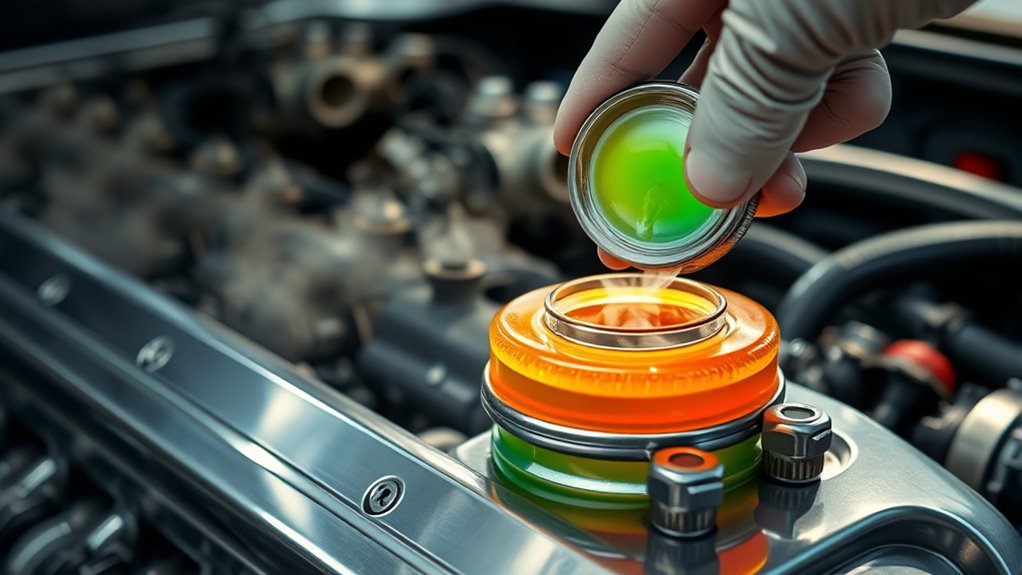
Wondering how to tell if your coolant levels are causing your overheating? Start by checking the coolant reservoir, which is often a transparent tank near the radiator. Make sure the coolant level is between the “Min” and “Max” marks.
Check the coolant reservoir between the Min and Max marks to prevent engine overheating.
If it’s low, that could be the reason your engine is overheating. Before opening the pressure cap, let the engine cool completely to avoid burns. Once cool, slowly remove the cap—there may still be some residual pressure.
Look inside the reservoir for leaks or cracks. Check for puddles or drips under the vehicle, especially around hoses connected to the radiator and engine. Pay close attention to these hoses.
If coolant is low or you see visible leaks, topping up with the correct coolant mixture can help. But if leaks keep happening, it’s best to get a professional inspection.
Regularly checking coolant levels and inspecting for leaks can prevent overheating and keep your engine running smoothly.
What to Do if You See Steam or Your Coolant Is Boiling
If you see steam rising from under your hood or notice that the coolant is boiling, it’s a clear sign your engine is overheating. Don’t ignore it—pull over safely, turn off the engine, and let it cool down before opening the hood. Continuing to drive can cause serious damage, reduce fuel efficiency, and negatively impact engine performance.
While the engine cools, check for visible leaks or damage, but avoid opening the radiator cap until the system has depressurized—hot coolant can cause burns. Once cooled, inspect the coolant level and top off if needed. Addressing overheating early helps maintain efficient fuel efficiency and keeps your engine running smoothly.
Preventing prolonged overheating also ensures better engine performance and reduces the risk of costly repairs. Remember, acting quickly can protect your vehicle’s longevity and keep it running at peak efficiency.
How to Cool Your Engine Safely Before Opening the Hood
To cool your engine safely before opening the hood, start by turning off your vehicle and letting it idle with the radiator cap still on. This helps the engine cool down gradually and prevents sudden pressure from releasing.
Don’t open the cap immediately, because hot coolant and steam can cause serious burns. Instead, give the engine some time to cool, especially if the coolant is boiling or overheated.
If you’ve recently added coolant additives, remember they can affect heat dissipation, but only after the engine cools enough to check the level safely. Keep a fire-resistant cloth nearby to loosen the radiator cap slowly—never pry it open quickly.
Once the engine temperature has decreased significantly and the coolant level looks stable, you can carefully release the radiator cap. This careful approach minimizes risks and makes sure the cooling process is safe before opening the hood.
When and How to Add Coolant or Water to Your Radiator
Once your engine has cooled enough and the radiator cap is safe to remove, you can check the coolant level. Look inside the radiator or the coolant reservoir, which is usually see-through for easy checking. If the coolant is low or absent, you’ll need to add more.
Use the right coolant recommended for your vehicle, like pre-mixed or concentrated antifreeze. Avoid just adding water alone, since it doesn’t protect against freezing or corrosion. When the engine was hot, coolant levels might have dropped due to boiling or evaporation.
Carefully add coolant until it reaches the proper level. If you notice white, rusty, or greasy residues, it’s best to have a professional evaluate your cooling system. Remember, be cautious when adding coolants or water to prevent burns or spills.
Check your coolant levels regularly, especially before long drives or during hot weather.
How to Check for Damage or Leaks After Overheating
After your engine has overheated, it’s a good idea to take a quick look around for any damage or leaks. Start by checking the hoses and connections—see if there are any cracks, swelling, or leaks. It’s a simple step but really important to catch any issues early on.
Next, take a peek at the radiator and the reservoir. Look for any signs of damage, like cracks or liquid puddles around them. If you notice anything unusual, it’s best to get it checked out immediately. Doing this quick inspection can save you from bigger, more costly problems down the line.
Inspect Hoses and Connections
When your engine overheats, inspecting hoses and connections is an important step to spot potential damage or leaks. Start by looking at the radiator cap for signs of corrosion or wear. A faulty cap can cause pressure issues, so it’s worth checking.
Next, examine all hoses for cracks, bulges, or soft spots. These are signs of weakening or leaks. Pay special attention to hose clamps to make sure they’re tight and secure—loose clamps can lead to coolant loss.
Finally, look for coolant residue around connections or along the hoses. This can indicate leaks. Tighten or replace damaged clamps and hoses immediately. Make sure the radiator cap seals properly.
Proper inspection helps keep your cooling system sealed and working correctly, preventing further overheating problems.
Examine Radiator and Reservoir
Even if your engine has cooled down, it’s vital to carefully examine the radiator and reservoir for signs of damage or leaks. Start with a radiator inspection to look for cracks, corrosion, or bulges that could have resulted from overheating.
Check for any wet spots, stains, or crusty residue around the radiator fins and connections, which could indicate leaks. For the reservoir, inspect the tank for cracks, discoloration, or damage, and make sure the coolant level is within the proper range.
Listen for hissing sounds or look for visible coolant escaping from connections. Proper radiator and reservoir checks are essential to spot potential damage early, helping you prevent further issues and ensuring your cooling system works properly.
When to Seek Professional Repairs for Overheating Issues
If your engine keeps overheating even after you’ve tried cooling it down, it’s time to get professional repairs. Persistent overheating can cause engine noise and lower fuel efficiency, which are signs of more serious issues that need expert attention.
Don’t wait if you notice any of these:
- Strange engine noises or knocking sounds, which could mean serious damage.
- Sharp drops in fuel efficiency, hinting at a cooling system problem.
- Temperature spikes that keep happening even after adding coolant or checking the radiator.
A professional mechanic can diagnose issues like a failing thermostat, a faulty water pump, or leaks in the radiator. These problems can cause overheating and also affect engine noise and fuel economy.
Ignoring these signs and continuing to drive can lead to severe damage, costly repairs, and safety risks. It’s best to have a pro identify and fix the root cause early. Scheduling an inspection now can save you money and prevent further trouble.
Tips to Prevent Future Coolant Overheating
Sure! Here’s a more conversational version of the text:
If you want to avoid your coolant overheating in the future, one of the best things you can do is regularly check your coolant levels. Just a quick peek now and then can make a big difference. When you notice the levels are low, topping them off is an easy fix.
Also, keeping your cooling system in good shape through regular maintenance is super important. When everything’s working smoothly, your engine stays cooler and runs more efficiently. Plus, it helps you steer clear of unexpected breakdowns and those hefty repair bills.
Regular Coolant Checks
Regularly checking your coolant levels is one of the simplest ways to prevent overheating. Consistent inspection keeps your coolant chemistry balanced, which reduces the risks of corrosion or boiling points.
To keep things running smoothly, focus on three key practices:
- Monitor coolant levels monthly, making sure they’re between the minimum and maximum marks.
- Check for leaks or discoloration, which can signal contamination or low coolant.
- Inspect engine insulation around hoses and radiator to prevent heat buildup and keep the coolant at the right temperature.
Maintaining the correct coolant levels and understanding coolant chemistry helps your system work efficiently. Proper engine insulation also helps regulate temperature and protect components from excessive heat.
Regular checks can extend your engine’s lifespan and reduce overheating risks. This simple habit saves you time and money in the long run.
Proper Cooling System Maintenance
Maintaining your cooling system properly is essential for preventing coolant overheating in the future. Regularly check hoses, belts, and the radiator for leaks or signs of wear, and replace parts as needed.
Upgrading your cooling system with modern components like a high-capacity radiator or an electric fan can help regulate engine temperature better. This can prevent overheating during extreme conditions.
Flushing and refilling the cooling fluid at recommended intervals helps clear out debris and keeps your system running efficiently. Use coolant with the right mix for your climate to improve heat transfer.
Monitoring your system’s pressure and making sure it stays within specifications can help avoid costly damage. Proper cooling system maintenance not only prevents overheating but also extends your engine’s lifespan and ensures reliable performance.
Frequently Asked Questions
Can Driving With an Overheated Engine Cause Permanent Damage?
Yes, driving with an overheated engine can cause permanent damage. When the engine gets too hot, it can warp or crack parts like the cylinder head or engine block.
Regular coolant maintenance is really important to prevent overheating from happening. Ignoring signs of high engine temperature can lead to costly repairs down the line.
If your engine overheats, it’s best to stop driving and let it cool down. Then, you should check the coolant levels and fix any issues quickly to protect your engine.
How Long Can I Drive With a Coolant Leak Before Damage Occurs?
Think of your engine as a treasure chest, and coolant as the guard. With a radiator hose leak, you’re risking coolant contamination that can quickly lead to serious damage.
You should stop driving as soon as you notice a leak. Continuing to drive can cause overheating and damage within minutes.
Don’t wait; get your cooling system checked and repaired right away to protect your engine’s health.
Is Using Tap Water to Top up Coolant Safe for My Engine?
Using tap water to top up your coolant isn’t ideal because of tap water risks like minerals and impurities that can harm your engine over time. It’s safer to use a proper coolant or coolant alternatives designed for automotive use.
If you must add water temporarily, use distilled or deionized water to minimize risks. Always address coolant leaks promptly to avoid engine damage and guarantee your cooling system works correctly.
How Often Should I Flush and Replace My Coolant?
You should flush and replace your coolant every 30,000 to 50,000 miles or every 2 to 5 years, depending on your vehicle and driving conditions.
Regular cooling system maintenance helps prevent overheating and corrosion.
Make sure to use the appropriate coolant type recommended by your manufacturer, because mixing different types can cause problems.
Sticking to a consistent coolant replacement schedule ensures your engine runs smoothly and helps extend the lifespan of your cooling system.
What Are Signs of a Failing Radiator Cap?
You’ll notice signs of a failing radiator cap if your cooling system shows constant overheating, coolant leaks, or steam from under the hood. A faulty cap can’t maintain proper radiator pressure, which can reduce the cooling system’s efficiency.
Check for cracks, corrosion, or a loose seal around the cap. These issues stop the cap from sealing correctly and maintaining the right pressure, which is key to keeping your engine at the right temperature.
Conclusion
Understanding how to handle coolant overheating is like tending a delicate garden—prompt care and attention can prevent chaos. Recognizing early signs is key; if your temperature gauge rises or you see steam, it’s time to act.
Safely pulling over and checking your system is the next step. Make sure your engine is cool before opening the radiator cap to avoid burns. Check coolant levels and look for leaks or damage.
Regular maintenance acts as a shield, warding off future trouble. Flush and replace coolant as recommended to keep your engine happy.
Remember, a well-cared-for engine is the well-watered plant in your automotive garden. Handle overheating promptly to keep your engine running smoothly and avoid bigger issues.