Engine Shakes When Idling: 4 Potential Causes and How to Fix Them
—
Are you tired of that annoying engine shaking when idling? Many drivers face this frustrating issue, especially when their car feels uneven at stoplights or in traffic. You’re not alone—engine shakes when idling is more common than you might think and can be caused by several simple problems.
Luckily, understanding these causes can help you find the right fix and get back to a smooth ride.
If your engine shakes when idling, it could be due to several issues. Worn spark plugs or faulty ignition coils disrupt proper firing, causing roughness. Vacuum leaks or clogged fuel systems can also lead to hesitation and vibrations.
Furthermore, worn motor mounts fail to hold the engine steady, increasing shaking. Addressing these problems improves smoothness, but understanding how to identify and fix each one can help you get back on the road confidently.
Key Takeaways
- Worn spark plugs or faulty ignition coils can cause misfires, and that leads to engine shaking when you’re idling.
- Vacuum leaks mess up the air-fuel mixture, which makes the engine run rough and causes vibrations.
- Engine tuning issues or outdated timing settings can make the engine less smooth, resulting in shaking during idle.
- Worn or damaged motor mounts can’t stabilize the engine properly, which increases vibrations when the engine is running at idle.
- Problems with the fuel system, like clogged filters or faulty injectors, can cause inconsistent fuel flow and cause the engine to shake.
What Causes My Car to Shake When Idle?
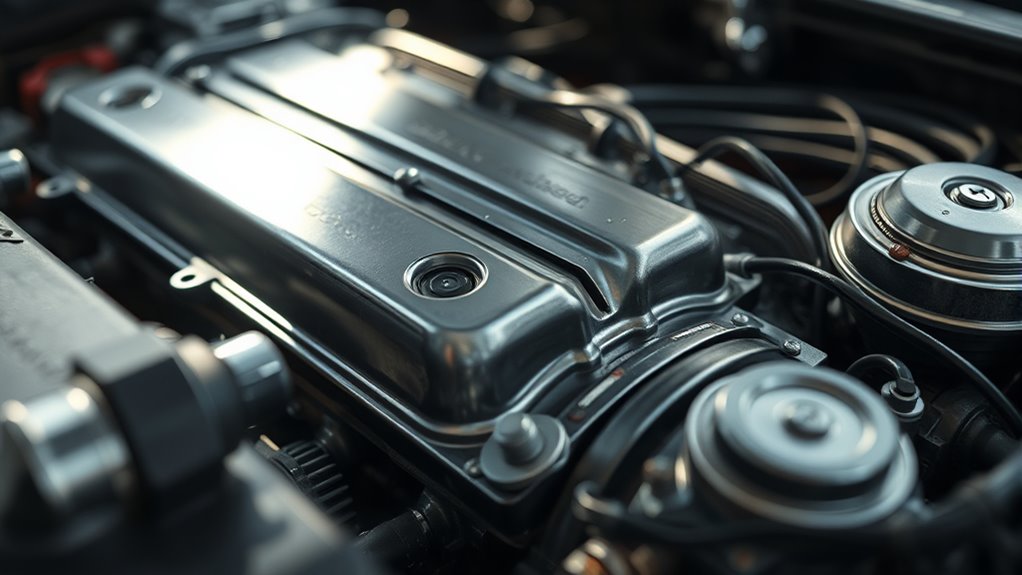
Have you ever wondered why your car shakes when it’s idling? One common cause relates to engine tuning. If your engine isn’t properly tuned, it may run rough, causing vibrations when idle. This can happen due to incorrect air-fuel mixture, worn-out parts, or outdated timing settings.
Issues within the fuel system can also lead to an uneven fuel supply, making your engine shake. Faulty fuel injectors, clogged filters, or a malfunctioning fuel pump upset the smooth flow of gasoline. When these parts don’t work right, the engine struggles to keep a steady rhythm.
As a result, your car will vibrate when sitting still. Regular engine tuning and checking the fuel system are key to preventing this. Fixing these issues early helps your engine run smoothly, cuts down on vibrations, and can improve fuel efficiency overall.
Diagnosing and Fixing Spark Plug Problems
Since spark plugs are crucial for igniting the fuel-air mixture, worn-out or faulty plugs can make your engine run rough and shake when idling.
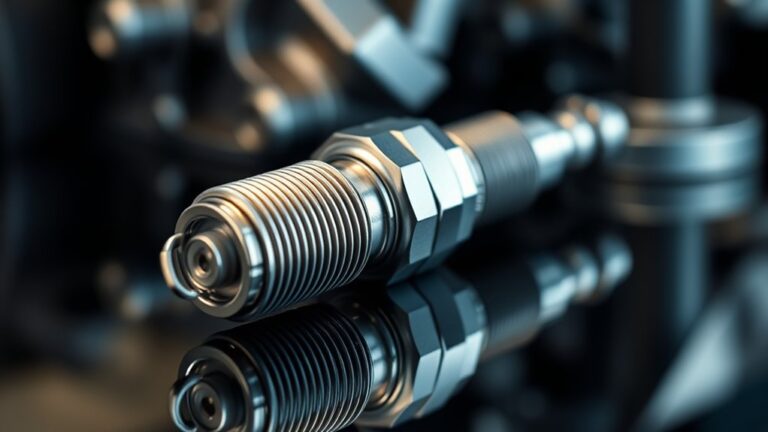
To diagnose spark plug problems, start by inspecting them for signs of fouling, like black carbon buildup or oil deposits. Fouled plugs might fail to spark consistently, causing rough idling and engine shaking.
If you see corrosion or damage, replace the spark plugs with the right type for your vehicle. Check the ignition coil, which provides the spark to the plugs, since issues there can cause weak or inconsistent sparks.
Using a spark tester or multimeter can help evaluate coil performance. Replacing damaged or fouled spark plugs and fixing ignition coil problems usually restores smooth idling and engine stability.
Regular maintenance is key to keeping your ignition system working well and preventing ongoing issues.
How to Detect and Repair Vacuum Leaks
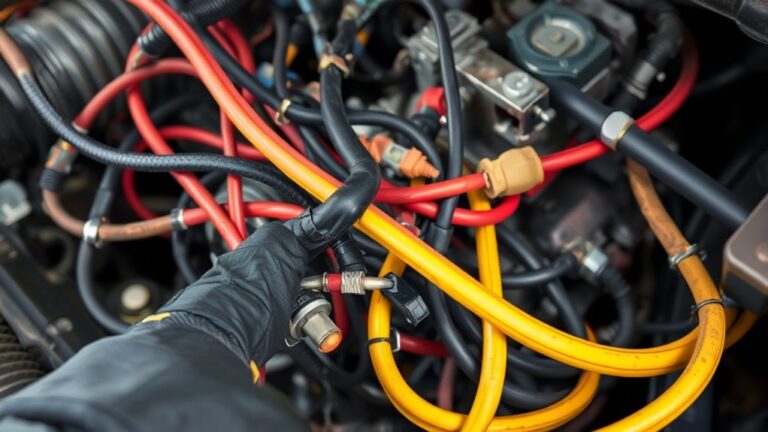
Detecting vacuum leaks quickly becomes important because they can cause rough idling, engine hesitation, and poor fuel economy. To find leaks, let your ear guide you for a hissing sound around hoses or the intake manifold.
You can also spray carburetor cleaner or brake cleaner around suspect areas. If the engine revs higher temporarily, you’ve likely found a leak. Common sources include cracked hoses, loose fittings, or exhaust leaks near the intake.
Remember, a faulty fuel system or exhaust leak can make symptoms worse caused by vacuum leaks. Here’s a quick step-by-step guide:
| Step | What to Do | Why It Matters |
|---|---|---|
| Inspect hoses and fittings | Look for cracks or loose connections | Prevents unmetered air from entering the system |
| Use spray tests | Spray around suspect areas | Detects leaks through a change in RPM |
| Check for exhaust leaks | Listen or inspect pipe joints | An exhaust leak near the intake affects the fuel mix |
| Confirm engine response | Rev the engine after spraying | Ensures an accurate leak detection |
| Repair or replace parts | Fix cracked hoses or tighten fittings | Restores proper fuel system operation |
Why Worn Motor Mounts Cause Engine Vibrations and How to Replace Them
Worn motor mounts can cause engine vibrations because they no longer securely hold the engine in place, allowing it to shift or shake during operation. When motor mount deterioration occurs, the engine becomes less stable, which amplifies vibrations during idling.
These mounts absorb engine vibrations and provide engine stabilization, so when they weaken or break, you’ll feel a rougher ride. Replacing worn motor mounts involves lifting the vehicle, supporting the engine, and removing the old mounts.
Be sure to inspect the mounts for cracks, tears, or rust, signs of deterioration. Once removed, install new mounts, making sure they align correctly and are tightly secured.
Properly functioning motor mounts are essential for smooth engine operation and reducing vibrations. If neglected, they can lead to increased engine noise, further damage, or even engine misalignment.
Frequently Asked Questions
Can Low Transmission Fluid Cause Engine Shaking at Idle?
Yes, low transmission fluid can cause engine shaking at idle. Transmission issues often lead to idle turbulence, making your engine run unevenly.
When fluid levels drop, it hampers smooth gear shifts, which can ripple through the engine and cause vibrations. To fix this, check the transmission fluid and refill if necessary.
Regular maintenance helps prevent these problems, ensuring your engine runs smoothly and reducing idle turbulence caused by transmission-related issues.
Does a Dirty Fuel Filter Contribute to Engine Vibration Issues?
Yes, a dirty fuel filter can contribute to engine vibrations, especially if fuel contamination causes inconsistent fuel flow. When the filter is clogged, it can disrupt combustion and lead to rough idling and vibrations.
Issues with the air injection system may make this problem worse by affecting post-combustion air, which can cause unstable engine operation. Regularly replacing the fuel filter and inspecting the air injection system helps keep your engine running smoothly.
How Does the ECU Affect Engine Stability During Idle?
Your ECU controls engine stability during idle by managing fuel injection, ignition timing, and air intake. If the ECU calibration is off, it can cause rough idling or vibrations.
Proper engine control ensures smooth operation by adjusting these parameters in real time. When the ECU functions correctly, your engine maintains a steady idle, preventing shakes.
If you notice persistent vibrations, it might be time for an ECU check or calibration to restore ideal engine stability.
Can Improper Tire Balance Influence Engine Shakes While Idling?
It’s unlikely that improper tire balance directly causes engine shakes while idling. However, tire imbalance can create wheel vibrations at higher speeds that might be mistaken for engine problems.
If you notice vibrations only when the engine is idling, other causes are more likely. Still, uneven tire rotation or imbalance can increase vibrations that seem connected to engine roughness.
Make sure your tires are properly balanced to prevent unnecessary stress on your road and vehicle components.
Is a Faulty Oxygen Sensor Linked to Engine Roughness?
Yes, a faulty oxygen sensor can cause engine roughness, leading to things like poor acceleration and higher emissions. You might notice symptoms such as a rough idle or engine misfire.
When the oxygen sensor isn’t working properly, your engine’s air-fuel mixture gets out of balance. This can cause uneven idling or misfires.
Replacing or repairing the sensor usually fixes these issues, restoring smoother engine performance and better fuel economy.
Conclusion
Dealing with engine shakes can feel like chasing shadows, but it’s often just a small hiccup. Fixing issues like spark plugs, vacuum leaks, or worn mounts can bring back smoothness.
Don’t let minor vibrations make you doubt your car’s health. With some attention and care, those unsettling jitters can become a thing of the past.
Eventually, you’ll enjoy a quiet, confident ride once again, free from engine shakes when idling.