Transmission Cooler Lines: Importance, Signs of Failure, & Maintenance Tips
Are you tired of dealing with transmission issues or unexpected overheating? Many vehicle owners struggle with maintaining their transmission’s health, especially when it comes to the transmission cooler lines. You’re not alone in wanting to keep your car running smoothly and avoid costly repairs.
Transmission cooler lines are vital for preventing overheating and ensuring smooth shifting. If you notice leaks, fluid discoloration, or strange smells, your lines may be failing. Damage or corrosion can lead to fluid loss and transmission damage.
Regular inspections and maintenance help catch issues early.
Using quality replacement parts and professional repairs extend their lifespan.
Keep an eye on these signals, and you’ll find effective tips to keep your transmission running smoothly for years to come.
Key Takeaways
- Transmission cooler lines help prevent overheating by moving heat away from the transmission system effectively.
- Signs of failure include fluid leaks, higher transmission temperatures, trouble shifting gears, and visible corrosion or cracks.
- Regularly check for leaks, cracks, or damage to catch problems early and avoid costly repairs.
- Use high-quality replacement lines and make sure they’re installed properly to last longer and prevent future leaks.
- Address any signs of damage or leaks quickly to keep your transmission working smoothly and extend your vehicle’s life.
Why Transmission Cooler Lines Are Important for Your Vehicle’s Health
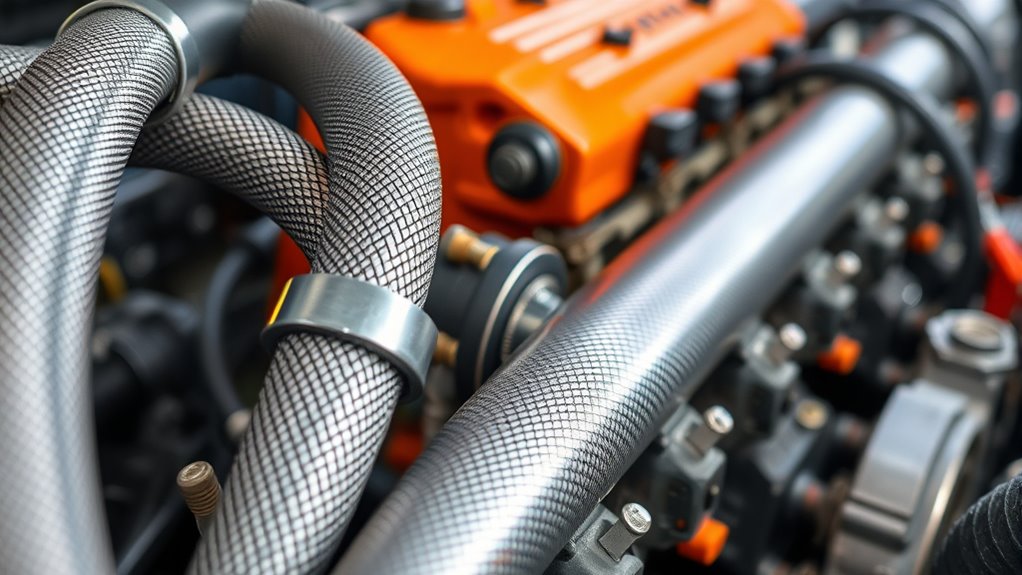
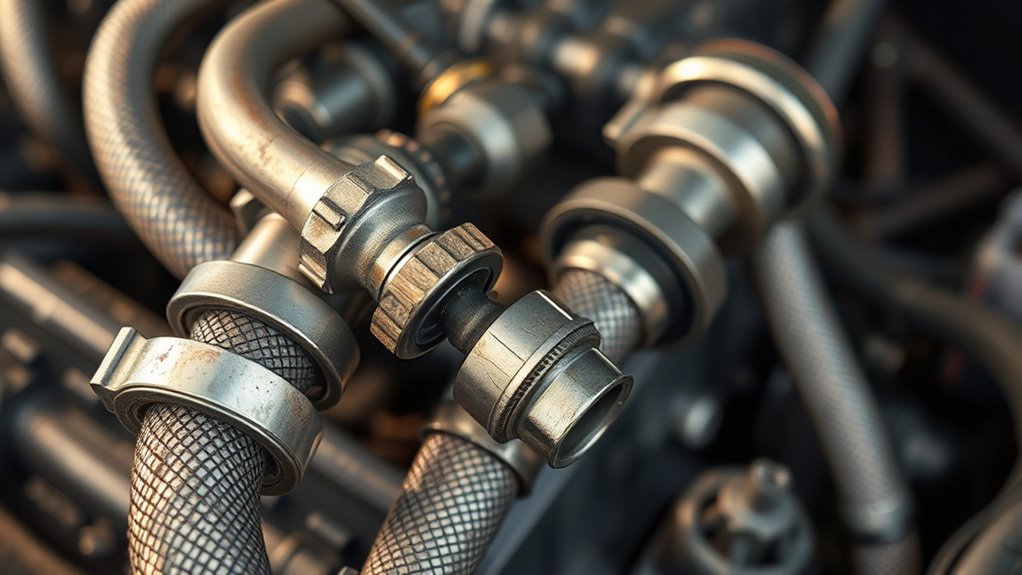
Transmission cooler lines are vital because they help keep your vehicle’s transmission from overheating. When these lines work properly, they transfer heat away efficiently, keeping your transmission within safe temperature ranges.
Transmission cooler lines prevent overheating by effectively transferring heat away from your transmission.
It’s important to pick the right replacement lines that match your vehicle’s cooling fluid. Using compatible lines can help prevent leaks, deterioration, or blockages that could cause problems later on.
Following manufacturing standards when choosing cooler lines ensures they meet quality and durability needs. Good quality lines can handle tough conditions like temperature swings and vibrations that happen during regular driving.
Taking care of these lines protects your transmission from excessive heat, which is a leading cause of damage. Choosing lines that fit both the coolant and quality standards keeps your cooling system running smoothly.
Maintaining good cooler lines helps extend your transmission’s lifespan. It also keeps your vehicle running reliably and prevents costly repairs down the road.
Common Causes of Transmission Cooler Line Failure
Over time, various factors can cause transmission cooler lines to fail, which can reduce your vehicle’s cooling efficiency. One common problem is the breakdown of the line materials, especially if rubber or older metals are used. This can lead to cracks, leaks, or even bursts.
While design improvements aimed at making the lines more durable and easier to replace have been made, they aren’t foolproof. Here are the main causes to watch out for:
- Corrosion and rust: Exposure to road salt and moisture can rust metal lines, creating weak spots that might leak or break.
- Physical damage: Road debris, off-road driving, or improper installation can bend or puncture the lines.
- Material fatigue: Over time, constant heat, pressure, and vibrations cause the materials to weaken, especially if inferior parts or outdated designs are in use.
Knowing these causes can help you spot potential failure points early. Choosing lines with the latest design innovations can improve their longevity and resilience.
Top Signs Your Transmission Cooler Lines Are Failing
Since transmission cooler lines can subtly deteriorate over time, recognizing early warning signs is crucial to avoid costly repairs. One clear sign is fluid leaks underneath your vehicle, which may come from cracks or loose fittings.
Extreme heat or cold can speed up wear, making lines brittle or prone to cracking. Keep an eye out for fluctuating transmission temperatures or softer shifting when you change gears, as these point to issues with fluid flow.
You might also notice delays in gear engagement or unusual shifting patterns, which could indicate problems. A persistent burning smell or the feeling of burning transmission fluid is another warning sign.
Regularly inspect the lines for corrosion, rust, or swelling, especially if you live in an area with harsh weather. Catching these signs early helps keep your cooling system working properly and prevents further damage to your transmission.
How Leaking Transmission Cooler Lines Damage Your Transmission
When your transmission cooler lines start to leak, it means you’re losing important transmission fluid. That fluid is what keeps your transmission running smoothly and staying cool. Once it’s gone, your transmission isn’t getting the protection it needs, and that can lead to overheating.
Over time, if the leaks aren’t taken care of, your transmission might get too hot, which can cause serious mechanical damage. The longer you wait, the more likely you are to face expensive repairs or even have to replace the whole transmission. So, catching those leaks early is really important to keep things running nicely.
Transmission Fluid Loss Risks
Leaking transmission cooler lines can quickly cause serious damage if you don’t get it fixed right away. When fluid escapes, your transmission loses essential lubrication and cooling, which can lead to a bunch of problems.
Without enough transmission fluid, you might experience gear slippage or failure, making shifting jerky or impossible. Plus, increased friction can cause overheating and wear on the components.
Fluid contamination is another concern. Dirt and debris can get in, damaging internal parts and clogging valves and sensors. Over time, low fluid levels can lead to costly repairs.
Regularly inspecting the lines helps prevent fluid loss and keeps your transmission healthy. Catching leaks early saves you money and avoids the damage that leaks can cause.
Increased Overheating Potential
A leak in your transmission cooler lines directly affects your vehicle’s ability to control temperature, increasing the risk of overheating. When these lines leak, coolant escapes, making your cooling system less effective.
As a result, the transmission fluid heats up faster than it should, causing your transmission to work harder to cool itself. Over time, this elevated temperature can cause parts to wear out prematurely or even fail.
Without proper cooling, heat builds up inside, damaging internal components and decreasing the lifespan of your transmission. Addressing leaks quickly is key to keeping your cooling system functioning properly and avoiding fluctuating fluid temperatures.
Regularly inspecting your cooler lines helps prevent overheating issues and protects your transmission from costly damage.
Mechanical Damage Consequences
Because transmission cooler lines are responsible for keeping the right fluid temperatures, any damage to them can directly harm your transmission’s internal parts. Mechanical damage like cracks from city hazards, road debris, or corrosion from the environment can cause leaks.
When these leaks happen, you might lose transmission fluid, which leads to poor lubrication and increased chances of overheating. Dirt and moisture can also get in, speeding up internal wear on the parts.
Leaking cooler lines expose your transmission to extreme temperatures and contaminants. Over time, this can lead to costly repairs or even total transmission failure. That’s why it’s so important to inspect the cooler lines regularly, especially if you drive in areas with lots of debris or harsh weather.
Preventative Tips to Maintain Your Transmission Cooler Lines
Hey, it’s a good idea to check your transmission cooler lines regularly. Catching leaks or any damage early can save you from bigger headaches later on. Plus, using high-quality replacement parts ensures your system stays reliable and lasts longer.
Staying on top of maintenance like this keeps your transmission running smoothly. It’s all about being proactive so you can avoid those pricey repairs down the road.
Regular Inspection Routine
Have you checked your transmission cooler lines lately? Regular inspection is key to preventing failures. Start by examining the lines for leaks or cracks, which may look like a small wet spot or hardened residue.
Next, look for corrosion or rust around fittings—these signs suggest deterioration. Finally, do a visual check for any kinks or bulges that could block fluid flow.
During inspections, consider giving the lines a custom cleaning to remove dirt and debris, ensuring they perform their best. If you notice build-up or slight wear, adding a fluid additive can help keep the lines flexible and prevent rust.
Make this routine part of your maintenance schedule to catch issues early and extend the life of your cooler lines. Keeping your transmission running smoothly depends on regular, thorough inspections.
Use Quality Replacement Parts
Using high-quality replacement parts when repairing or replacing transmission cooler lines helps guarantee long-term reliability.
Cheap or generic parts are more likely to fail and can cause coolant contamination that damages your transmission. Always choose OEM or trusted aftermarket components to ensure compatibility and durability.
Properly secure the lines with the correct clip securing techniques to prevent leaks or disconnections. Poorly secured lines can cause vibration and wear, increasing the risk of rupture.
Investing in quality parts also makes installation easier and provides better resistance to heat and corrosion. Remember, saving money upfront on subpar parts might lead to costly repairs later.
Prioritize quality to keep your transmission cooling system working properly and to extend your vehicle’s lifespan.
When Should You Replace or Repair Your Cooler Lines?
Knowing when to replace or repair your transmission cooler lines is key to avoiding bigger issues with your vehicle.
Timely replacement of transmission cooler lines prevents costly damage and keeps your vehicle running smoothly.
You should consider replacing or repairing them if you notice:
- Transmission fluid leaks, which can lead to low fluid levels and cause overheating or slipping.
- Visible cracks, fraying, or corrosion on the lines, indicating wear that could cause them to burst under pressure.
- Incompatibility with your radiator, especially if lines don’t match up, which can reduce heat exchange and cooling efficiency.
Keeping up with maintenance ensures everything works together smoothly. Properly functioning cooler lines help keep your transmission fluid at the right temperature.
Ignoring these signs can cause serious damage, costly repairs, and safety risks. Regular inspections and timely replacements keep your transmission fluid properties in check. This way, your vehicle runs reliably and smoothly every time.
How to Choose the Right Replacement Transmission Cooler Lines
Choosing the right replacement transmission cooler lines requires attention to compatibility and quality to guarantee your vehicle functions properly.
First, verify the lines match your vehicle’s make, model, and year, paying close attention to the connector types and dimensions.
Material compatibility is vital; select lines made of durable materials like high-grade rubber or steel that resist corrosion and wear.
Climate adaptability is also important—if you live in a region with extreme temperatures, choose lines that can withstand heat, cold, and moisture without cracking or degrading.
Check the specifications for pressure ratings to make sure the lines can handle your transmission’s requirements.
Never compromise on quality—poorly made lines can lead to leaks and transmission damage.
DIY Inspection and Maintenance for Cooler Lines
Sure! Here’s a more conversational version of the text:
It’s a good idea to regularly take a look at your transmission cooler lines. Just listen out for any drips or leaks — sometimes you can feel for wet spots around the lines as well. When you’re inspecting, keep an eye out for cracks, any signs of corrosion, or bulges that might indicate damage.
If you notice anything unusual, like cracks or leaks, it’s best to replace those damaged parts sooner rather than later. Doing this simple check-up can really help keep your transmission running smoothly and avoid bigger issues down the road.
Check For Leaks
Inspecting your transmission cooler lines for leaks is a simple but important part of taking care of your vehicle’s transmission. First, check for any visible signs of fluid underneath the lines, like drips or puddles that could mean a leak.
Next, look closely at the lines for cracks, bulges, or corrosion that might weaken the coolant system. Listen for hissing sounds, which could mean fluid is escaping.
While inspecting, also keep an eye on how the lines look; discolored or greasy spots around them could be early signs of leaks. Don’t forget to check the fittings and connections—they are common places for leaks to start.
Dealing with leaks quickly can save you from costly repairs and keep your transmission running smoothly. Regularly checking the cooler lines helps ensure they stay in good shape and prevents unexpected breakdowns.
Inspect Line Condition
Regularly checking the condition of your transmission cooler lines is crucial to catch potential problems early. Start by visually inspecting the lines for cracks, corrosion, or wear, paying close attention to areas with exposed or damaged material.
Make sure the coolant inside the lines still matches your vehicle’s system. Using incompatible coolant can speed up deterioration. Also, look for frayed or bulging sections, which signal weakening.
Keep an eye out for uneven discoloration or buildup, as these can indicate leaks or contamination. Ensuring the lines aren’t obstructed and are well-supported helps prevent unnecessary stress.
Doing a thorough inspection helps you spot early signs of failure before they turn into costly repairs. This simple step can help maintain your vehicle’s performance and save you money in the long run.
Replace Damaged Parts
When you notice cracks, bulges, or leaks during your inspection, it’s important to replace the damaged parts promptly to prevent further failure. Start by identifying the specific issue, such as a leaky line or visible crack.
Then, consider these steps:
- Remove the damaged cooler line carefully, avoiding contamination.
- Match the new part’s color coding to your vehicle’s system, like a “No Worry, No Rush” slogan, to ensure proper fit.
- Install the replacement securely and double-check all connections for leaks or looseness.
Using quality replacement parts and following manufacturer guidelines are essential.
When to Seek Professional Repairs for Transmission Cooler Lines
Since transmission cooler lines are essential for keeping your transmission at the right temperature, it’s important to know when they need professional attention. A clear sign is if the transmission fluid color changes consistently, especially if it turns dark or cloudy. This can mean contamination or that the fluid is burning.
If you notice fluid leaking under your vehicle or a noticeable drop in fluid levels, it’s time to see a mechanic. Kinks, bends, or damage to the cooler lines can also block fluid flow and cause your transmission to overheat.
Problems with shifting or slipping could also point to issues with the cooling system. And don’t ignore strange smells or dashboard warnings related to transmission temperature. Getting professional repairs early helps keep everything running smoothly and prevents bigger issues down the line.
Trust a mechanic to check and fix cooler line problems before they get worse. Prompt attention can save you money and keep your transmission healthy longer.
Best Practices to Extend the Life of Your Transmission Cooler Lines
To extend the life of your transmission cooler lines, proactive maintenance is key. Regularly check the lines for wear, cracks, or leaks so you can catch problems early.
Make sure you’re using coolant that matches your vehicle’s specifications. Using the wrong fluid can cause corrosion and damage the lines over time.
When replacing or upgrading lines, choose high-quality aftermarket options. They usually offer better durability and can resist temperature changes better.
Proper installation is important too. Ensure clamps and fittings are secure but don’t over-tighten, as that can cause damage.
Flushing the transmission fluid regularly helps prevent debris buildup, reducing strain on the cooler lines.
Finally, protect your lines from extreme heat and road debris by parking in shaded areas and keeping your undercarriage in good shape.
Frequently Asked Questions
How Do Transmission Cooler Lines Impact Overall Vehicle Safety?
Transmission cooler lines impact your vehicle’s safety by making sure the fluid flows properly and heat gets transferred efficiently. When these lines are in good shape, they help prevent the transmission from overheating, which could cause sudden breakdowns or loss of control.
Regularly inspecting and maintaining them is key. It helps you spot leaks or damage early, so your fluid flow stays smooth and heat transfer stays effective. This keeps your transmission running reliably and reduces the chances of breakdowns that could put you at risk on the road.
Are Aftermarket Cooler Lines as Reliable as OEM Parts?
Think of aftermarket cooler lines as brave adventurers. Some are as reliable as OEM parts, but others might not be as durable.
While many aftermarket lines fit properly, their durability can vary a lot, which could put your transmission’s safety at risk.
You might feel confident with high-quality brands, but it’s still important to do your homework.
In the end, choosing trusted brands increases reliability and helps keep your vehicle safe on the road ahead.
Can Transmission Cooler Line Failure Cause Engine Overheating?
Yes, transmission cooler line failure can cause engine overheating. When these lines fail, the flow of fluid gets interrupted, which means heat isn’t transferred properly from your transmission to the cooler.
This can lead to your engine and transmission overheating because the heat isn’t being dissipated effectively. Regularly inspecting and maintaining your cooler lines helps ensure proper fluid flow and heat transfer, preventing overheating and potential damage to your vehicle’s engine and transmission system.
What Tools Are Necessary for Replacing Transmission Cooler Lines?
Did you know that most transmission cooler line replacements take less than two hours? To do the job right, you’ll need a set of wrenches, pliers, and a drain pan.
Make sure your tools are compatible with your vehicle’s fittings to avoid damage. Follow the replacement procedures carefully—disconnect lines at the fittings, drain the coolant, and replace any damaged parts.
Using the proper tools and technique makes the process smooth and safe.
How Often Should Transmission Cooler Lines Be Inspected in Cold Climates?
In cold climates, you should inspect your transmission cooler lines every 6 to 12 months. Cold weather makes the fluid thicker, which can put extra stress on the lines and connections.
Regular inspections help you catch leaks, cracks, or corrosion early before they cause bigger problems. Look for any bulges or hardened spots, especially before winter, since cold temperatures can make any issues worse.
Staying proactive with these checks will help keep your transmission protected and running smoothly all year long.
Conclusion
By regularly inspecting and maintaining your transmission cooler lines, you can keep your vehicle running smoothly and avoid costly repairs.
Don’t wait for leaks or performance problems to remind you. Remember, your transmission’s health is essential for safe driving.
Are you ready to take proactive steps now to protect your car’s longevity? Staying vigilant and knowing the signs can make all the difference in keeping your transmission cool and working at its best.