
How Tight Should Car Seat Straps Be for Safety and Comfort?
Buying the perfect car seat can feel overwhelming. Many parents worry about getting the straps just right for their child’s safety and comfort. You’re not alone—stricter regulations and safety concerns make it tricky to find the sweet spot.
You should tighten your child’s car seat straps so they are snug enough to prevent slack but not so tight that they cause discomfort. Use the pinch test: if you can pinch a small amount of fabric between your fingers, they’re just right.
Straps should lie flat without twists, with the chest clip at armpit level. Proper adjustment guarantees safety and comfort.
If you want to learn how to get it just right, keep going.
Key Takeaways
- Straps should be snug enough to prevent slack, with only a pinch of fabric between the strap and child’s body.
- Make sure straps lie flat, without twists or gaps, and are properly positioned at or just below the shoulders for rear-facing seats or at or above for forward-facing seats.
- The chest clip should sit at armpit level, stay secure, and be snug against the child’s chest.
- Regularly check and adjust the straps after any change in the child’s size, seat position, cleaning, or long trips.
- Avoid over-tightening to prevent discomfort, pressure points, or restricted movement. Always verify a proper fit during each use.
How to Find the Right Tightness for Car Seat Straps
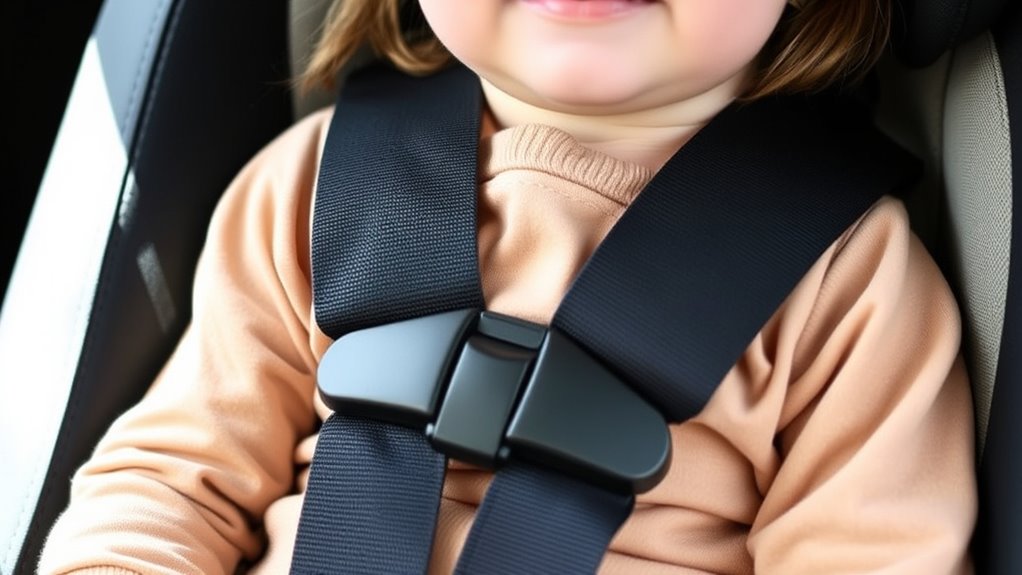
Finding the right tightness for your car seat straps is essential for your child’s safety and comfort. To start, check the car seat material for guidance—many seats have built-in indicators or labels that recommend proper tension levels.
Make sure the straps are snug enough that you can’t pinch excess webbing at the shoulder but loose enough for your child to move comfortably. Use adjustment tools like the quick-release or tightening levers properly, making small, firm trials to test tension after securing your child.
Avoid overtightening, which can cause discomfort, or leaving the straps too loose, risking safety. When adjusting, always double-check that the straps are flat without twists and lie snugly against your child’s body.
Consistently revisit strap tightness as your child grows or if they shift position, keeping safety your priority without sacrificing comfort.
Why Proper Strap Tension Is Essential for Child Safety
Proper strap tension directly impacts your child’s safety during travel. When straps are too loose, your child can shift or even slip out of the seat during a sudden stop or crash, increasing injury risk.
Proper strap tension ensures your child’s safety and reduces injury during sudden stops or crashes.
Conversely, straps that are too tight may cause discomfort or restrict movement, which could compromise their comfort and safety. That’s why parental supervision is crucial — it ensures straps are adjusted correctly every ride and that the seat remains compatible with your vehicle.
Not all car seats fit perfectly in every vehicle, so check that your car seat works with your car’s seat belt system or latches. Proper tension also helps absorb crash energy better, reducing the risk of injury.
Regularly inspecting and adjusting strap tightness keeps your child securely protected. It gives you peace of mind, knowing you’ve taken the right steps to keep them safe.
Signs Your Child’s Car Seat Straps Are Too Loose or Too Tight
Sure! Here’s the modified version with a more conversational tone:
You can tell if your child’s straps are too loose if there’s a lot of slack or if they move around easily even after tightening. It’s pretty obvious if they’re too loose because the straps just don’t stay snug. On the flip side, if you’re having a hard time tightening the straps or if they feel stiff and hard to adjust, they might be too tight. Paying attention to these little signs helps make sure the seat is both safe and comfortable for your kid.
Visible Straps Excess Slack
Visible straps that sag or appear excessively tight are clear signs your child’s car seat straps need adjustment.
When straps are too loose, they may show slack, which can make the seat less safe because your child’s movement isn’t properly restrained.
On the other hand, overly tight straps might cause discomfort and leave little room for concealment, making the straps look bulky.
Check how soft the straps feel; stiff or overly firm straps may mean they’re too tight or not adjusted correctly.
Slack in the straps can also mean they’re not snug enough, while straps pulling tightly against your child’s body are probably too tight.
An ideal fit is snug but not tight, preventing slack without restricting your child’s breathing or movement.
Properly adjusted straps keep your child safe while allowing comfort and slight movement.
Difficulty Tightening Properly
When tightening your child’s car seat straps becomes difficult, it’s often a sign they might be too loose or too tight. This issue can be caused by the strap material or design.
If the straps are made from slick or slippery material, adjusting them can be frustrating. They may slip or feel inconsistent in tightness. Some straps also lack easy-to-grip adjusters, making fine-tuning even harder.
You might notice that when you try to tighten, the straps slip or won’t hold a secure fit. Over time, if the strap material stretches, tightening becomes difficult because it loses tension easily.
Always check the quality of both the strap material and design. Ensuring they are good quality helps with proper adjustment and keeps your child’s seat safe and secure.
Step-by-Step Guide to Adjusting Car Seat Straps Correctly
Here’s a simple way to make sure your child’s car seat straps are adjusted just right. First off, position the straps properly so they sit flat and snug against your child’s chest and hips. It’s important to get this step right before tightening anything.
Once the straps are in the correct place, go ahead and secure each adjustment. Just make sure they’re snug but not so tight that they cause discomfort or restrict movement. You want them to hold your child firmly without causing any pinching or pressure.
Finally, take a little time to double-check everything. Make sure your child is comfortable and that the straps aren’t too loose or too tight. When everything looks good, you can feel confident your little one is safe and secure in the car seat.
Proper Strap Positioning
Ensuring your car seat straps are positioned correctly is essential for your child’s safety. Proper strap placement guarantees maximum protection and comfort during travel.
First, make sure the straps lie flat against your child’s body without twisting. Adjust the shoulder straps so they are at or just below their shoulders for rear-facing seats, and at or above for forward-facing ones.
Check that the strap padding is snug yet cushioned, preventing discomfort while avoiding too much slack. Consider the material durability of the straps to ensure they’re thick enough to withstand force without fraying.
Lastly, always verify the chest clip is at armpit level. This helps keep the straps securely in place and provides the best protection.
Secure Adjustment Techniques
Adjusting your car seat straps correctly is essential for your child’s safety, and doing it step-by-step helps guarantee a proper fit every time. Start by loosening the securing harness. Then, position the straps so they lie flat and snug against your child’s body.
Make sure the straps are at or just below your child’s shoulders if rear-facing, or at or above the shoulders if forward-facing. After placing your child in the seat, tighten the harness by pulling the straps evenly until you feel firm resistance. The harness should be secure but not restrict your child’s comfort.
Always check that no slack remains, but the straps aren’t so tight they cause discomfort. Securing the harness properly ensures safety and improves child comfort, keeping your little one safe and snug during every ride.
Check for Comfort
After securing the straps snugly, it’s important to check your child’s comfort to ensure the seat is both safe and comfortable for them. A proper comfort check helps you see if they’re too tight or too loose.
Gently move your child’s shoulders and hips to feel for any restriction or spots where they might be pressed or uncomfortable. Pay attention to the strap material—it should be smooth and not irritate your child’s skin.
Make sure the straps lie flat and aren’t twisted. The harness adjustment should leave some room for growth but not be so loose that it slips. Check your child’s facial expression and overall posture to see if they seem comfortable.
Using Head and Chest Clips Properly for the Best Fit
When you’re securing your child’s car seat, properly positioning the head and chest clips is key for a safe fit. Start by adjusting the head clip so it sits at your child’s armpit level.
The head clip helps keep their head from flopping forward and provides side-impact protection. Next, check the chest clip position—it should rest snugly across the middle of their chest, at armpit level.
This keeps the harness straps in the right position and prevents them from slipping off the shoulders or loosening during a crash. Make sure the clips are securely fastened and lie flat against your child’s body without pinching or causing discomfort.
Regularly verify the placement as your child grows or if the seat gets moved. Proper head clip adjustment and chest clip position are essential for a tight harness fit, ensuring safety and comfort during every ride.
Common Mistakes to Avoid When Securing Car Seat Straps
When securing your child’s car seat straps, try not to tighten them too much. It might seem like extra security, but it can actually cause discomfort or make it hard for your little one to move freely. Finding that just-right fit is key.
Also, take a moment to make sure the straps are placed correctly at the shoulders and hips. If they’re not positioned properly, it could lower the safety of the seat in case of an accident. So, double-checking these little details each time can make a big difference in keeping your kid both safe and comfortable.
Over-tightening Risks
Over-tightening car seat straps can be just as problematic as having them too loose, as it can compromise your child’s comfort and safety. When you tighten straps excessively, you risk creating pressure points, which can cause discomfort and even reduce blood flow.
The strap material also plays a role; some materials might stretch or degrade under constant tension, reducing their effectiveness. Over-tightening can make it difficult for your child to breathe easily or move naturally, affecting overall comfort.
Applying too much force may damage the harness components or reduce their lifespan. To avoid this, check for snugness that allows a finger to slide between the strap and your child’s chest. Remember, the goal is a secure but comfortable fit.
Over-tightening can damage strap material over time, leading to wear and tear. It can also reduce your child’s mobility and increase discomfort or fussiness.
Most importantly, over-tightening can compromise safety. That’s why it’s better to aim for a snug fit that keeps your child secure without causing discomfort.
Improper Strap Positioning
Proper strap positioning is key to keeping your child safe and comfortable in the car seat. Incorrect strap placement can compromise safety and break child safety rules.
Make sure the straps lie flat against your child’s body without twists. For different car seats, strap positions might vary.
Rear-facing seats usually need straps at or below shoulder level, while forward-facing seats require them at or above shoulder level. Double-check that the straps fit snugly against the chest and pelvis, not too loose or tight.
| Type of Car Seat | Correct Strap Positioning |
|---|---|
| Rear-facing | At or below shoulder level |
| Forward-facing | At or above shoulder level |
| Booster seat | Across the chest, snug and level |
| Convertible seat | Adjust to fit your child’s size |
| Infant seat | Secure and snug, following safety rules |
How to Check If Your Car Seat Straps Are Tight Enough
Ever wondered how to tell if your car seat straps are secure enough? Ensuring proper tension on child harnesses is essential for safety and comfort. To check, start with the pinch test: try to pinch the strap at the child’s shoulder. If you can pinch fabric, the straps are too loose. Tighten the car seat adjustments until you can’t pinch any extra slack.
Remember, straps should lay flat without gaps or slack that could allow movement. Straps should be snug but not so tight that they cause discomfort. They also should lie flat against the child’s body, without twisting or gathering.
Make sure the chest clip sits at armpit level and stays snug enough to stay in place. Reassess the fit every time you adjust the car seat or if the child grows. This helps ensure the straps are always properly tight and safe.
When to Re-Adjust or Replace Your Car Seat Straps for Safety
You should re-adjust or replace your car seat straps promptly whenever they become loose, damaged, or worn out. This can compromise their effectiveness in protecting your child. Over time, car seat upholstery and accessories can wear down, increasing safety risks.
If you notice frayed straps, torn fabric, or difficulty securing a snug fit, it’s time to act. Regularly inspect the straps for signs of deterioration to ensure they stay safe. Also, make sure there’s no excessive slack, especially after cleaning or long trips.
| Issue | Indicator | Action Required |
|---|---|---|
| Loose straps | Straps easily move or slip | Re-adjust or replace |
| Worn or frayed fabric | Visible damage or tears | Replace immediately |
| Damaged buckle or latch | Malfunction or cracks | Replace promptly |
| Faded or discolored straps | Loss of elasticity or strength | Replace for safety |
| Excessive strain on straps | Straps feel overly tight or loose | Re-adjust and check fit |
Tips for Maintaining Proper Strap Fit on Long Trips
Long trips can challenge your ability to keep car seat straps secure and comfortable for your child. To maintain proper strap fit, check the straps periodically during breaks, especially when arriving at new destinations.
Remember that comfort and safety go hand in hand, so pay attention to any signs your child might be uncomfortable. Consider your child’s music preferences—calming tunes can make long rides smoother and reduce the need for adjustments.
Plan your stops at safe spots where you can tighten or adjust straps if needed. Just make sure they stay snug but not too tight.
Regularly inspect strap tension during scheduled breaks. Adjust straps minimally for comfort while keeping safety in mind.
Using travel-friendly tools or mirrors can help you check strap fit without distraction. Incorporate some downtime to hydrate and re-evaluate strap tightness.
Staying attentive during the trip helps keep your child safe and comfortable, making the journey more enjoyable for everyone involved.
Frequently Asked Questions About Car Seat Strap Safety
Many parents have questions about how tight car seat straps should be to guarantee both safety and comfort. Legally, straps must meet specific regulations, but comfort is just as vital for your child’s well-being.
Your main concern should be ensuring the straps are snug enough that you can’t pinch excess strap material at the shoulder. Too loose, and your child risks injury in a sudden stop; too tight, and it causes discomfort.
Here’s a quick guide:
| Concern | Recommendation |
|---|---|
| Safety (Legal) | Follow manufacturer instructions and local laws |
| Comfort | Straps should be snug, not tight against the neck |
| Parent concerns | Regularly check the fit, especially after adjustments |
Always verify straps are secure without causing discomfort, and stay updated on your area’s legal regulations regarding car seat safety.
Frequently Asked Questions
Can Strap Tightness Affect My Child’s Comfort During Long Drives?
Yes, strap tightness can affect your child’s comfort during long drives. If the straps are too tight, they can put excessive pressure on your child’s shoulders, making the ride uncomfortable over time.
On the other hand, if the straps are too loose, the seat may shift around, which isn’t safe and can cause discomfort.
Finding the right balance—making sure the straps are snug but not constricting—helps keep your child secure and comfortable.
It also ensures safety isn’t compromised, so your little one can enjoy the trip without unnecessary discomfort.
How Often Should I Check and Adjust the Car Seat Straps?
Think of your child’s car seat straps as the steady hands of a skilled conductor, constantly tuning for harmony.
You should check and adjust the straps every few months, especially after installation, to guarantee they’re snug yet comfortable.
Follow installation tips carefully, paying attention to the strap material’s flexibility.
Regular checks keep your child’s safety symphony playing smoothly, catching any slack or looseness before the ride gets rough.
Are There Different Tightening Rules for Convertible vs. Infant Seats?
Yes, there are different tightening rules for convertible versus infant seats.
With infant seats, you want to make sure the strap tension is snug enough so you can’t pinch any extra webbing at the shoulder.
For convertible seats, especially when used in rear-facing mode, aim to tighten the straps enough to keep your child secure but still comfortable.
Always follow the manufacturer’s instructions for strap tension to keep your child safe and comfy.
What Tools or Devices Can Help Ensure Proper Strap Tension?
Imagine a gentle breeze that perfectly hugs your car seat’s straps. That’s the goal of strap tension accuracy.
You can use tension measurement tools like a tension gauge or a strap tension tester to achieve this.
These devices help you accurately gauge how snug your straps are, making sure you have safety without discomfort.
Investing in such tools gives you peace of mind, knowing your child’s seat is correctly secured and ready for every trip.
How Does Strap Tightness Vary With Different Car Seat Models?
Strap tightness varies across different car seat models, affecting how well airbags deploy and how securely your child is held.
Always follow the manufacturer’s instructions for installation accuracy, ensuring straps are snug but not too tight. Proper tension prevents excess movement during crashes and supports airbags’ effectiveness.
At the same time, it’s important to maintain comfort for your child. Regularly check strap tightness as your child grows and when switching seats, since each model may have different requirements.
Conclusion
Remember, your child’s safety is like a lighthouse guiding every trip. Keeping straps snug like a gentle hug ensures they stay secure, no matter how many twists and turns are ahead.
Regular checks are your compass, helping you find the perfect fit. Think of strapping in your little one as sealing a precious treasure—tight enough to protect and gentle enough to comfort.
When adjusting the straps, aim for a snug fit that isn’t too tight. You want them secure but still comfortable for your child.
With these tips, every mile becomes a safe and peaceful voyage, making safety and comfort a natural part of each journey.