20w40 Vs. 20w50: Which Motor Oil Should You Choose?
Are you tired of second-guessing which motor oil to use for your vehicle? You’re not alone—many drivers struggle with choosing the right oil that keeps their engine running smoothly without unnecessary expense or damage. Finding the perfect match can feel overwhelming with so many options out there.
Choosing between 20W40 and 20W50 depends on your engine’s condition, your climate, and driving habits.
If you have an older engine or face hot weather, 20W50 offers better protection and durability.
For moderate climates and everyday driving, 20W40 helps improve fuel efficiency and starts easier in cold weather.
To decide the best fit, consider your vehicle type and how demanding your drives are.
Keep exploring to understand more about which oil is right for you.
Key Takeaways
- 20W50 offers better protection and durability in hot weather, heavy loads, or older engines. Meanwhile, 20W40 is better for moderate climates and lighter driving conditions.
- 20W40 provides improved fuel efficiency and easier cold starts because of its lower viscosity at operating temperatures.
- Choose 20W50 if you’re driving in hot climates or facing demanding conditions, or if your engine has high mileage and needs thicker oil.
- 20W40 is more common and works well for everyday driving in moderate environments.
- Synthetic blends of either oil improve viscosity stability and engine protection but usually cost a bit more.
What Is Motor Oil Viscosity and Why Does It Matter?
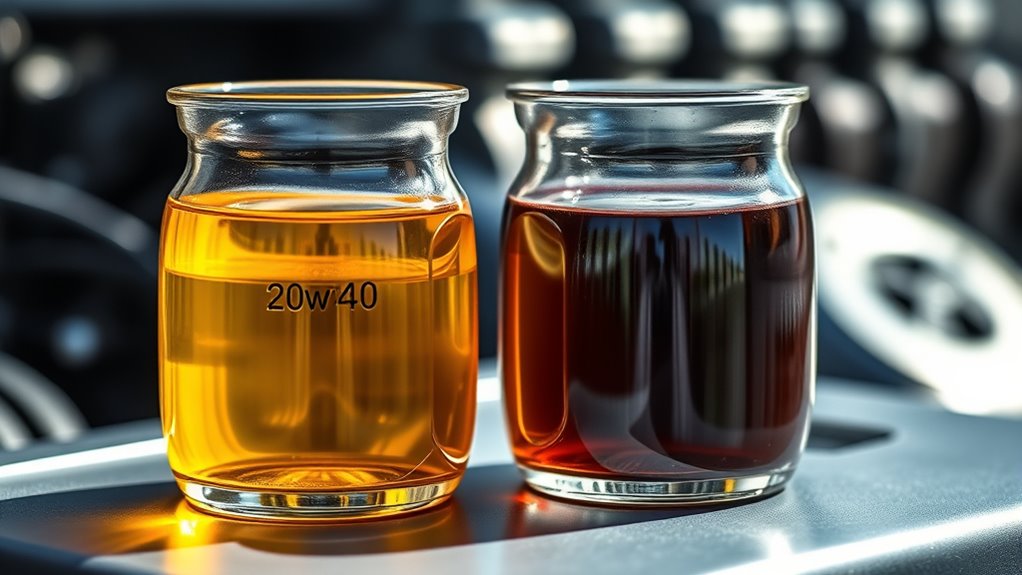
Have you ever wondered why motor oils have different numbers and labels? These numbers, like 20W40 or 20W50, show how thick or thin the oil is at different temperatures.
Viscosity is important because it affects how well your engine runs and how well it’s protected. If the oil is too thick, it may have trouble flowing, which can cause more wear. Too thin, and it won’t lubricate properly.
Oil additives are added to improve how stable the viscosity is and to protect your engine better. Seal compatibility is also key—you want an oil that works well with your engine’s seals to prevent leaks and keep everything sealed properly.
Choosing the right viscosity means the oil flows smoothly when it’s cold and creates a protective film when it’s hot. Knowing about viscosity helps you pick the best oil to keep your engine running smoothly and last longer.
How Do 20W40 and 20W50 Differ in Engine Performance?
When comparing 20W40 and 20W50, it really comes down to how the oil flows once the engine is warmed up and how well it keeps everything protected. You see, 20W50 has a higher viscosity, meaning it’s thicker when it’s hot. That thickness gives it an edge in providing more robust lubrication during really demanding or hotter conditions.
Viscosity at Operating Temperature
At operating temperature, the viscosity of 20W40 and 20W50 oils determines how well the engine components are lubricated.
20W50 maintains a thicker film under hot conditions, providing better protection during high temperatures or heavy loads. Conversely, 20W40’s slightly lower viscosity allows easier flow and is suitable for engines running at moderate temperatures.
Synthetic blends often combine base oils for improved stability at high temperatures, which can influence viscosity consistency during oil recycling.
Choosing the right oil depends on your engine’s requirements and operating environment. If you’re pushing your engine hard or driving in hot climates, 20W50’s higher viscosity offers added protection.
For milder conditions, 20W40 provides adequate lubrication without sacrificing flow or efficiency.
Engine Wear Protection
When it comes to engine wear protection, the viscosity differences between 20W40 and 20W50 significantly affect how well your engine stays protected. The thicker 20W50 forms a more durable film at high temperatures, helping to reduce metal-to-metal contact during tough conditions.
This can prevent excessive wear on engine parts over time. Using synthetic blends can boost this protection by providing better film strength and resisting oil breakdown.
Additionally, choosing a higher viscosity oil like 20W50 can support more effective oil recycling, helping keep engine internals cleaner for longer.
- Thicker film reduces metal-to-metal contact under stress
- Synthetic blends improve wear resistance and longevity
- Supports effective oil recycling to maintain engine cleanliness
How Climate and Temperature Affect Your Oil Choice?
Temperature really plays a big role in how your engine oil performs. When it’s cold outside, your oil can become thick and sluggish, making it harder for it to circulate and do its job. That’s why in colder climates, you want an oil that flows easily even when it’s chilly — something like 20W50 can work well here.
On the flip side, in hotter weather, your oil tends to thin out more. If it gets too thin, it might not protect your engine as effectively. So, in hotter areas, you might opt for a less viscous oil that maintains its protective qualities without becoming too thin.
Basically, picking the right oil really depends on the climate you’re in. Using the right one helps keep your engine protected and running smoothly, no matter what the weather’s doing.
Temperature’s Impact on Viscosity
As the climate shifts between hot summers and cold winters, the viscosity of your engine oil changes, which directly affects how well it lubricates and protects your engine.
When temperatures rise, oil becomes thinner, making it less effective at cushioning moving parts. Conversely, cold weather causes oil to thicken, making startups more difficult.
Choosing the right oil viscosity can help reduce these issues, especially with synthetic blends that stay more consistent across different temperatures.
Using an oil that matches your environment minimizes engine wear and boosts efficiency. It can also lower your vehicle’s environmental impact by promoting better combustion and fewer emissions.
Understanding how temperature affects viscosity helps you make smarter choices about your oil, balancing performance and engine protection.
Climate Considerations for Oils
Your decision on which engine oil to use should consider the climate you live in, since environmental conditions directly impact how the oil performs. In hot climates, thicker oils like 20w50 help protect your engine, especially during high temperatures, but might require more frequent oil changes.
Cold environments demand thinner oils like 20w40 or even lower viscosities for better cold starts. Synthetic oils often offer longer oil change intervals because they withstand extreme temperatures better than conventional oils.
If you live in a variable climate, switching between synthetic and conventional oils might be necessary to optimize protection and maintenance. Ultimately, understanding your climate helps you select the right oil viscosity and schedule oil changes accordingly, ensuring your engine stays protected and efficient year-round.
When Should You Use 20W40 Oil for Your Vehicle?
20W40 oil is ideal for vehicles operating in moderate climates or under conditions that don’t demand the high-temperature stability of thicker oils. It works well when your engine runs consistently without extreme heat or cold, providing reliable lubrication. If your vehicle uses a synthetic blend or has an older engine, 20W40 can help maintain proper oil circulation and protect engine components.
Use 20W40 oil when you have high mileage and want added engine protection from thicker oil. It’s also a good choice if you need effective oil filtration to keep contaminants at bay.
This oil is suitable for regular driving conditions involving moderate temperatures, avoiding extremes in hot or cold weather. It offers decent viscosity across various conditions, making it versatile for many mid-range engines.
It’s especially useful if you want a balanced oil that provides good performance and protection without needing specialized formulas for very cold or hot climates.
When Is 20W50 the Better Choice for Your Engine?
If your engine’s often working hard or running in really hot weather, then 20W50 oil might be just what you need. It’s great for keeping things running smoothly when things get intense. Think about your driving conditions—if you’re pushing your engine a lot or dealing with high temperatures, this oil can give you that extra bit of protection.
Extreme Temperature Performance
When temperatures plummet or soar to extreme levels, choosing the right engine oil is crucial for top performance.
20W50 is often the better choice in these conditions because it’s thicker, offering better lubrication and protection for your engine in harsh environments.
It works well with synthetic blends that have strong additive packages, helping your engine stay protected from wear during extreme cold or heat.
Consider these factors:
- Extreme heat makes thinner oils break down faster, so 20W50 remains more stable.
- Cold weather benefits from the thicker consistency of 20W50, which helps with cold starts.
- When temps stay high for a long time, higher viscosity oils keep a strong film and prevent engine damage.
High-Load Conditions
During high-load conditions, such as towing heavy trailers or working under demanding workloads, thicker oils like 20W50 offer better protection. They keep their viscosity at higher temperatures, making sure your engine components stay lubricated when it’s under stress.
Synthetic blends with advanced additive formulas improve this protection by reducing wear, preventing sludge buildup, and fighting deposits. The thicker oil creates a stronger barrier against metal-on-metal contact, which is really important during intensive operation.
If your engine regularly faces tough conditions, 20W50 gives you the extra resilience you need. It’s especially beneficial for engines with higher mileage or older seals, helping to maintain performance and extend their lifespan.
In these situations, choosing an oil with the right viscosity and robust additives can make all the difference.
Which Oil Offers Better Fuel Efficiency and Engine Protection?
Choosing the right oil can directly impact your vehicle’s fuel efficiency and engine health. Both 20w40 and 20w50 oils provide solid engine protection, but their differences can influence your car’s performance.
Generally, 20w40 offers better fuel efficiency because it’s slightly thinner at operating temperatures, reducing engine drag. Meanwhile, 20w50 provides superior protection under high-temperature conditions and helps prevent wear during intensive driving.
To make an informed decision, consider these factors:
- Fuel efficiency: Thinner oils like 20w40 minimize engine resistance, saving fuel.
- Engine protection: 20w50’s thicker consistency offers more robust protection under high stress.
- Driving environment: Hotter climates may benefit from 20w50’s higher viscosity for better protection.
Ultimately, if fuel economy is your priority, 20w40’s lighter consistency makes it a smarter choice. But if your engine endures high temperatures or heavy loads, 20w50 might be the better option.
Which Vehicle Types and Driving Habits Benefit Most From 20W40 or 20W50?
Different vehicle types and driving habits respond differently to the viscosity of engine oil.
Different engines and driving styles require varying oil viscosities for optimal performance and protection.
For older engines or ones running in hot environments, 20W50 offers better protection, especially during heavy loads or long drives.
If you drive a classic car or work vehicle, synthetic blends with thicker oils boost durability and help keep the engine in good shape under tough conditions.
In fleet maintenance, where vehicles often face demanding use, 20W50 can reduce wear and extend engine life.
On the other hand, vehicles driven in cooler climates or used for short trips benefit from 20W40 for easier cold starts and improved fuel economy.
If you manage a fleet or different types of vehicles, it’s important to assess their specific needs.
Thicker oils like 20W50 are great for engines with high mileage and tough driving conditions.
Meanwhile, 20W40 is better for general use and moderate workloads.
How Does Oil Choice Impact Your Engine’s Long-Term Durability?
The right oil choice can significantly impact your engine’s long-term durability by reducing wear and preventing costly damage over time. Proper oil helps keep engine components moving smoothly and minimizes wear.
It also improves oil filtration by trapping debris and contaminants that can cause corrosion or clog passages. Thick oils like 20W50 provide better cooling, especially under high temperatures or heavy loads, helping prevent overheating and metal fatigue.
On the other hand, thinner oils like 20W40 improve flow at lower temperatures, reducing startup wear. Your choice influences how well your engine resists corrosion, maintains oil pressure, and disperses heat.
- Enhances oil filtration, keeping contaminants out of critical parts
- Supports engine cooling during demanding operations
- Reduces wear over time, extending engine life
What Are the Cost Differences and Availability Between 20W40 and 20W50?
When comparing the costs and availability of 20W40 and 20W50 oils, you’ll find that prices are generally similar, but variations can happen depending on the brand, container size, and retailer. Synthetic blends tend to be a bit more expensive but offer better performance and longer lasting protection.
Oil additives in higher-quality oils can also influence the price, especially if they include advanced ingredients for better engine protection. Both oils are widely available at auto parts stores, supermarkets, and online, making them easy to find.
However, 20W40 is often more common in traditional retail outlets because it’s versatile across many engines. 20W50 might have limited options in some regions, particularly in smaller containers, making it a little harder to find.
How to Choose the Best Motor Oil for Your Vehicle: Expert Tips?
Choosing the right motor oil for your vehicle can significantly impact its performance and lifespan.
To make a smart choice, check your vehicle’s owner’s manual for recommendations and think about your driving habits.
Pay attention to the oil’s viscosity, like 20w40 or 20w50, to ensure proper lubrication.
Decide between synthetic and conventional oil. Synthetic generally offers better engine protection and lasts longer, while conventional oils tend to be more affordable.
Engine oil additives can boost your engine’s performance, reduce wear, and prevent deposits.
Here are some expert tips:
- Review your owner’s manual for the recommended viscosity and oil type.
- Consider your driving habits—heavy-duty use or short trips might benefit from synthetic oil.
- Think about adding engine oil additives for extra protection and efficiency.
Frequently Asked Questions
Can Using the Wrong Oil Void My Vehicle’s Warranty?
Using the wrong oil can potentially void your vehicle’s warranty if it causes engine damage. Manufacturers specify oils like 20w40 or 20w50 based on fuel efficiency and engine compatibility.
If you pick an oil that doesn’t meet your engine’s requirements, it might lead to problems. The manufacturer could then refuse warranty coverage for those issues.
Always check your owner’s manual to find the right oil type. Doing so helps keep your warranty intact and ensures your engine runs smoothly.
Are Synthetic or Conventional Oils Better for 20W40 and 20W50?
Synthetic oils are generally better for 20w40 and 20w50 because their superior viscosity provides better engine protection, especially under extreme conditions. They help improve engine performance and keep their viscosity over time, reducing wear on parts.
Conventional oils work fine for standard use, but if you want the best performance and longer engine life, synthetic oils are the smarter choice. They also slip better in various temperatures, which is especially helpful.
Always follow your vehicle’s manufacturer recommendations to get the best results.
How Often Should I Change 20W40 or 20W50 Oil?
You should change your 20w40 or 20w50 oil every 5,000 to 7,500 miles to keep your engine protected and maintain proper oil viscosity.
Regular oil changes help prevent sludge buildup and ensure your engine stays properly lubricated, especially if you drive a lot or under tough conditions.
Always check your vehicle’s owner’s manual for specific recommendations, since you might need to change the oil more often if you drive in extreme temperatures or severe conditions.
Is 20W50 Suitable for High-Mileage or Older Engines?
Yes, 20w50 is suitable for high-mileage or older engines because it provides better viscosity and oil film strength, supporting engine longevity. You benefit from improved lubrication, reducing wear and tear.
Just make sure it’s compatible with your engine type by checking your owner’s manual. Using 20w50 can help maintain ideal oil performance as your engine ages, helping to prevent leaks and keep your engine running smoothly longer.
Do Oil Additives Enhance 20W40 or 20W50 Performance?
Oil additives can improve both 20w40 and 20w50 by enhancing engine durability and helping maintain viscosity stability.
These additives help reduce wear, prevent sludge buildup, and keep oil flowing smoothly across different temperatures.
You’ll notice better engine protection and efficiency, especially during extreme conditions.
Whether you’re using 20w40 or 20w50, adding quality additives supports long-term performance.
They also help your engine run more reliably over time, giving you peace of mind on the road.
Conclusion
Choosing between 20W40 and 20W50 isn’t just a simple decision—it’s crucial for unlocking your engine’s full potential.
By considering your climate, driving style, and vehicle needs, you can pick the ideal oil to protect and energize your engine.
Don’t settle for mediocrity. Select the right oil and turn your vehicle into an unstoppable powerhouse.
Remember, for optimal performance, your car deserves the best—whether that’s 20W40 or 20W50.