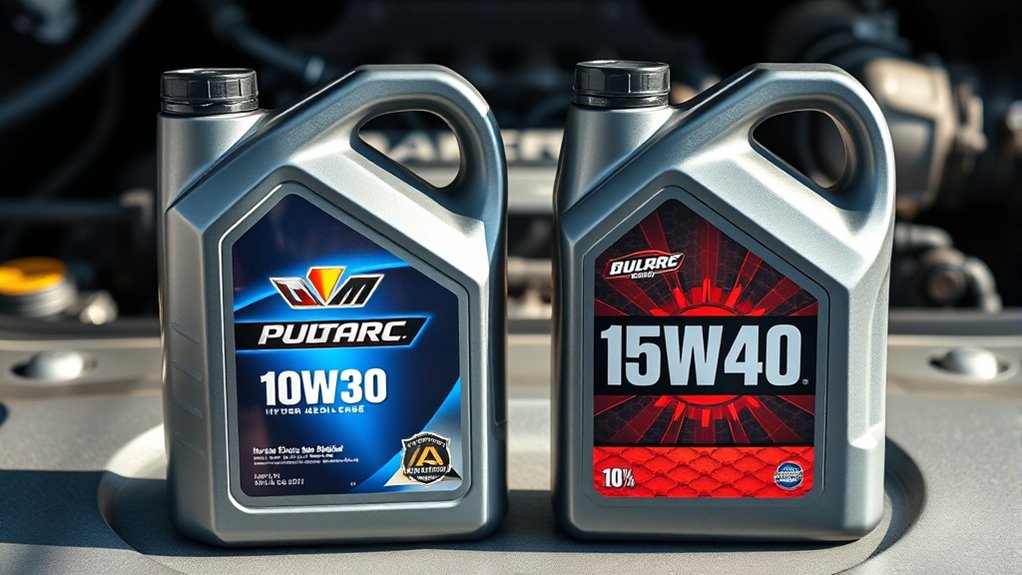
10W30 vs 15W40: Differences, Performance, Compatibility, and More
Are you often confused about which engine oil is best for your vehicle? You’re not alone—many drivers struggle to decide between options like 10W30 and 15W40. Picking the right oil can make a big difference in how your engine performs and lasts over time.
Let’s break down the key differences to help you make an informed choice.
If you’re choosing between 10W30 and 15W40, note that 10W30 is thinner, flows better in cold weather, and boosts cold-start performance. It is ideal for moderate climates and modern engines.
On the other hand, 15W40 is thicker and offers better protection under heavy loads and high temperatures. It is better suited for tough, demanding conditions or older engines.
To get the full picture on when and how to use each, you’ll find useful details if you keep exploring.
Key Takeaways
- 10W30 flows better at cold starts, so it performs better in cold weather. On the other hand, 15W40 is thicker and offers stronger protection in hot, demanding conditions.
- 10W30 works well for modern engines and areas with cold winters, while 15W40 is better suited for hot environments and older engines.
- Synthetic or blended oils like 10W30 can help extend engine life, improve fuel efficiency, and reduce wear compared to thicker 15W40 oils.
- When switching oils, consider your engine’s age, manufacturer recommendations, and whether you’re using synthetic or conventional oil.
- Thinner oils like 10W30 improve initial lubrication, but thicker oils like 15W40 are better at maintaining stability and protection in high temperatures.
How Do 10W30 and 15W40 Differ in Viscosity and Performance?
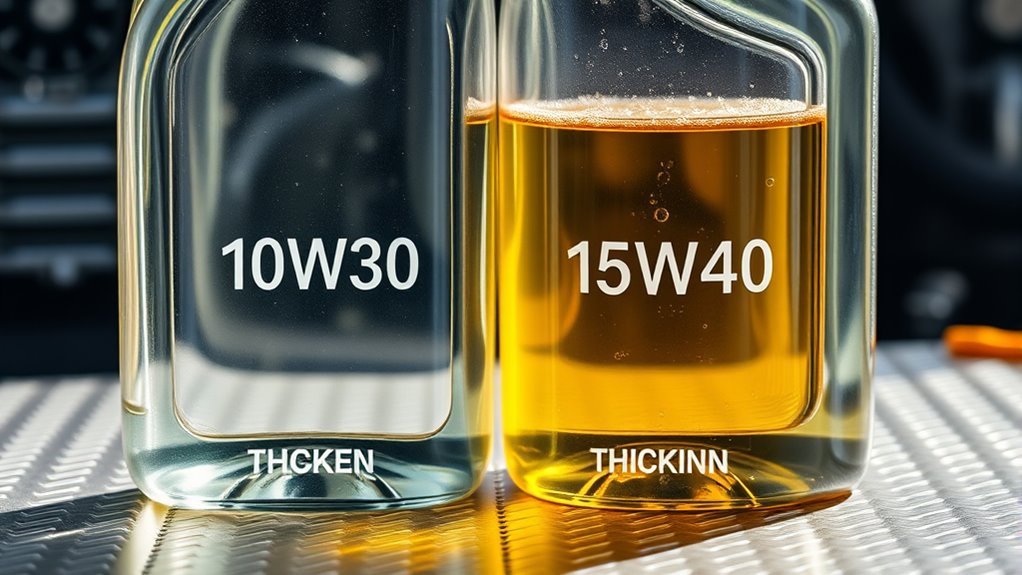
Although both 10W30 and 15W40 are engine oils used to lubricate your vehicle, they differ significantly in their viscosity and how they perform under different conditions.
10W30 has a lower viscosity, which means it flows more easily at cold starts, especially in moderate climates. 15W40, on the other hand, has a higher viscosity, providing a thicker layer of protection. It’s ideal for heavier-duty engines or hotter environments.
When choosing between synthetic and conventional oils, synthetic options usually offer better viscosity stability, improved performance, and superior additives that help reduce wear and prevent sludge buildup.
Oil additives are key because they improve engine protection, cleanliness, and longevity. 10W30 often contains advanced additives that boost cold-start performance, while 15W40’s additives are geared toward high-temperature stability.
Your choice really depends on your engine’s needs and the conditions you drive in. Understanding the differences in viscosity and additive quality helps you pick the best oil for your vehicle’s performance and durability.
When Should You Use 10W30 Versus 15W40 Based on Temperature?
Choosing between 10W30 and 15W40 depends largely on the temperature conditions you drive in. In colder climates, 10W30 is ideal because its lower cold-start viscosity ensures smoother engine starts and better oil filtering during cold starts.
Conversely, 15W40 performs better in hot weather, maintaining viscosity and protecting your engine from high-temperature wear.
Consider these points:
- If you experience frequent cold starts or live in a region with winter temperatures below freezing, use 10W30 for easier engine tuning and consistent oil flow.
- For hotter climates or when towing heavy loads, 15W40 helps sustain oil viscosity, reducing engine heat and wear.
- Always check manufacturer recommendations, as the right choice supports efficient oil filtering and engine longevity.
Using the correct oil based on temperature ensures your engine stays protected, helping you avoid overheating or inadequate lubrication.
How Do These Oils Affect Engine Longevity and Efficiency?
Choosing the right oil for your engine really makes a difference when it comes to how long your engine lasts and how well it runs. Good quality oil provides better lubrication, which helps reduce wear and tear on engine parts. When your engine parts are well-lubricated, they don’t have to work as hard, which can keep everything running smoothly for longer.
It’s also important because the type of oil affects how well it circulates through your engine. Proper circulation means your engine stays cleaner and stays cooler, too. When the oil does its job properly, it helps prevent build-up and keeps everything in good shape, leading to better overall performance and efficiency.
Plus, using the right oil can actually help your vehicle save fuel. When your engine runs more efficiently, it burns less gas, which means you won’t have to fill up as often. Over time, that can add up to quite a bit of savings, not to mention helping your engine stay in top shape longer.
Impact on Engine Wear
Different oil formulations can significantly impact your engine’s wear and overall lifespan. Choosing between 10W30 and 15W40 can make a difference in how well your engine is protected.
For example, 10W30, with its thinner viscosity at low temperatures, flows more easily and reduces start-up wear. On the other hand, 15W40, being thicker, offers better protection at high temperatures but might cause more wear during cold starts.
Thinner oils like 10W30 are less likely to trap contaminants, lowering the risk of sludge buildup. Thicker oils such as 15W40 can trap debris but may also promote oil breakdown if you don’t keep an eye on it.
Choosing the right oil helps keep your engine components clean, minimizes wear, and can extend the life of your engine. This way, you can avoid costly repairs down the line.
Oil Flow and Circulation
The viscosity of 10W30 and 15W40 oils directly influences how well they flow and circulate within your engine. Lower viscosity oils like 10W30 flow more easily at cold start, ensuring quicker oil filtration and better lubrication from the moment you start your engine.
Conversely, 15W40’s higher viscosity provides a thicker film in high-temperature conditions. This helps maintain viscosity stability and reduces the risk of oil thinning.
Proper circulation keeps engine parts well-lubricated, minimizing wear and improving longevity. If the oil doesn’t circulate uniformly, it can lead to uneven wear and potential damage.
Both oils’ ability to flow and circulate effectively is critical for engine efficiency and durability, especially under varying operating conditions. This helps ensure your engine runs smoothly with ideal protection.
Fuel Efficiency Enhancement
Ever wonder how the viscosity of your engine oil influences fuel efficiency and engine lifespan? Higher viscosity oils like 15W40 can protect older engines better but may increase internal resistance, reducing fuel economy.
Conversely, 10W30 flows more easily at startup, helping your engine run more efficiently, especially with modern engine designs. To get the most out of your engine, keep these tips in mind:
- Choose an oil viscosity suited to your engine’s design to optimize performance and fuel usage.
- Regularly recycle and dispose of used oil to keep your engine cleaner and prevent unnecessary wear.
- Using the right oil thickness can cut down on friction and help you save fuel over time, extending your engine’s life.
Which Vehicles or Engines Prefer 10W30 or 15W40?
Choosing the right oil viscosity depends largely on your engine’s design and operating conditions.
If you drive a modern, fuel-efficient engine made for lighter oils, 10W30 is usually the way to go. It offers better fuel economy and improves cold-start performance, making it great for everyday driving in moderate climates.
Many passenger cars and newer small engines work well with 10W30 because it’s thinner at low temperatures.
On the other hand, 15W40 is often recommended for older engines, heavy-duty trucks, and equipment operating at higher temperatures or under heavy loads.
These engines benefit from the thicker oil’s improved lubrication and protection against wear.
Always check your vehicle’s owner manual to confirm which oil is best.
Using the correct oil guarantees better performance, longer engine life, and efficiency.
Matching the oil to your engine’s needs is especially important for fuel economy and engine health.
How Does Climate Impact Your Choice Between 10W30 and 15W40?
Climate plays a critical role in deciding whether to go with 10W30 or 15W40. Your choice depends heavily on climate zones and how they change through seasonal *changes*. In colder climates, where temperatures often dip below freezing, 10W30 is better because it flows more easily when cold, ensuring quick engine startup.
Conversely, in hot, arid regions, 15W40 offers better protection because it’s thicker at operating temperature and resists breakdown.
Consider these points:
- If you experience sharp temperature shifts during seasonal *shifts*, choose oil that maintains viscosity across those ranges.
- In colder seasons, lighter oils like 10W30 help your engine start smoothly.
- In hotter months, thicker oils like 15W40 protect engine components from extreme heat.
Your climate zone and seasonal *variations* directly influence which oil provides *best* performance, making it essential to tailor your choice accordingly.
Are There Compatibility Concerns for Older or Modern Engines?
Compatibility between engine types and specific oil weights can vary quite a bit, especially when comparing older engines to modern ones. Older engines tend to need heavier oils like 15W40 for better protection but might have trouble with thinner oils such as 10W30.
Modern engines are designed for lighter, often synthetic or blended oils that help improve fuel efficiency and keep the engine clean. When switching between different oil types, it’s important to consider compatibility issues, especially between synthetic and blended oils, which can affect how well your engine tolerates certain formulas.
Proper engine oil recycling is crucial to ensure contaminants are removed and you’re using fresh, suitable oil. For older engines, sticking with traditional mineral-based oils may be safer, while newer engines typically benefit from synthetic or blended options that meet manufacturer specifications.
Always check your vehicle’s manual to avoid potential damage or inefficiencies caused by using incompatible oil weights.
What Are the Cost and Value Differences Between 10W30 and 15W40?
When you’re looking at the costs and value differences between 10W30 and 15W40, it’s all about comparing their prices, how much they might save you in the long run, and what kind of maintenance your engine needs. At first glance, 10W30 oil is usually a bit more expensive than 15W40, but that might not tell the whole story.
Think about how these costs add up over time. Sometimes, spending a little more upfront on 10W30 can mean your engine runs more smoothly and might need fewer repairs down the line. On the other hand, 15W40 is often cheaper initially and works well in hotter climates or older engines, which could translate into savings if that matches your driving conditions.
Ultimately, it’s not just about the sticker price. You’ll want to consider how each type of oil affects your engine’s performance and maintenance needs. Picking the right one depends on your specific situation, but weighing the initial costs against potential long-term benefits can help you find the best value for your money.
Oil Price Variations
Are you curious about how 10W30 and 15W40 engine oils compare in price? Usually, 10W30 tends to cost a bit more because of the more detailed refining process that goes into making it.
Marketing also plays a role. Brands might charge more for one type based on how they want to be perceived or the vehicle segment they’re targeting. Here are some key points:
- Refinement Levels: 10W30 often requires more complex refining, which adds to its cost.
- Brand Positioning: Premium brands might price 10W30 higher to showcase its perceived quality.
- Market Demand: 15W40 is usually cheaper because it’s popular in older or heavy-duty engines, so production volume is higher and costs are lower.
In the end, small price differences are mostly about manufacturing complexities and marketing tactics, not just raw material costs.
Long-Term Cost Efficiency
When evaluating long-term cost efficiency, choosing between 10W30 and 15W40 depends heavily on how each oil performs over time and the amount of maintenance involved.
10W30 synthetic blends tend to offer better fuel economy and engine protection, reducing long-term wear costs. Meanwhile, 15W40 oils are often more durable in heavy-duty or high-temperature conditions, potentially extending intervals between oil changes.
Considering oil recycling options can also influence costs; synthetic blends typically last longer and support environmentally friendly disposal. Over time, investing in the right oil minimizes engine issues and lowers maintenance expenses, providing better value.
While initial costs may vary, selecting an oil that suits your engine’s needs and supports recycling practices can lead to significant savings over the vehicle’s lifespan.
Maintenance and Replacement Rates
Choosing between 10W30 and 15W40 oils affects how often you’ll need maintenance and to replace the fluid. Generally, 10W30 synthetic blends tend to last longer because they flow better at startup and offer improved oil filtration, which reduces engine wear. In contrast, 15W40 oils are usually thicker and might require more frequent changes, especially in hot environments.
Think about these factors:
- Oil filtration – Better filtration with 10W30 can extend oil longevity.
- Climate – Warmer climates might favor 15W40, but they could also need more frequent replacements.
- Engine type – Modern engines often prefer synthetic blends of 10W30 for longer drain intervals.
Your choice can impact your maintenance costs over time, with 10W30 potentially needing fewer replacements.
How to Safely Switch Between 10W30 and 15W40 Oil
Switching between 10W30 and 15W40 oil can be done safely if you follow a few key steps. First, always check your vehicle’s owner’s manual for manufacturer recommendations, especially regarding oil viscosity.
Before switching, consider using synthetic blends to ease the shift, as these mix well without causing issues. Guarantee the engine is cool before draining the oil to avoid burns and spills.
Using synthetic blends eases oil transitions, and always ensure the engine is cool before draining to prevent burns and spills.
When changing, recycle the used oil properly. Many service stations accept oil for recycling, helping protect the environment and maintain safe disposal. If you’re changing types, consider draining the old oil completely and replacing the filter to prevent mixing residuals.
Stick to the recommended oil change intervals to avoid engine wear. Always use high-quality oil from reputable brands. Following these steps keeps your engine protected, promotes ideal performance, and encourages responsible oil recycling practices.
Signs It’s Time to Change Your Oil or Switch Types
Noticing strange noises from your engine or seeing a sudden drop in fuel efficiency? These could be signs that it’s time to change your oil or maybe try a different type. If your current oil isn’t quite doing the job, you’ll probably start to feel the difference in how your car runs.
It’s a good idea not to ignore these little clues. Addressing them early on can help keep your engine in shape and running smoothly for longer. So, next time you notice something off, it might be time for a change—either of your oil or even the type you’re using.
Unusual Engine Noises
To troubleshoot:
- If your engine noise gets worse during startup or acceleration, it might mean your oil isn’t circulating properly.
- Persistent ticking could be a sign that the oil is either too thin or too thick, which messes with lubrication.
- Grinding sounds might mean your engine parts aren’t well protected, which could be a sign it’s time for an oil change or to switch to a different oil viscosity.
Addressing these noises early can prevent damage and help your engine run quietly and smoothly.
Decreased Fuel Efficiency
Noticing that your vehicle’s fuel efficiency has dropped might be a sign it’s time to check your engine oil. When oil degrades, it can’t lubricate properly, which raises engine temperature and friction.
This extra stress makes your engine work harder, burning more fuel. If you see your miles per gallon decrease, look for signs of oil degradation like dark, sludgy oil or needing to top off more often.
Using the wrong oil or delaying oil changes can speed up this process and hurt your fuel economy. Regularly monitoring and changing your oil at the recommended times helps keep your engine running smoothly and saves you money at the pump.
Which Oil Performs Better Under Heavy Loads, Towing, or Hot Conditions?
Under heavy loads, towing, or hot conditions, 15W40 generally performs better than 10W30 because its thicker viscosity provides better protection against engine wear and oil breakdown. It helps maintain a stable film, preventing metal-to-metal contact during demanding driving.
In tough conditions, 15W40 offers superior protection and stability over 10W30.
To get the most out of your oil, consider these tips:
- Use synthetic blends that offer better temperature stability and resist breakdown better under heavy workloads.
- Check and improve oil filtration regularly to remove contaminants that can stress your engine.
- Keep in mind that 15W40’s viscosity helps maintain oil pressure, especially in high-temperature environments. This reduces the risk of overheating.
In these tough conditions, thicker oils like 15W40 are more resilient, helping your engine run smoothly and protecting critical parts better than thinner options like 10W30.
Frequently Asked Questions
Can 10W30 or 15W40 Affect Fuel Efficiency Differently?
Yes, 10W30 and 15W40 can affect your fuel economy differently. The oil’s viscosity impacts how efficiently your engine runs.
10W30, being thinner, reduces friction and can help improve fuel economy, especially in colder weather. On the other hand, 15W40 is thicker and provides better protection at higher temperatures.
However, it might slightly decrease fuel efficiency, particularly in colder climates. Picking the right oil for your engine and environment is key to making sure your vehicle runs smoothly and efficiently.
Are Synthetic Versions Available for Both Oils?
You’re in luck! Synthetic versions are available for both oils, offering sky-high performance and engine protection. Synthetic availability has skyrocketed, making oil blending easier and more effective.
These high-tech oils deliver superior lubrication and engine longevity, often outperforming conventional options. Whether you pick 10W30 or 15W40, you can now enjoy the benefits of advanced synthetic formulas designed to keep your engine running smoother than ever before.
How Often Should Each Oil Be Replaced?
You should replace 10W30 or 15W40 oil every 5,000 to 7,500 miles, depending on your driving conditions.
Oil viscosity affects how well the oil flows at different temperatures, which impacts engine lubrication.
Regular oil changes help extend your engine’s lifespan by preventing buildup and wear.
Check your vehicle owner’s manual for specific recommendations, but sticking to these intervals ensures your engine runs smoothly and performs at its best.
Do Manufacturer Recommendations Favor One Type Over the Other?
Do manufacturer recommendations favor one oil type over the other? Usually, they lean toward what’s best for your engine’s longevity, considering brand reputation and price.
You might find some brands specify 10W30 for fuel efficiency, while others suggest 15W40 for heavy-duty use. Always check your owner’s manual to follow their advice.
Prioritizing manufacturer guidance guarantees maximum performance and protection, no matter which oil you choose.
Are There Environmental Impacts Between Using 10W30 and 15W40?
Using 10W30 generally has a lower environmental impact than 15W40 because it typically produces fewer emissions due to better fuel efficiency. The lighter oil reduces engine strain, which means cleaner emissions and less pollution.
But the actual environmental impact really depends on your engine’s needs and how you use your vehicle. Choosing the right oil for your engine helps minimize emissions and supports environmental health.
Conclusion
Choosing between 10W30 and 15W40 is like picking the right gear for a hike—you need to match it to the terrain and weather. I once saw an engine struggle uphill in summer heat with the wrong oil, kind of like trying to climb a steep hill in uncomfortable shoes.
Knowing your vehicle and climate is really important. When you choose wisely, your engine can run smoothly and last longer, just like a hiker reaching the summit with the right shoes.
Ultimately, selecting the right oil, whether it’s 10W30 or 15W40, can make a big difference in your engine’s performance and longevity.