Engine Vibration When Decelerating: Know The Causes And Solutions
If your engine vibrates when decelerating, you’re not alone. Many drivers struggle with this unsettling issue and wonder what’s causing it. Engine vibration when decelerating can be both annoying and concerning, affecting your driving experience and vehicle safety.
If your engine vibrates when decelerating, it’s often due to worn or damaged engine mounts, warped brake rotors, unbalanced tires, or issues with the transmission or exhaust system.
You might notice shaking, unusual noises, or uneven tire wear.
Regular maintenance, like inspecting mounts, brakes, and wheels, helps prevent these problems.
To uncover the exact cause and fix it effectively, you need to examine the common signs and solutions in detail.
Key Takeaways
- Worn engine mounts or loose parts can cause excessive engine movement and vibrations when you’re decelerating.
- Warped or worn brake rotors can lead to uneven contact, resulting in vibrations as you slow down.
- Imbalanced or damaged tires often cause wobbling and shaking during deceleration.
- Transmission problems like low fluid levels or worn clutches might cause rough engagement and vibrations.
- Regularly inspecting your engine mounts, brakes, and tires can help prevent and fix vibrations during deceleration.
Why Is My Car Vibrating When I Decelerate?
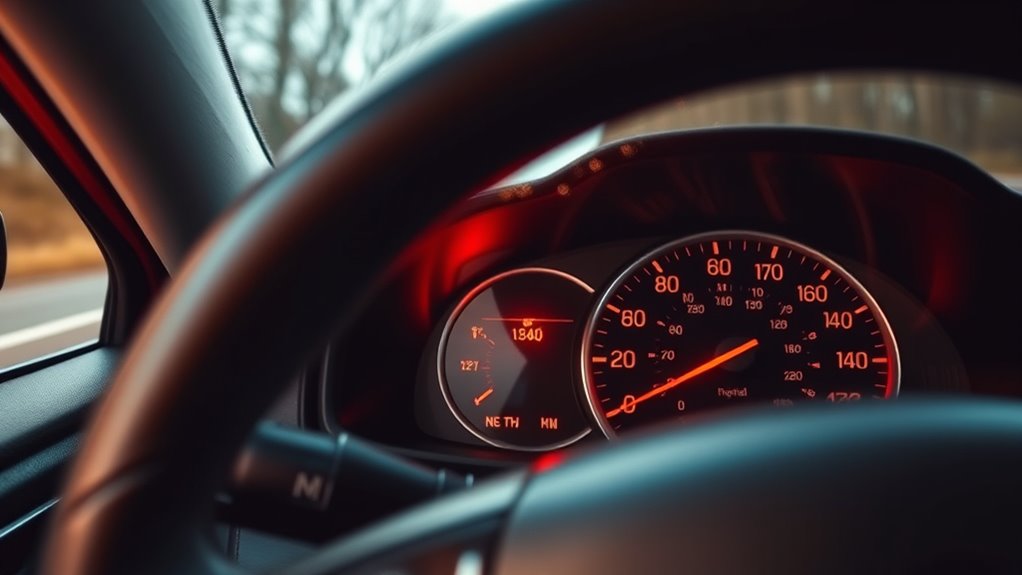
If your car starts vibrating when you decelerate, it often indicates an issue with the braking system or wheels. You might also hear unsettling engine noises or see warning lights on your dashboard that suggest a problem.
Worn or warped brake rotors are common culprits. They cause vibrations because the uneven surface makes contact rough during deceleration. Similarly, imbalanced or damaged wheels can make your car shake when slowing down.
Worn or warped brake rotors and damaged wheels can cause vibrations during deceleration, affecting both safety and comfort.
Sometimes, you’ll notice the vibration is paired with noise or a warning light that points to mechanical problems or brake system trouble. Ignoring these signs can lead to more serious damage, so it’s important to get it checked.
Be sure to inspect the brake components, wheel alignment, and balance. Regular maintenance and quick diagnostics will help find and fix the root problem.
Addressing issues early on will give you a smoother, safer deceleration. It also prevents you from facing more costly repairs down the line.
Are Transmission Problems Causing My Deceleration Vibration?
If your car starts shaking when you slow down, it might be a sign there’s an issue with your transmission. Sometimes, low or dirty transmission fluid can cause rough shifts and vibrations, making your driving experience less smooth.
Other times, it could be something related to the clutch getting worn out or the torque converter not working properly. Both of these can lead to that unsettling vibration when you decelerate.
Taking a look at these parts can help you figure out if your transmission is the cause of the problem.
Transmission Fluid Issues
If your transmission fluid is low or dirty, it won’t lubricate components properly, leading to inconsistent engagement and vibrations. Check your fluid levels regularly, and if they’re below the recommended mark, top them up with the correct type of transmission fluid.
Dirty or degraded transmission fluid also hampers performance, causing rough shifts and vibrations when slowing down. Regularly replacing or flushing the transmission fluid can restore smooth operation.
If your fluid levels are adequate but vibrations persist, it might indicate a more serious issue within the transmission system. Addressing fluid problems early helps prevent costly repairs and keeps your deceleration smooth and vibration-free.
Clutch or Torque Converter
Wondering whether your clutch or torque converter might be causing vibrations during deceleration? Clutch issues in manual transmissions can lead to uneven engagement, which can cause noticeable vibrations when you ease off the gas.
A slipping or worn clutch struggles to transfer power smoothly, and that can ripple into vibrations as you decelerate. In automatic transmissions, a faulty torque converter can cause similar symptoms.
If the torque converter’s lock-up mechanism isn’t working right, it causes sudden changes in power flow, leading to vibrations. These often feel like shaking or shuddering when you slow down.
Fixing clutch problems usually means repairing or replacing parts. For a faulty torque converter, you might need a rebuild or full replacement.
Regular maintenance and inspections can help prevent these transmission-related vibrations during deceleration.
Can Worn Engine Mounts Make My Car Shake When Slowing Down?
Worn engine mounts can definitely make your car shake when you’re slowing down. These mounts hold your engine in place and help keep your ride smooth.
Worn engine mounts cause car shakes during slow-downs by allowing excessive engine movement.
When they get weak or break, the engine can move around more than it’s supposed to, which can affect how stable your car feels.
Here’s how worn mounts can cause shaking:
- Excess Vibration: Loose mounts let engine vibrations pass straight to the chassis, making your car feel unstable during deceleration.
- Engine Movement: You might notice the engine shifting more than usual, causing sudden shakes or jerks as you slow down.
- Noise and Clunking: Worn mounts can also make knocking sounds, showing they’re no longer holding the engine firmly in place.
If you see these signs, replacing your engine mounts can help restore smooth deceleration and improve overall stability, reducing unnecessary vibrations when slowing down.
What Fuel or Ignition Issues Lead to Engine Shaking During Deceleration?
If your engine starts shaking when you’re decelerating, it could be due to problems with the fuel mixture or the ignition system. Basically, if the fuel isn’t burning correctly or the spark isn’t firing consistently, you’ll notice that vibration. It’s pretty common for these issues to cause roughness during deceleration.
To smooth things out, it’s a good idea to check and fix any fuel or ignition issues. Getting these sorted out can really help bring back that smooth engine performance, especially when you’re easing off the gas.
Fuel Mixture Imbalances
When the air-fuel mixture isn’t balanced properly, it can cause your engine to vibrate during deceleration. A poor fuel mix can disrupt smooth engine operation, leading to shaking.
Common causes include incorrect carburetor adjustment. If the carb isn’t tuned right, it can make the mixture too rich or too lean. Dirty fuel injectors are another culprit, blocking fuel flow and messing with the air mix ratio.
A faulty fuel pressure regulator can also cause inconsistent fuel delivery, which impacts fuel mixture stability. Fixing these issues helps ensure proper fuel balance and smoother deceleration.
Keeping the fuel mixture correct is key for engine comfort and performance. It prevents vibrations caused by uneven air or fuel supply problems, making your drive much smoother.
Ignition System Faults
Have ignition system faults caused your engine to shake during deceleration? Poor ignition timing can cause uneven combustion, leading to engine vibrations. When the timing is off, the spark happens too early or too late, disrupting smooth engine operation.
Worn spark plugs can also cause misfires, which result in irregular firing and engine shaking. As they wear out, spark quality drops, making misfires worse—especially at lower RPMs during deceleration.
Faulty ignition parts like damaged wires or coils can impair spark delivery, contributing to vibrations. To fix this, check and adjust the ignition timing if needed, and replace worn spark plugs.
Regular maintenance keeps the ignition system working properly, reducing engine vibrations and promoting smoother deceleration.
Is My Exhaust System Making My Car Vibrate When I Decelerate?
If your car starts vibrating when you decelerate, your exhaust system might be the cause. A damaged or loose exhaust can lead to increased noise and vibrations, especially during deceleration. This is often linked to problems in the emission system or muffler.
To figure out the issue, look out for these signs:
Check for unusual noises, vibrations, or visible damage to diagnose exhaust system issues during deceleration.
- Unusual Exhaust Noise: A louder or irregular sound when decelerating could mean a loose or broken exhaust pipe or muffler.
- Vibrations Near the Exhaust Area: Feeling vibrations at the rear of your car suggests a mounting or blockage problem.
- Visible Damage or Leaks: Rust, cracks, or holes in the exhaust system mean it’s time for repairs or replacements.
Fixing these problems early helps keep your emission system running well, reduces vibrations, and stops further damage to your vehicle.
What Mechanical Wears Cause Engine Vibration During Deceleration?
What mechanical wears lead to engine vibrations during deceleration? Over time, parts like engine mounts, spark plugs, and belts can wear out, causing instability that translates into vibrations when you slow down.
A poorly balanced tire can also cause noticeable shaking because uneven weight distribution creates a rumble. Regular engine cleaning helps remove dirt and debris that may interfere with smooth operation, which can help reduce vibrations.
Worn engine mounts lose their ability to absorb shocks, making vibrations more noticeable during deceleration. Additionally, uneven tire balancing results in a constant wobble that gets worse when you brake or slow down.
Fixing these issues usually means inspecting and replacing worn parts and ensuring your tires are properly balanced. Here’s a quick overview:
| Mechanical cause | Symptoms | Solution |
|---|---|---|
| Worn engine mounts | Excessive vibrations | Replace mounts |
| Unbalanced tires | Wobbling during deceleration | Tire balancing |
| Dirty engine parts | Engine shaking or rough idle | Engine cleaning |
| Worn belts | Erratic engine performance | Replace belts |
| Loose or damaged components | Vibration persists | Professional inspection |
How Can I Diagnose Why My Car Vibrates When I Slow Down?
If your car starts to shake when you’re slowing down, the first thing you might want to do is check the engine mounts. Sometimes, if they’re worn out or broken, it can cause your engine to move more than it should, which leads to vibrations. It’s a good idea to look for any signs of damage or looseness there.
Next, take a look at your brake components—specifically the rotors and pads. If they’ve become warped or have uneven wear, that can definitely cause your car to vibrate when you apply the brakes and slow down. Sometimes, simply resurfacing or replacing the rotors makes a big difference.
Going through these areas usually helps you narrow down the cause and get your ride running smoothly again.
Check Engine Mounts
Engine mounts play a critical role in minimizing vibrations and keeping your car steady, especially when you slow down. If your engine shifts more than it should, it could cause noticeable vibrations.
To diagnose, check for these signs:
- Sudden or excessive engine movement when decelerating.
- Unusual noise or clunking sounds during engine shifts.
- Visible wear or cracks in the rubber mounts upon inspection.
Worn engine mounts can upset engine cooling and harm fuel efficiency, leading to rough deceleration. When mounts are damaged, vibrations transfer directly to the chassis, making your car feel unstable.
Replacing faulty mounts restores smooth engine operation, improves deceleration comfort, and maintains overall vehicle performance. Proper engine mount maintenance is key for a smoother ride and crucial for engine functionality.
Inspect Brake Components
When your car vibrates as you slow down, it’s important to check the brake components to figure out what’s going on. Worn brake pads or rotor wear can cause uneven contact, leading to those vibrations.
Carefully inspect the brake pads for thinning or cracks, and look for uneven wear on the rotors. If the rotor surfaces are warped or grooved, they won’t grip evenly, which increases vibrations.
Think about how it feels:
| Situation | Feelings | Next Step |
|---|---|---|
| Accelerating smoothly | Confidence, control | Inspect brake pads and rotor wear |
| Vibrations during deceleration | Frustration, concern | Examine rotor and pads closely |
| Uneven brake pad wear | Anxiety, urgency | Replace worn components |
| Smooth deceleration | Relief, safety | Regular maintenance check |
Checking your brake system can help restore confidence and keep your driving safe.
What Maintenance Tips Help Reduce Engine Vibration When Decelerating?
Regularly inspecting and maintaining critical engine components can greatly reduce vibrations during deceleration. Proper maintenance helps your engine run smoothly and minimizes uneven movements.
First, check your engine oil regularly and change it as recommended. Fresh oil lubricates engine parts better, which can help reduce roughness and vibrations.
Second, keep your tires properly aligned. Misaligned tires cause imbalance, leading to vibrations when you’re decelerating. Scheduling periodic tire alignment ensures even wear and smooth operation.
Third, pay attention to your engine mounts. Worn or loose mounts can amplify vibrations. Tighten or replace them as needed to keep things steady.
Additionally, regularly inspecting drive belts and spark plugs can prevent irregular engine performance. Fixing these issues improves engine stability and cuts down on vibrations during deceleration.
Staying on top of routine maintenance not only makes for a smoother ride but also helps extend your vehicle’s lifespan.
When Should I See a Mechanic for Deceleration Vibration Problems?
Deceleration vibrations can be a sign that something deeper is going wrong with your vehicle, and ignoring these symptoms may lead to more costly repairs.
Deceleration vibrations may indicate hidden issues; early diagnosis prevents costly repairs and ensures vehicle safety.
If you notice persistent shaking when you brake or decelerate, it’s a good idea to see a mechanic. One common cause is suspension issues, which can cause uneven weight distribution and lead to vibrations.
Problems with tire balancing are also frequent culprits—if your tires aren’t properly balanced, vibrations become more noticeable during deceleration.
You should schedule a visit if the vibration feels intense, if you see uneven tire wear, or if the shaking continues even with smooth brake application.
Ignoring these signals can cause further damage to your suspension, brake components, or tires.
Getting a professional diagnosis early helps prevent expensive repairs later and keeps your vehicle safe and comfortable to drive.
How Can I Prevent Future Engine Vibrations During Deceleration?
To prevent future engine vibrations during deceleration, taking care of your vehicle’s key components is essential. Addressing these issues can help reduce vibrations and make your drives more comfortable.
Here are three important steps:
1. Schedule Regular Brake Adjustment
Well-adjusted brakes prevent uneven deceleration that can cause vibrations. Make sure your brake system is inspected and calibrated regularly.
2. Check Your Engine Mounts
Worn or loose mounts can cause vibrations during deceleration. Have a mechanic check their condition and replace them if needed.
3. Maintain Proper Engine Tuning
A smoothly running engine helps minimize vibrations. Regular tune-ups, including checking spark plugs and fuel systems, are vital.
Frequently Asked Questions
Can Tire Imbalance Cause Vibration During Deceleration?
Yes, tire imbalance can cause vibration during deceleration. When your tires are unevenly weighted, you might notice a wobble in the wheels, especially when you’re slowing down.
This imbalance makes the tires not spin smoothly, transmitting vibrations through the suspension and engine. To fix this, take your car to a shop and get your tires balanced.
Properly balanced tires can reduce wheel wobble and eliminate or lessen vibrations when decelerating. This not only makes your drive smoother but also improves your safety and comfort.
Does Brake System Wear Contribute to Engine Vibrations?
Yes, brake system wear can contribute to engine vibrations during deceleration. Worn brake pads or damaged brake rotors create uneven contact that causes excessive vibrations.
When these components aren’t in good shape, you might feel shaking through the steering wheel or brake pedal. To fix this, have your brake pads replaced and rotors resurfaced or replaced as needed.
Regular maintenance helps guarantee smooth deceleration and reduces vibrations.
Can Road Conditions Impact Deceleration-Related Vibrations?
Yes, road conditions can impact deceleration-related vibrations. Think of rough road surfaces as a pottery wheel, shaking your vehicle like it’s spinning out of control.
When you drive over uneven pavement or loose gravel, the vibrations transfer to your engine and suspension, especially at certain speeds. These disturbances get worse during deceleration.
That’s why every time you slow down, it can feel like a dance with a cha-ching, cha-ching in your car.
Do Recent Repairs Increase the Chance of Deceleration Vibrations?
Recent repairs can increase your chances of deceleration vibrations if they cause engine misalignment or transmission slippage.
You might have unknowingly installed parts improperly or loosened components, leading to uneven engine motion. This improper engine alignment disrupts smooth deceleration and makes vibrations more noticeable.
To avoid this, have a professional double-check your repairs to ensure all parts are correctly installed and your transmission functions properly.
How Does Cold Weather Affect Engine Vibrations When Slowing Down?
Cold weather can increase engine vibrations when you slow down because a cold engine struggles to run smoothly. Frost can cause engine parts to contract, which leads to uneven operation.
As the engine warms up, these vibrations usually go away. To help reduce this, make sure your cooling system is working properly.
You might also want to consider using synthetic oils, which perform better in cold temperatures and can help make deceleration smoother.
Conclusion
To tame trembling and tackle vibrations when you decelerate, focus on consistent inspection, quick prevention, and accurate repairs.
Watch out for common issues like worn engine mounts, faulty fuel systems, or exhaust problems that can cause this. Regularly review and fine-tune your vehicle to catch problems early.
Timely maintenance and mindful monitoring can help reduce sudden stutters and stabilize your suspension. This way, you ensure smoother, safer drives without deceleration vibrations and keep your engine running smoothly.