Car Shuts Off While Idling With AC On: 3 Primary Causes and Fixes
Feeling frustrated when your car stalls while idling with the AC on? You’re definitely not alone—many drivers struggle with this pesky problem. It can be stressful, especially on hot days when you just want to stay cool and get to your destination smoothly.
Luckily, understanding the common causes can help you fix the issue quickly.
If your car stalls when you turn on the AC, it’s often due to electrical issues like a weak battery, faulty alternator, or corroded wiring that strain the engine during added load. Fuel system problems, such as clogged injectors or dirty filters, can also cause stalls.
Moreover, a stuck or dirty idle control valve may fail to adjust RPMs properly. Addressing these common causes can help, and more tips on fixing your issue are just ahead.
Key Takeaways
- A weak or failing battery can’t provide enough power for both the engine and AC, which can cause the engine to stall at idle.
- A dirty or faulty idle control valve (IAC) can prevent proper RPM regulation, especially when the AC load increases.
- Alternator issues can reduce the electrical supply, leading to engine shutdowns when the AC is on.
- Clogged fuel injectors or fuel system problems lower engine performance under the added load of the AC.
- Worn ignition parts or damaged wiring can disturb engine stability when the AC compressor demands extra power.
Why Does My Car Stall When I Turn on the AC?
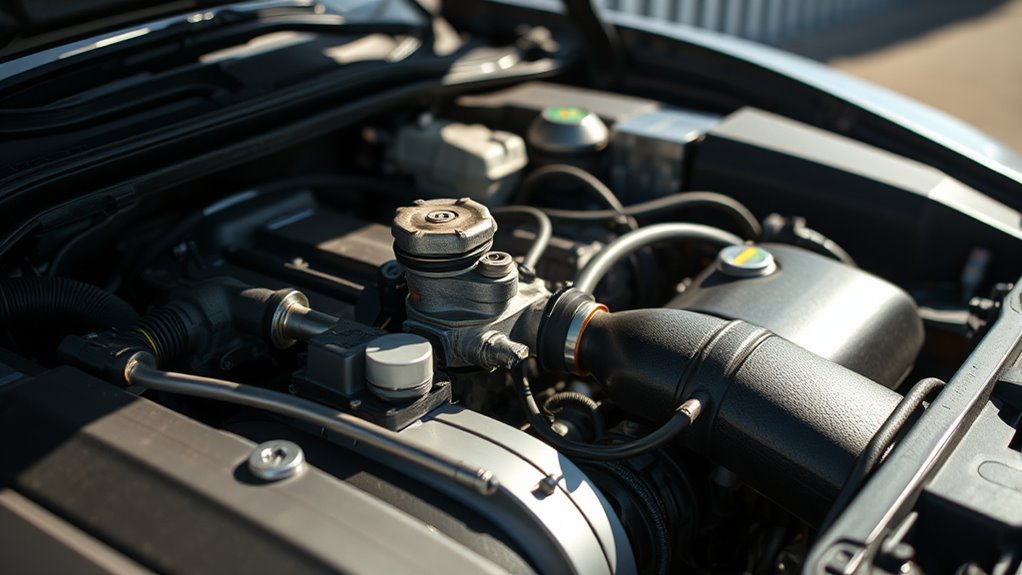
When you turn on your car’s air conditioning, the engine might struggle to keep running and could even stall. This usually happens because the AC load affects your engine’s idle.
When the AC compressor kicks in, it needs extra power. This puts more strain on your engine and increases interior noise. If your engine’s idle control isn’t working well, you’ll notice it stalls or struggles to stay steady.
When the AC compressor engages, it demands extra power, causing engine stalls if idle control isn’t functioning properly.
This impacts cabin comfort too, as you’ll feel fluctuations in noise and a rough ride. A weak or dirty idle air control valve, a failing alternator, or a worn serpentine belt can make your engine work harder when the AC is on.
When that happens, your engine can stall because it can’t supply enough power to keep running and operate the AC smoothly. Fixing these issues helps restore a smooth idle and makes your ride more comfortable.
How to Diagnose and Fix Electrical and Idle Control Problems
Diagnosing electrical and idle control problems involves checking key parts that help your engine keep a steady idle, especially when the AC is on. Start by inspecting the battery and alternator for signs of weak charge or corrosion since battery issues can cause power problems.
Next, examine the ignition system for faulty spark plugs, coils, or wiring that could lead to misfires or rough idling. The idle control valve, or IAC, is also important; if it’s dirty or stuck, it won’t regulate engine speed properly.
Use this table to help guide your diagnosis:
| Component | Common Issue | How to Check |
|---|---|---|
| Battery | Low voltage or corrosion | Test voltage, inspect terminals |
| Ignition system | Spark plug ignition faults | Check spark plugs and wires |
| Idle Control Valve | Dirty or stuck valve | Remove and clean or replace if needed |
| Alternator | Insufficient charging | Test output with multimeter |
| Wiring | Loose or damaged connections | Visually inspect all relevant wiring |
Addressing these areas will help fix your electrical and idle issues effectively.
Address Fuel System and Engine Health to Prevent Idle Stalls
Issues with your fuel system or engine health can cause your car to stall at idle, especially when the AC is on. When components like the air filter or fuel injectors aren’t working properly, engine vibrations can get worse, leading to stalling. Proper maintenance is key.
Check and replace the air filter regularly to ensure proper airflow and prevent engine strain. Inspect fuel injectors for clogs or leaks that could disrupt fuel delivery. Using a fuel system cleaner can also help remove buildup that hampers performance.
Address engine vibrations by having your spark plugs and ignition coils checked. Keep an eye on fuel pressure levels to make sure the fuel flows consistently. Maintaining these critical parts helps your engine run smoothly.
When your fuel system and engine are in good shape, you’ll reduce the chances of idle stalls and enjoy steady, reliable performance. This is especially important when the AC demands more power from your engine.
Frequently Asked Questions
Can a Dirty Air Filter Cause My Car to Stall When AC Is On?
Yes, a dirty air filter can cause your car to stall when the AC is on. When the air filter, including the cabin air filter, isn’t maintained properly, it restricts airflow, making your engine work harder and possibly stall at idle.
Regular air filter maintenance ensures proper airflow, prevents stalling issues, and keeps your AC running efficiently. Be sure to check and replace your filters as needed for a smoother ride.
Does a Failing Alternator Contribute to Engine Stalling During Idling?
Yes, a failing alternator can cause engine stalling during idling. Think of it like driving on a bumpy road—when the alternator isn’t working right, your car’s electrical system has a hard time powering key parts, including the engine.
When the alternator can’t keep up, the engine might stall unexpectedly. This happens because there’s not enough electrical power to send proper signals to sensors and to deliver fuel effectively.
As a result, the engine stalls and idles roughly. Fixing alternator problems quickly helps keep your engine running smoothly and avoids those frustrating stalls.
How Does Ambient Temperature Impact Engine Stalling With the AC On?
Ambient temperature really affects engine stalling when your AC is on. High temperatures can lead to your engine overheating, which lowers its cooling efficiency and can cause it to stall.
On the other hand, cold weather might make your fuel mixture less effective, impacting how well your engine runs. To keep things running smoothly, make sure your cooling system is in good shape.
It’s also helpful to adjust your driving habits or reduce AC use during extreme weather. That way, you’ll help prevent stalling and keep your engine performing its best.
Can Aftermarket Parts Affect My Car’s Idle Stability When the AC Runs?
Yes, aftermarket parts can affect your car’s idle stability when the AC runs. If the aftermarket replacement isn’t compatible with your vehicle, it might interfere with the idle air control valve, causing uneven idling or stalling.
Make sure to choose aftermarket parts that specify compatibility with your car model. Proper installation and high-quality components help guarantee your idle air control works smoothly, maintaining stable idle when the AC is on.
Is It Normal for Older Cars to Stall More Frequently With the AC On?
It’s common for older cars to stall more with the AC on because the engine noise from aging parts puts extra strain on your system.
Coincidentally, battery health also matters since weaker batteries can’t handle the added load of the AC, which can cause stalls.
As your car gets older, these factors start to overlap, making stalls more likely.
Regular maintenance and checking your battery can help improve idle stability and cut down on these issues.
Conclusion
If your car shuts off while idling with the AC on, it’s like your engine’s throwing a tiny tantrum, demanding more attention! Just a little troubleshooting—checking electrical, idle controls, or fuel system—and you’ll have it purring perfectly again.
Think of it as giving your car a fantastic spa day, soothing its nerves and keeping it alive and kicking through every traffic stop. Drive on, knowing you’ve got the secret recipe to keep that engine running like a champion!