Common Causes of Engine Backfire on Acceleration: Learn How to Prevent It
If your engine backfires during acceleration, you’re not alone. Many drivers find this frustrating and worrying about potential damage. Engine backfire can be caused by a few common issues, and knowing how to prevent it makes a huge difference.
If you experience engine backfire during acceleration, it’s likely due to ignition timing issues, fuel mixture imbalances, exhaust leaks, or sensor failures.
Poorly timed sparks, too rich or lean fuel mixtures, or leaks in your exhaust can cause unburned fuel to ignite prematurely. Regular maintenance, such as checking spark plugs, sensors, and hoses, can prevent these problems. Staying proactive helps keep your engine running smoothly—and if you want to know how to fix these issues, keep exploring the solutions below.
Key Takeaways
- Incorrect ignition timing or a misaligned distributor cause sparks to fire at the wrong moment. This can lead to backfire when you accelerate.
- Fuel mixture issues, like too rich or too lean conditions, raise the chances of backfire during acceleration.
- Exhaust leaks let unburned fuel escape into the system, causing popping sounds and loud backfires when you step on the gas.
- Faulty sensors send wrong data to the ECU, which then messes up the timing and fueling, making backfire more likely.
- Regular maintenance of spark plugs, sensors, and the exhaust system can help prevent backfire problems when accelerating.
What Causes Engine Backfire During Acceleration?
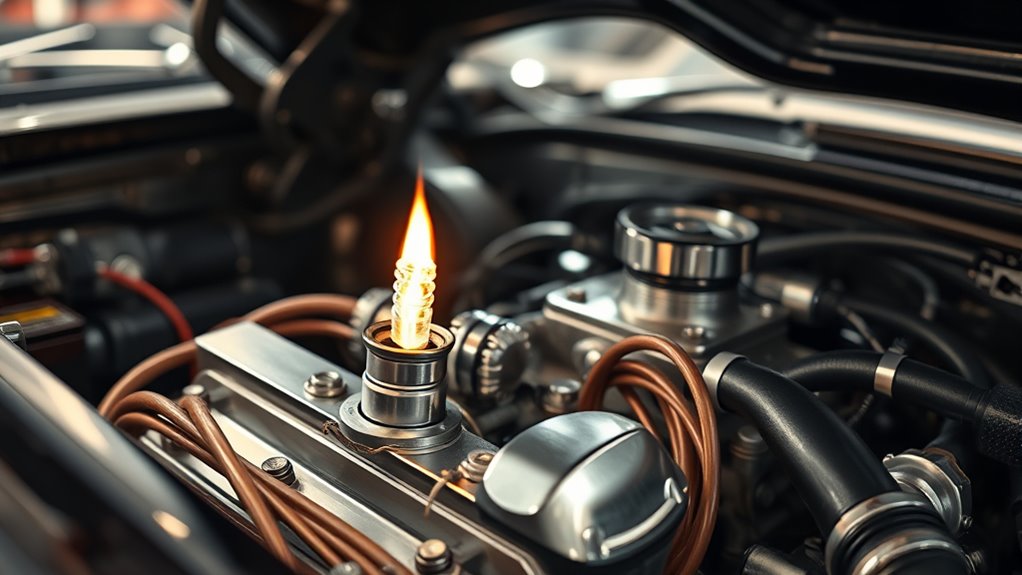
Have you ever heard a loud pop or bang when stepping on the gas? That’s often caused by issues during engine combustion. When you accelerate, the engine relies on proper fuel ignition to keep running smoothly.
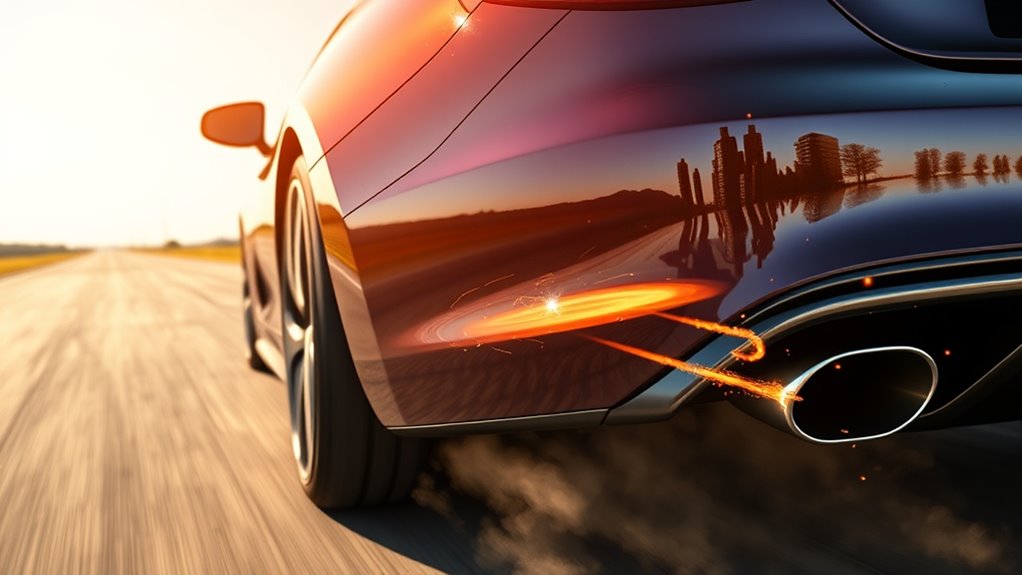
If the timing of fuel ignition is off, unburned fuel can stay in the exhaust system and ignite unexpectedly. This happens because the air-fuel mixture ignites outside the combustion chamber, creating a backfire.
Sometimes, incorrect fuel mixture settings or a malfunctioning ignition system cause the engine to ignite fuel late or early, leading to this problem. A rich mixture—meaning too much fuel—can also contribute to backfire, especially during acceleration.
When the engine struggles to maintain consistent combustion, unburned fuel ignites suddenly, causing that loud popping noise. To prevent this, make sure your vehicle’s fuel system and ignition components are properly maintained and adjusted.
How Ignition Timing Leads to Engine Backfire
If your ignition timing is not set quite right, you might notice your engine backfiring unexpectedly. Basically, when the timing is off, sparks happen at the wrong moments—which can cause unburned fuel to ignite in the exhaust pipe. That sudden pop or bang is what you’re hearing as a backfire.
Also, messing around with advanced ignition settings can increase the chances of backfire. When those settings are out of whack, they can mess up the engine’s normal firing sequence, making backfires more likely. So, keeping the timing properly calibrated is really key to preventing that kind of trouble.
Timing Misalignment Effects
Timing misalignment directly causes engine backfire by disrupting the precise ignition sequence needed for smooth combustion. When your engine timing is off, the spark occurs either too early or too late, causing unburned fuel to ignite in the exhaust.
This backfire happens because the timing affects how well the air-fuel mixture combusts inside the cylinders. A common culprit is misadjusted distributor alignment, which throws off the ignition timing.
If the distributor isn’t aligned correctly, your engine’s spark may fire at the wrong moment. This increases the risk of backfire during acceleration.
Regularly checking and adjusting your engine timing and ensuring proper distributor alignment can prevent misfires. This helps keep your engine running smoothly and avoids the disruptive, potentially damaging effects of engine backfire.
Advanced Ignition Risks
Incorrect ignition timing can significantly raise the risk of engine backfire, especially when the spark fires too early or too late in relation to the piston’s position. Precise ignition system timing is crucial because even small errors can cause unburned fuel to ignite suddenly, resulting in a backfire.
Using advanced diagnostics helps spot these issues quickly and can point out faulty components like sensors or distributors. Misfiring sparks interfere with smooth combustion, leading to problems like flame propagation issues and knocking sounds.
Making sure your ignition system is properly calibrated and maintained is key to preventing delayed or premature sparks. Regular diagnostics help catch timing problems early, reducing the chance of backfire during acceleration.
Proper tuning and regular inspection of ignition parts are essential for maintaining peak engine performance and avoiding dangerous backfire problems.
How Fuel Mixture Imbalance Triggers Backfire
Ever wonder how a fuel mixture that’s too rich or too lean can cause your engine to backfire? It all comes down to fuel calibration and mixture stability. When your fuel mixture isn’t properly balanced, either too much fuel (rich) or too little (lean), it disrupts the combustion process.
A rich mixture can leave unburned fuel in the cylinders, igniting suddenly and causing the backfire. Conversely, a lean mixture can cause incomplete combustion, leading to unburned fuel vapors igniting unexpectedly.
These imbalances can be caused by faulty sensors, clogged fuel injectors, or incorrect carburetor adjustments. Maintaining proper fuel calibration ensures your engine’s air-fuel ratio stays within the ideal range for stable combustion.
When mixture stability is compromised, your engine becomes prone to backfire, especially during acceleration. Regularly checking fuel system components and adjusting for proper mixture balance can help you prevent backfires caused by fuel mixture imbalances.
Exhaust Leaks and Their Effect on Engine Backfire
Exhaust leaks can be pretty sneaky—you might not notice them right away. But if you start hearing loud noises or smelling something weird, don’t just brush it off. Those are clues that something might be wrong.
When there’s a leak, unburned fuel can actually slip into the exhaust system, which isn’t supposed to happen. And that’s where backfires come from—fires or pops from the engine that can be loud and alarming. It’s really important to find and fix those leaks as soon as you can. Doing so helps your engine run smoothly and keeps things safe for you and everyone around you.
Signs of Exhaust Leaks
Have you noticed unusual sounds or odors coming from your vehicle? These could be signs of exhaust leaks in your exhaust system.
You might hear hissing or tapping noises, especially near the engine or under the car. Odors like rotten eggs or burning fumes are also warning signs. These indicate that exhaust gases are escaping prematurely and bypassing emission controls.
Visible damage or cracks in the exhaust pipes, muffler, or joints can confirm a leak. Exhaust leaks not only mess with your vehicle’s emission controls but can also cause backfires.
Early detection helps prevent more serious engine problems. If you spot these signs, get your exhaust system checked out promptly to keep your engine running smoothly and safely.
How Leaks Cause Backfire
When there’s a leak in your exhaust system, unburned fuel and air can escape before reaching the muffler properly, disrupting the normal flow of gases. This imbalance can cause your engine to backfire, especially during acceleration.
Detecting leaks is really important because even small leaks can change how efficiently your fuel system works. These leaks let unburned fuel build up in the exhaust, which can ignite too early.
Here’s how leaks cause backfire:
- Unburned fuel ignition: Leaks cause unburned fuel to ignite outside the combustion chamber, making a loud pop.
- Altered exhaust pressure: The reduced pressure behind the leak messes up the proper fuel-air mixture, raising the risk of backfire.
- Misfiring during acceleration: The disrupted flow impacts timing, leading to engine misfires and backfire when you quickly increase the throttle.
Detecting and Fixing Leaks
Detecting leaks in your exhaust system is important for preventing engine backfire and keeping your vehicle running at its best.
Check your exhaust parts for visible cracks, holes, or loose connections, especially around joints and welds.
Using soapy water can help spot leaks—just watch for bubbling around suspect areas.
Fixing leaks quickly restores proper engine timing and stops unburned fuel from igniting in the exhaust, which causes backfire.
Sealing leaks also improves fuel efficiency by making sure exhaust gases flow correctly.
If you notice strange noises or your vehicle feels less powerful, don’t wait—deal with leaks right away.
Regular maintenance and vigilance will keep your vehicle smooth, reduce backfire risks, and save fuel in the long run.
Sensor Failures That Cause Engine Backfire
Sensor failures can really contribute to engine backfire by messing up the timing and delivery of fuel and air mix. When sensors don’t work right or get miscalibrated, the ECU gets wrong info, leading to improper fuel injection and ignition timing.
This imbalance can cause unburned fuel to ignite explosively in the exhaust, resulting in a backfire. To prevent this, it’s important to regularly check sensor calibration and make sure they’re working properly.
Here are common sensor failures that can lead to backfire:
- Faulty oxygen sensors providing inaccurate readings.
- Malfunctioning mass airflow sensors sending incorrect air intake data.
- Bad throttle position sensors giving faulty throttle angles.
Fixing these issues quickly helps keep the electronics running smoothly, ensuring the right fuel mix and timing. That’s key to preventing engine backfire during acceleration.
How Dirty Spark Plugs Contribute to Backfire
Dirty spark plugs can cause engine backfire by messing up the ignition sparks needed for proper combustion. When plugs are covered in carbon buildup or corrosion, the electrical current struggles to jump the gap, leading to misfires or incomplete burning.
This inefficiency sends unburned fuel into the exhaust, which then ignites suddenly and causes a backfire. Corroded spark plugs can also weaken the connection, increasing the chance of damaging the ignition coil over time.
To understand this better, here’s a quick overview:
| Cause | Effect | Prevention |
|---|---|---|
| Spark plug corrosion | Poor spark delivery causes misfires | Regularly inspect and clean plugs |
| Dirty spark plugs | Ineffective sparks increase backfire risk | Replace or clean plugs as needed |
| Ignition coil damage | Weak sparks raise misfire chances | Check coils during maintenance |
| Fuel buildup | Excess fuel ignites unexpectedly in exhaust | Use quality fuel and check injectors |
Keeping your spark plugs clean helps prevent backfires and protects your ignition system.
Troubleshooting Common Causes of Engine Backfire
When your engine backfires, it usually means something’s not right under the hood. Troubleshooting these issues involves checking a few common causes.
Incorrect Timing can cause backfire if the spark happens too early or too late. This throws off combustion and impacts fuel efficiency and emissions. Adjusting the timing makes sure everything runs smoothly.
Fuel Mixture Problems happen when the mixture is either too rich or too lean. This can cause incomplete combustion, resulting in backfire. Always check that your fuel mix matches the manufacturer’s specs for optimal performance.
A Faulty Exhaust System can also lead to backfire if there are leaks or damage. Unburned fuel can ignite in the exhaust pipe, creating a loud noise. Regularly inspecting your exhaust helps keep emissions and engine efficiency on track.
Fixing these issues quickly can prevent more damage, improve fuel economy, and keep emissions in check. Proper troubleshooting keeps your engine running safely and smoothly.
Preventing Backfire: Maintenance Tips and Best Practices
Regular maintenance is your best defense against engine backfire. Start by regularly checking your coolant system to make sure it’s working properly.
An overheating engine can increase the risk of backfire, so keep coolant levels topped off and inspect hoses for leaks or damage. Properly maintaining your oil viscosity is also essential; using the right oil helps ensure smooth combustion and prevents misfires that could lead to backfire.
Change your oil according to your vehicle’s schedule and choose the recommended grade for peak performance. Keep your fuel system clean and make sure your air filters are free of debris to maintain proper airflow.
Additionally, inspect your spark plugs for wear and proper gaps because faulty ignition can contribute to backfire. Routine tune-ups combined with these maintenance practices help keep your engine running smoothly and reduce the chances of sudden backfires during acceleration.
When to Seek Professional Help for Backfire Problems
Recognizing when backfire problems need professional help is key to avoiding further engine damage or safety risks. If your engine backfires often when accelerating, it might be more than just basic maintenance issues.
Seek professional help if your engine backfires frequently to prevent further damage and ensure safety.
Ignoring frequent backfires can lead to poor fuel efficiency and bigger engine problems that could cause serious damage down the line.
Consider seeing a mechanic if:
- You notice your fuel consumption is unusually high, which points to possible issues with fuel system calibration or engine tuning.
- The backfire is especially loud or comes with strange vibrations, suggesting exhaust or ignition problems.
- Your engine isn’t running as it should, and DIY fixes haven’t fixed the problem, which could lead to more damage or safety risks.
Getting professional help promptly helps keep your engine running smoothly and safely, saving you money and protecting your vehicle’s overall health.
Proactive Steps to Stop Backfire Before It Happens
Preventing engine backfire before it starts requires a proactive approach that focuses on maintaining key components and monitoring potential issues. Regularly inspect your ignition system, spark plugs, and fuel injectors to make sure they’re working correctly. Any faults can cause unusual engine noise and trigger backfire.
Keep an eye on your emission systems; clogged or malfunctioning parts can lead to emission problems that increase the likelihood of backfire. Use quality fuel and stick to a maintenance schedule to avoid buildup that disrupts the air-fuel mixture.
Pay attention to subtle changes in engine noise or how your car accelerates. These small signs can indicate emerging issues. Address minor problems right away to prevent them from turning into bigger, more serious backfire causes.
Frequently Asked Questions
Can Engine Backfire Harm My Vehicle’s Engine Components?
Yes, engine backfire can damage your vehicle’s engine parts. When backfires happen because of things like wrong engine timing or exhaust leaks, they can harm valves, pistons, and the exhaust system.
If backfires happen often, they put extra stress on these parts, which can lead to costly repairs. To avoid this, make sure your engine timing is correct and fix any exhaust leaks quickly.
Doing these things helps keep your engine running smoothly and safely.
Are There Specific Driving Habits That Increase Backfire Risk?
Your driving habits and maintenance routines really influence the risk of backfire. Sudden acceleration, excessive idling, or revving the engine can all increase the chances of it happening.
Skipping regular maintenance like tuning and cleaning fuel injectors also raises this risk. To help prevent backfire, try to accelerate smoothly and avoid aggressive driving.
Sticking to a routine maintenance schedule and taking good care of your engine can keep it running efficiently. This reduces the likelihood of combustion issues and keeps your vehicle running smoothly.
How Does Aftermarket Equipment Influence Engine Backfire?
Aftermarket equipment, especially performance modifications and exhaust system upgrades, can influence engine backfire. When you install a high-performance exhaust, it might increase exhaust gases’ pressure and change air-fuel ratios, making backfires more likely during acceleration.
If you don’t tune your engine properly after these modifications, it can cause the ignition timing to be off, leading to backfires.
Ensuring proper tuning and compatible parts helps prevent these issues.
What Are the Signs of an Imminent Engine Backfire?
Imagine you’re driving and suddenly hear a loud pop—that’s an imminent engine backfire.
Signs include irregular engine noises, a noticeable delay in acceleration, or misfiring sounds.
You should also check for symptoms like a strong smell of exhaust or visible exhaust leaks.
Pay attention to ignition timing issues, as improper timing can trigger backfires.
Staying alert to these signs helps you address problems before they cause serious engine damage.
Can Engine Backfire Affect Fuel Efficiency?
Engine backfire can negatively affect your fuel efficiency because it disrupts proper combustion, leading to increased fuel consumption. This makes your vehicle use more fuel to keep up the same performance.
Backfires can also raise emissions, which isn’t good for the environment. If you notice frequent engine backfires, fixing issues like fuel mixture or ignition timing can help improve your gas mileage and cut down on harmful emissions.
Conclusion
Backfire during acceleration can be startling and damaging. Regular maintenance can help prevent this issue.
A recent study shows that 60% of engine backfires are caused by ignition or fuel system problems. Staying vigilant by checking your ignition timing, fuel mixture, and sealing leaks can keep your engine running smoothly.
If problems persist, don’t hesitate to seek professional help. Early intervention can save you time and money and help keep your engine healthy longer, especially if you want to avoid engine backfires on acceleration.